Best Contemporary Literary Fiction: Essential Reading from the Last Decade
The best contemporary literary fiction — from Beautiful World Where Are You and Tomorrow and Tomorrow and Tomorrow to The Bee Sting and Intermezzo. Recent literary novels.
The best contemporary literary fiction is being written in a period of remarkable formal and thematic diversity — Irish, American, British, and Canadian writers are producing work that engages with friendship, creative collaboration, family collapse, political anxiety, and the specific texture of contemporary life with novelistic intelligence. The novels below are the most important of the last five years.
Best Contemporary Literary Fiction at a Glance
| Book | Author | Best for |
|---|---|---|
| Tomorrow and Tomorrow and Tomorrow | Gabrielle Zevin | Literary fiction readers who appreciate |
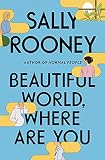
| Beautiful World, Where Are You | Sally Rooney | Literary Fiction |
| The Bee Sting | Paul Murray | Literary fiction readers interested in family |
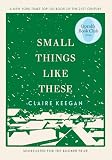
| Small Things Like These | Claire Keegan | Readers of literary fiction, Irish fiction |
| The Marriage Portrait | Maggie O’Farrell | Historical Fiction |
| Intermezzo | Sally Rooney | Sally Rooney devotees, literary fiction readers |
The Most Celebrated
Tomorrow and Tomorrow and Tomorrow — Gabrielle Zevin (2022)
The finest American novel of recent years — Sam Masur and Sadie Green’s decades-spanning creative collaboration as video game designers is simultaneously a story about friendship, artistic collaboration, love, envy, and what it means to make something that matters. Zevin’s novel is formally conventional (it does not experiment with structure) but emotionally complex in a way that few contemporary novels achieve: she makes the reader understand two people who love each other and keep failing to say so, and shows how creative work can both sustain and destroy intimacy.
Beautiful World, Where Are You — Sally Rooney (2021)
Rooney’s most ambitious novel — Alice and Eileen’s email exchanges about contemporary life provide the philosophical scaffolding for a story about two women in their thirties trying to decide what they believe in, what they want, and whether they can be happy. Rooney’s critics find her discursive; her admirers find her the most intelligent novelist of her generation. The novel’s directness about the difficulty of contemporary life (what is worth doing? can happiness be earned or only accidentally encountered?) makes it the most explicitly reflective of her three novels.
The Irish Fiction
The Bee Sting — Paul Murray (2023)
The most formally ambitious Irish novel of recent years — four perspectives on the collapse of the Barnes family in a small Irish town, each told in a different register that matches the character. Murray’s account of financial ruin, family secrets, and the specific texture of Irish small-town life is both panoramic and intimate. Longlisted for the Booker Prize.
Small Things Like These — Claire Keegan (2021)
At 120 pages, the most concentrated of the recent Irish fiction — a coal merchant in 1985 Ireland who discovers that the local convent is running a Magdalene laundry. What Keegan achieves in this space — the texture of small-town Catholic Ireland, the cost of knowing something that conflicts with social survival, the possibility of one small act of courage — is extraordinary.
The Marriage and Family Novel
The Marriage Portrait — Maggie O’Farrell (2022)
O’Farrell’s follow-up to her Booker Prize-winning Hamnet — a novel about Lucrezia de’ Medici, who at fifteen is married to Alfonso II, Duke of Ferrara, and comes to believe that he intends to kill her. O’Farrell combines historical fiction, psychological thriller, and an examination of women’s constrained choices with the formal confidence of Hamnet.
The Recent Rooney
Intermezzo — Sally Rooney (2024)
Rooney’s fourth novel — two brothers in Dublin, Peter and Ivan Koubek, both dealing with the death of their father and with their romantic lives, in a novel that is less about Irish women’s experience (as her first three novels were) and more about men, grief, and the difficulty of intimacy. A departure from her earlier work while recognisably hers.
The Irish Renaissance
A reader scanning this list will notice immediately that Irish writers occupy a strikingly disproportionate share of it, and this is no accident of selection but a reflection of one of the most remarkable developments in contemporary literature: a genuine Irish literary renaissance. For a small nation, Ireland has long produced an astonishing number of major writers, but the current moment has an unusual intensity and coherence. Sally Rooney has become the defining novelist of the millennial generation, her spare, intelligent fiction about love, class, and communication generating both adoration and backlash on a scale rarely seen. Claire Keegan has perfected a form of extreme compression, achieving in a hundred-odd pages what most novelists cannot manage in five hundred. Paul Murray, Anna Burns, Colm Tóibín, Sebastian Barry, and others have made contemporary Irish fiction a byword for quality and ambition. What accounts for this flowering is much debated — the legacy of a literary culture that has always prized the written and spoken word, the rapid social transformation of a country that moved within a generation from conservative Catholic insularity to liberal European modernity, the institutional support for writers, and perhaps simply the catalytic effect of success breeding success as a generation of talented writers spurred one another on. Whatever the causes, the result is that to read the best contemporary literary fiction is necessarily to read a great deal of Irish writing, and this list reflects a real and remarkable concentration of present-day literary power on a single small island.
What Today’s Novelists Are Writing About
Reading across this list reveals the preoccupations that define serious fiction of the present moment, the themes to which the most ambitious contemporary novelists keep returning. Foremost among them is the difficulty of connection and communication in an age that offers more means of contact than ever before — the paradox, explored by Rooney above all, of people who understand each other deeply yet repeatedly fail to bridge the gap between them, defeated by class anxiety, pride, miscommunication, and the terror of vulnerability. A second major theme is the relationship between creative or meaningful work and personal intimacy, central to Zevin’s portrait of artistic collaboration and its costs. A third is the persistence of family as the crucible of identity and pain, whether in the financial and emotional collapse of Murray’s Barnes family or the quiet familial dramas that anchor so much of this fiction. Running beneath these is a pervasive contemporary anxiety — about politics, climate, economic precarity, and how to live a good or even a bearable life in a moment that feels uncertain and morally complex — which Rooney in particular foregrounds, letting her characters argue explicitly about what is worth doing and believing. There is also a notable engagement with history’s grip on the present, from Keegan’s reckoning with the Magdalene laundries to O’Farrell’s Renaissance reimaginings. Together these themes sketch a literature intensely concerned with intimacy, work, family, and the challenge of meaning in anxious times.
The Pleasures of Reading the Present
There is a particular and underrated pleasure in reading the literary fiction of one’s own moment, distinct from the satisfactions of the established classics, and this list is an invitation to that pleasure. To read contemporary fiction is to participate in literary culture as it happens — to encounter the books that are shaping the conversation, that friends and critics are arguing about, that may or may not become the classics of the future. There is an immediacy to it: these novels render the texture of life as it is being lived right now, capturing the specific anxieties, technologies, idioms, and moral dilemmas of the present in a way that even the greatest older fiction cannot. When Rooney’s characters exchange emails about the collapse of civilization, or Zevin’s designers build worlds out of code, the reader recognizes their own world reflected back with a clarity that historical distance would blur. Reading the present also carries a pleasurable uncertainty absent from the canon: no one yet knows which of these books will last, and the reader gets to form their own judgment rather than inheriting a received verdict. For those who have spent their reading lives among the established classics, turning to the best new fiction can be genuinely refreshing, a reminder that literature is a living art form, still capable of surprise, still wrestling with how to be human in conditions no previous generation faced. The books on this list are the ideal entry into that living conversation, the most accomplished and discussed novels of the immediate past, and the best available map of where serious fiction stands today.
Reading Order
Start accessible: Tomorrow and Tomorrow and Tomorrow → Beautiful World, Where Are You → The Bee Sting.
Irish fiction: Small Things Like These → The Bee Sting → Beautiful World, Where Are You.
By recency: Small Things Like These (2021) → Beautiful World (2021) → Tomorrow (2022) → The Marriage Portrait (2022) → The Bee Sting (2023) → Intermezzo (2024).
Also Worth Reading
Two further titles reward readers exploring contemporary literary fiction: Richard Ford’s Pulitzer-winning Independence Day, the second novel in his acclaimed Frank Bascombe sequence, and Jonathan Coe’s The Rotters’ Club, a warm, funny, and politically astute portrait of 1970s England.
Frequently Asked Questions
What is the best contemporary literary novel?
Tomorrow and Tomorrow and Tomorrow by Gabrielle Zevin is the most widely praised contemporary novel — a decades-spanning story of friendship, creative collaboration, and love between two video game designers, which is simultaneously a profound examination of what it means to make something together and one of the most emotionally complex novels about creative partnership in recent fiction. Beautiful World, Where Are You by Sally Rooney is the most discussed contemporary literary novel among readers engaged with literary culture.
What is Tomorrow and Tomorrow and Tomorrow about?
Tomorrow and Tomorrow and Tomorrow (2022) by Gabrielle Zevin follows Sam Masur and Sadie Green from their childhood meeting in a hospital video game room through three decades of friendship, creative collaboration, and complicated love as they build video games together. The novel is about what it means to make things with another person over a lifetime — the joy of collaboration, the resentment it generates, the specific way creative partnerships hold love and competition simultaneously. It is one of the finest novels about friendship and creative work in recent American fiction.
What is Beautiful World, Where Are You about?
Beautiful World, Where Are You (2021) by Sally Rooney follows Alice, a novelist who has had a breakdown after her first book's success, and her college friend Eileen, who is in love with her childhood friend Simon. The novel alternates between the characters' lives and a series of long emails between Alice and Eileen about meaning, relationships, culture, and what it is like to be young and intelligent and dissatisfied in the contemporary world. Rooney's most discursive novel and her most explicitly political.
What is The Bee Sting about?
The Bee Sting (2023) by Paul Murray follows the Barnes family in a small Irish town — father Dickie, a car dealer whose business is failing; mother Imelda, who is keeping secrets; teenage daughter Cass, who is applying to university; and twelve-year-old PJ, who spends his time in the forest with a school friend. Murray tells each section from a different family member's perspective, gradually revealing the financial disaster and personal history that is about to destroy the family. It was longlisted for the Booker Prize and is the most formally ambitious Irish novel in recent years.