Julian Barnes is a British novelist whose witty, melancholic fiction circles obsessively around memory, time, and how little we can truly know about the past.
Julian Barnes was born in Leicester and belongs to a generation of British novelists — alongside Martin Amis and Ian McEwan — who remade English literary fiction in the 1980s, bringing formal sophistication, philosophical seriousness, and a new cosmopolitan ambition to a tradition that had grown somewhat provincial. He worked as a literary editor and lexicographer before publishing his first novel, and that precision with language has never left him. He is a genuinely European writer in his sensibility, as likely to be thinking about Flaubert or Montaigne as about anything in the English tradition.
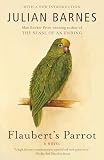
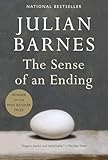
Flaubert’s Parrot (1984) announced him as a major talent. Its narrator — a retired English doctor obsessed with Gustave Flaubert — attempts to determine which of two surviving stuffed parrots the writer actually kept on his desk while composing Un coeur simple. The novel uses this absurd, touching fixation as a vehicle for investigating memory, biography, and the impossibility of recovering the past from its debris. It is rightly counted among the most inventive English novels of the last half century. Barnes was shortlisted for the Booker Prize multiple times before finally winning it with The Sense of an Ending (2011), a novella about an aging man who discovers that his memories of a youthful friendship are not only incomplete but actively self-serving. England, England (1998) is a more satirical project, imagining the commodification of British national identity into a theme park, and remains one of his most pointed works.
Nothing to Be Frightened Of (2008), an essay-memoir on death and the fear of annihilation, is Barnes at his most personal and his most searching. He writes always with wit, but the melancholy underneath is real — the sense that time erodes and distorts, that we cannot finally know other people or even ourselves, and that this is cause for grief as much as acceptance.
A Master of the Contemporary Novel
Julian Barnes is among the most acclaimed and versatile British novelists of his generation, a writer celebrated for his intelligence, wit, and elegant, precise prose. Renowned for his explorations of memory, history, love, and mortality, and for his willingness to experiment with the form of the novel, Barnes has produced a varied and distinguished body of work that has earned him major honors, including the Booker Prize. His fiction combines intellectual sophistication with emotional depth and a characteristic dry humor, and he is widely regarded as one of the finest and most thoughtful writers in contemporary English literature.
The Sense of an Ending
Barnes’s Booker Prize-winning novel, The Sense of an Ending, is among his most admired and widely read works, a short, subtle meditation on memory, regret, and the unreliability of our recollections. Following a retired man forced to reconsider his understanding of his own past, the novel explores how we revise and distort our memories to protect ourselves, and how a sudden revelation can overturn a comfortable narrative. Compact, elegant, and resonant, it exemplifies Barnes’s gifts for psychological subtlety and philosophical reflection, and it brought him his greatest recognition and a wide readership.
Memory and the Past
A central preoccupation of Barnes’s fiction is the nature of memory and our relationship to the past. He returns repeatedly to questions of how we remember, how memory deceives us, and how the stories we tell about our own lives and about history are shaped by selection, distortion, and desire. His work probes the gap between what happened and what we believe happened, and the impossibility of fully recovering the truth of the past. This sustained exploration of memory and its unreliability gives his fiction its intellectual depth and its quietly unsettling power.
Barnes is a writer of considerable formal inventiveness who has experimented boldly with the structure and conventions of the novel. His acclaimed Flaubert’s Parrot blends fiction, biography, and criticism in its idiosyncratic exploration of the French novelist, while A History of the World in 10½ Chapters assembles a series of loosely connected narratives into an unconventional whole. This willingness to play with form, to blur the boundaries between genres and to find new shapes for fiction, reflects his restless intelligence and his sense of the novel as a flexible and capacious form capable of constant reinvention.
Wit and Intelligence
Barnes’s writing is marked throughout by its wit, elegance, and formidable intelligence. His prose is precise, controlled, and frequently funny, with a characteristic dry, ironic humor that leavens even his most serious explorations of mortality and loss. He brings a sharp, cultivated mind to his subjects, and his fiction is rich in allusion, observation, and reflection without ever becoming dry or merely clever. This combination of intellectual sophistication with genuine emotional resonance and a light, witty touch is central to his appeal and to the distinctive pleasure of reading his work.
Love, Grief, and Mortality
Alongside his preoccupation with memory and history, Barnes has written movingly about love, grief, and mortality. His later work, including the deeply personal Levels of Life, written in part about the death of his wife, confronts loss and mourning with honesty and depth, and the awareness of death runs throughout his fiction. He explores these universal experiences with the same intelligence and precision he brings to all his subjects, but with a profound emotional directness that gives his treatment of love and grief a particular power. This engagement with the deepest human concerns lends his work its enduring resonance.
Julian Barnes’s Reputation Endures
Julian Barnes has established himself as one of the most accomplished and admired novelists in contemporary British literature, celebrated for his intelligence, his wit, and his thoughtful exploration of memory, history, and mortality. For newcomers, The Sense of an Ending is the natural starting point, with the inventive Flaubert’s Parrot and the moving Levels of Life offering further entry into his range. For readers seeking elegant, intelligent, and emotionally resonant fiction that engages the deepest questions of memory, love, and time, Julian Barnes is among the most rewarding writers at work today.
Reading Guides