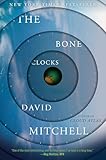
David Mitchell is a British novelist known for structurally ambitious, genre-bending fiction that connects across centuries and voices, most famously in Cloud Atlas and The Bone Clocks.
David Mitchell is a British novelist who lived for years in Japan and whose work bears the influence of both Western postmodernism and Japanese narrative traditions. He is among the most formally inventive English-language novelists of his generation, and Cloud Atlas, published in 2004, is the most celebrated demonstration of his structural ambition. The novel contains six narratives spanning from the nineteenth century to a post-apocalyptic future, each nested within the next like Russian dolls, connected by recurring characters and themes about power, exploitation, and the persistence of the human spirit. Some readers find the formal game thrilling; others find it distancing.
The Bone Clocks, published in 2014, follows the life of a British woman named Holly Sykes across six decades, pulling together a more overt fantasy element involving rival factions of near-immortals. It is less formally radical than Cloud Atlas but in some ways more emotionally involving — the thread of Holly’s ordinary human life through the more fantastical material gives the novel genuine pathos. The contemporary sections are sharply observed and often funny, while the ending gestures toward environmental catastrophe with a kind of quiet devastation.
Mitchell is occasionally accused of over-complication for its own sake, and his more fantastical elements do not always integrate as cleanly as his advocates suggest. But his ambition is genuine, his prose is accomplished, and his ability to inhabit a range of voices and genres across a single career makes him one of the more interesting novelists working in English today.
A Virtuoso of the Novel
David Mitchell is among the most inventive and acclaimed British novelists of his generation, a writer renowned for his dazzling formal ambition, his genre-blending imagination, and the intricate interconnections that link his books into a single vast fictional universe. Celebrated for novels that span centuries, continents, and styles, Mitchell combines virtuosic technical skill with genuine emotional depth and narrative pleasure, earning both critical praise and a devoted readership. His willingness to experiment with structure and form, while never losing sight of character and story, has made him one of the most admired and distinctive writers in contemporary fiction.
Cloud Atlas
Mitchell’s most famous novel, Cloud Atlas, exemplifies his ambition and ingenuity. Composed of six nested stories spanning from the nineteenth century to a post-apocalyptic future, each written in a different genre and style and interrupted and later resumed in turn, the novel explores connection, recurrence, and the persistence of human nature across time. Its audacious structure and its themes of interconnection and reincarnation made it a critical sensation and led to an ambitious film adaptation. Cloud Atlas remains the definitive demonstration of Mitchell’s formal daring and imaginative reach.
A hallmark of Mitchell’s fiction is his fearless experimentation with structure and form. His novels frequently employ multiple narrators, nested or fragmented narratives, shifting time periods, and a dazzling range of styles and genres, from historical fiction to science fiction to fantasy to coming-of-age realism. He delights in formal challenges and in testing the boundaries of the novel, yet his experiments serve his storytelling rather than overwhelming it, and his technical brilliance is always married to a deep concern for character, emotion, and meaning.
An Interconnected Universe
One of the most distinctive features of Mitchell’s work is the way his individual novels connect to form a single, sprawling “über-novel.” Characters reappear across different books, storylines overlap, and a shared mythology gradually emerges, rewarding attentive readers who trace the links between his works. This grand interconnected design transforms his separate novels into parts of a larger whole, and the discovery of these hidden connections is one of the great pleasures of reading Mitchell, lending his entire body of work a sense of unity and accumulating depth.
Range and Versatility
Mitchell’s novels demonstrate extraordinary range, moving from the historical world of The Thousand Autumns of Jacob de Zoet, set in eighteenth-century Japan, to the fantastical and supernatural elements of The Bone Clocks, to the tender coming-of-age realism of Black Swan Green. He is equally at home in historical reconstruction, speculative fiction, and intimate character study, and his ability to inhabit such different modes with conviction reflects both his versatility and his deep love of storytelling in all its forms. This breadth keeps his work perpetually surprising and rewarding.
Storytelling and Humanity
For all his formal cleverness, Mitchell is at heart a generous and humane storyteller, and his novels are driven by genuine warmth, emotional resonance, and narrative momentum. Beneath the structural ingenuity lie deep concerns with human connection, mortality, the conflict between predatory power and compassion, and the ways individual lives echo across time. This combination of intellectual ambition and emotional generosity, of virtuoso technique and genuine feeling, is the secret of his appeal and what distinguishes him from mere literary game-players.
David Mitchell: Where to Start
David Mitchell has established himself as one of the most inventive and admired novelists of his time, a writer whose formal brilliance and imaginative scope have expanded the possibilities of contemporary fiction. For newcomers, Cloud Atlas is the essential starting point and the fullest expression of his ambition, while The Thousand Autumns of Jacob de Zoet and the accessible Black Swan Green offer excellent alternatives. For readers seeking fiction that is intellectually dazzling, formally adventurous, and yet deeply human and pleasurable, David Mitchell is among the most rewarding novelists writing today.
Reading Guides