Where to Start with David Mitchell: A Reading Guide
Where to start with David Mitchell — whether to begin with Cloud Atlas, Black Swan Green, or The Bone Clocks. A complete reading guide to Mitchell's novels.

David Mitchell (born 1969) is the most formally ambitious British novelist of his generation — a writer whose novels span centuries, continents, and genres while exploring a coherent set of questions about time, exploitation, and whether individual lives matter in the sweep of history. Cloud Atlas (2004) is his most celebrated achievement: a nested structure of six narratives spanning five centuries that has been compared to a Matryoshka doll or a musical fugue. His range — from a Victorian diary to a post-apocalyptic oral narrative — is extraordinary, and his gifts (period ear, comic precision, structural intelligence) operate equally well across all of them.
Where to Start: Black Swan Green (2006)
The most accessible Mitchell — and, for many readers, his finest in terms of sustained emotional precision. Thirteen-year-old Jason Taylor lives in the village of Black Swan Green in Worcestershire in 1982. He stutters (so badly that he cannot say his own name), writes poems secretly under a pseudonym, and navigates the unforgiving social world of adolescence while his parents’ marriage breaks down around him. The Falklands War is happening in the background; the social textures of early 1980s England are rendered with the precision of a novelist who lived them.
The novel is structured as thirteen chapters for thirteen months — each self-contained but all building toward a cumulative portrait of a year in a boy’s life that is also a portrait of a moment in English social history. It is Mitchell’s warmest and most intimate novel.
Cloud Atlas (2004)
Mitchell’s most celebrated and most formally daring novel — six narratives arranged in a nested structure spanning from 1850 to a distant post-apocalyptic future. Adam Ewing’s Victorian Pacific diary is interrupted by a young composer’s letters from 1930s Belgium; his letters are interrupted by a 1970s California thriller; the thriller is interrupted by a contemporary London farce; that is interrupted by a future Korea narrative; which is interrupted by the far-future oral testimony of Zachry on post-collapse Hawaii. Then everything reverses: each story is resumed and completed in reverse order.
The formal structure is not a game but an argument: the same patterns of exploitation and resistance recur across time, the same characters (suggested by a comet-shaped birthmark) appear in each era, and individual moral choices matter even in the sweep of five centuries of history. The Wachowski/Tykwer film adaptation (2012) is ambitious and worth watching after reading.
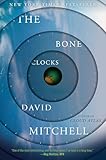
The Bone Clocks (2014)
A more accessible Cloud Atlas — six narratives spanning from 1984 to 2043, united by the character of Holly Sykes, who encounters in each decade a secret war between two groups of souls who have inhabited human bodies across centuries. The novel is Mitchell’s most genre-fluid: Holly’s story is realistic fiction; the supernatural conflict is fantasy; the 2043 sections are post-climate-catastrophe speculative fiction. Less formally complex than Cloud Atlas but more emotionally direct, and Holly is Mitchell’s most fully developed protagonist.
Utopia Avenue (2020)
Mitchell’s most joyful novel — a historical fiction set in the late 1960s London music scene, following the rise of a fictional British band called Utopia Avenue from their formation to their dissolution. The novel is Mitchell’s love letter to the era and to rock music, rendered with the period authenticity of a novelist who cares deeply about the music and the cultural moment. Less formally complex than his earlier work; more immediately pleasurable. Cameos from real historical figures (including Syd Barrett, Jimi Hendrix, and Brian Jones) are handled with great skill.
Why Black Swan Green Is an Ideal First Book
For a reader new to David Mitchell, Black Swan Green is an ideal first book because it is among his most accessible and beloved novels and a fine expression of his distinctive gifts, the dazzling prose, the emotional depth, and the vivid evocation of place and time. Black Swan Green is a coming-of-age novel following a year in the life of a stammering, sensitive boy in 1980s England, in a warm, funny, and beautifully written story. As an entry point it is ideal, for it is one of his most approachable works, more linear than his famously structured novels, while fully displaying his gifts. It welcomes the newcomer with its endearing narrator, its beautiful prose, and its emotional warmth, drawing the reader into his distinctive vision. It is among his major works and a fine representation of his gifts, so the new reader encounters Mitchell at his most accessible. For the newcomer, then, Black Swan Green is an excellent starting point.
What to Expect as a New Reader
As a new reader, you can expect Black Swan Green to be a warm, funny, and beautifully written coming-of-age novel. You can expect an endearing narrator, for the novel follows a year in the life of a stammering, sensitive boy in 1980s England. You can expect dazzling prose, for Mitchell writes with great verbal skill, invention, and beauty. You can expect emotional depth, for the novel captures the joys, embarrassments, and growing pains of adolescence with feeling. You can expect a vivid evocation of place and time, the world of 1980s English village life. You can expect a more accessible, linear structure than some of his more famously intricate novels. You can expect warmth, humor, and insight. Expect, in short, a warm, funny, and beautifully written coming-of-age novel, a fine introduction to Mitchell’s gifts.
Going Deeper After Your First Book
Once Black Swan Green has introduced you to Mitchell’s gifts, the reader who wishes to go deeper can explore his other novels, which reveal his dazzling structural ambition and his interconnected imagination. His most famous novel weaves together six nested stories across centuries and genres in a dazzling, intricate structure, while his other works range across time, place, and genre, often connected by recurring characters and a vast, interlinked fictional universe. Reading these after Black Swan Green deepens your appreciation of Mitchell’s distinctive gifts, the dazzling prose, the structural ambition, and the interconnected imagination. His characteristic inventiveness runs through his work, though some of it is more intricate than Black Swan Green. Building your reading journey through Mitchell is a matter of following his fiction from Black Swan Green into his more ambitious, interconnected novels. The reader who begins here and continues will find one of the most dazzling and inventive novelists writing today.
Reading David Mitchell
Mitchell’s characteristic pleasure is structural: the way multiple narratives relate to each other, the echoes between eras, the characters who recur across centuries. But his formal ambitions never override his commitment to character — his people are fully alive in their particular times and places. Begin with Black Swan Green for the most intimate access to his gifts; with Cloud Atlas for his most ambitious structural achievement; with The Bone Clocks for the most accessible combination of both. Any entry point leads naturally to the others.
Frequently Asked Questions
Where should I start with David Mitchell?
Black Swan Green (2006) is the best starting point for readers new to David Mitchell — his most straightforwardly realist and most emotionally accessible novel, a coming-of-age story set in a Worcestershire village in 1982, following thirteen-year-old Jason Taylor through a year of adolescent difficulty. Cloud Atlas is Mitchell's most celebrated novel and demonstrates his full formal ambition, but its complexity can be daunting as an introduction. Black Swan Green reveals Mitchell's gifts — his period ear, his comic precision, his emotional depth — in the most accessible form.
What is Cloud Atlas about?
Cloud Atlas (2004) consists of six nested narratives spanning from the nineteenth century to a post-apocalyptic future: a Victorian seafarer's Pacific diary; letters from a 1930s composer; a 1970s corporate thriller; a contemporary publisher trapped in a care home; an interview with a fabricant worker in near-future Korea; and a post-collapse oral narrative from a distant future Hawaii. The six stories are arranged in a Russian doll structure — each begins, is interrupted by the next, and is resumed in reverse order. Mitchell's argument (that individuals matter, that exploitation replicates across time, that human nature persists) is made across five centuries of narrative.
What is Black Swan Green about?
Black Swan Green (2006) follows thirteen-year-old Jason Taylor through thirteen months of 1982 in the village of Black Swan Green in Worcestershire. Jason stutters, writes poetry secretly, and navigates the complex social hierarchies of his school and village while his parents' marriage deteriorates around him. The Falklands War is in the background; the social world of early 1980s England — class, aspiration, rural life, adolescent cruelty — is in the foreground. The novel is Mitchell's most personal, drawing extensively on his own childhood experience.
Do David Mitchell's novels need to be read in order?
David Mitchell's novels are loosely connected — characters recur across novels, and references to events in other books reward readers who know the whole sequence — but each novel is substantially self-contained and can be read without prior knowledge of the others. Cloud Atlas is most commonly read as an introduction because it is his most celebrated; Black Swan Green is the best introduction for readers who want his most accessible mode. The connections between novels become richer with reading but do not prevent understanding of individual books.