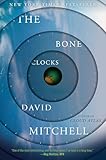
Editors Reads Verdict
The Bone Clocks is Mitchell at his most generous and most sprawling: Holly Sykes is one of contemporary fiction's most fully realized protagonists, and the novel's emotional range — from teenage heartbreak to apocalyptic grief — is genuinely impressive, even if its fantasy mechanics occasionally crowd out its humanist instincts.
What We Loved
- Holly Sykes is an extraordinarily vivid and consistently engaging protagonist across six decades
- Each of the six sections succeeds as independent character study before contributing to the larger arc
- Mitchell's prose is at its most supple and emotionally varied here
- The near-future climate sections carry genuine prescient unease
Minor Drawbacks
- The Horologists vs. Anchorites fantasy subplot sits uneasily with the novel's literary ambitions
- The middle fantasy-heavy sections slow the human story considerably
- Some readers will find the metaphysical scaffolding more distracting than enriching
Key Takeaways
- → A life lived fully resists summary — it must be inhabited moment by moment
- → The choices made in adolescence echo forward into middle age in ways the teenager cannot predict
- → Climate grief is grief at a civilizational scale that requires new narrative forms
- → The desire for immortality and the desire for meaning are fundamentally opposed
| Author | David Mitchell |
|---|---|
| Publisher | Random House |
| Pages | 624 |
| Published | September 2, 2014 |
| Language | English |
| Genre | Literary Fiction, Science Fiction, Fiction |
| Difficulty | Advanced |
| Best For | Fans of David Mitchell's interconnected fictional universe and readers who enjoy literary fiction with speculative elements and a strong sense of character across time. |
How The Bone Clocks Compares
The Bone Clocks at a glance against 3 similar books readers weigh alongside it.
| Book | Author | Rating | Best for |
|---|---|---|---|
| The Bone Clocks (this book) | David Mitchell | ★ 4.1 | Fans of David Mitchell's interconnected fictional universe and readers who |
| Cloud Atlas | David Mitchell | ★ 4.1 | Ambitious literary fiction readers who enjoy structural experimentation and are |
| Never Let Me Go | Kazuo Ishiguro | ★ 4.2 | Literary fiction readers drawn to Ishiguro's distinctive voice and the |
| The Night Circus | Erin Morgenstern | ★ 4.4 | Fantasy readers who prioritise immersive atmosphere and beautiful prose over |
Holly Sykes and the Shape of a Life
The Bone Clocks begins in 1984 with fifteen-year-old Holly Sykes running away from her home in Gravesend after a fight with her mother. In the first of six chronological sections, Mitchell renders Holly’s adolescence with the kind of precision — the specific texture of provincial English life, the granular certainty of teenage grievance, the way first love feels like a geological event — that immediately establishes her as one of his most fully inhabited protagonists.
What Holly doesn’t know, and what the novel gradually reveals, is that she has a psychic sensitivity that makes her a focal point in a centuries-long conflict between two secret factions of near-immortal beings: the Horologists, who are repeatedly reborn, and the Anchorites, who sustain their immortality by consuming the psychic energy of children. This fantasy scaffold is the novel’s most contentious feature, and Mitchell is honest about the tension: his human story is more compelling than his supernatural one, and the sections that lean hardest into fantasy mechanics are also the novel’s weakest.
Six Decades, Six Voices
The novel’s six sections are narrated by different characters — an Oxford student in 1991, a war correspondent in 2004, a novelist in 2015, an Anchorite in a fantastical present, and Holly herself in a near-future Ireland — before returning to Holly for a closing section set in 2043 in a world diminished by climate collapse. Mitchell’s ventriloquism is again impressively varied: the novelist Hugo Lamb is a brilliantly drawn literary narcissist, and the war correspondent Ed Brubeck section captures the moral disorientation of Iraq-era journalism with uncomfortable accuracy.
The 2043 closing section is the novel’s emotional apex. Holly at seventy-three, living in an off-grid Irish community as civilization contracts around climate change, achieves a kind of hard-won luminosity that feels earned by everything that came before. Mitchell is one of the few writers working today who takes climate grief seriously as a literary subject rather than a backdrop, and the weight of civilizational loss in these pages is genuine.
The Fantasy Problem
The Horologist-Anchorite conflict is The Bone Clocks’ central structural risk, and opinions divide sharply on whether it pays off. Mitchell is clearly more interested in Holly as a human being than in the metaphysics of psychosoterica, and the novel’s longest purely fantastical section — the Horologists’ confrontation with the Anchorites — reads like a different, lesser book. It clarifies the stakes in plot terms while shrinking them in human ones.
What saves the novel from this imbalance is the consistency of its emotional intelligence. Mitchell never loses sight of what actually matters: the costs of love, the accumulation of grief, the specific ways people choose or fail to choose each other across the decades. Holly Sykes is compelling enough to hold the novel together even when its architecture wobbles.
A Generous, Imperfect Achievement
The Bone Clocks is messier and more emotionally varied than Cloud Atlas, and some readers will prefer it for exactly those reasons. Its ambitions are finally humanist rather than formal, and when it succeeds — in its teenage opening, its devastating middle sections, and its elegiac close — it succeeds at something Mitchell’s more architecturally rigorous work sometimes sacrifices: the irreducible, specific weight of a single human life.
Our rating: 4.1/5
A Single Life Across Six Decades
For all its supernatural machinery, The Bone Clocks is finally a book about the shape of one ordinary life. Holly Sykes enters the novel as a fifteen-year-old running away from home in Gravesend in 1984, and the reader follows her — sometimes directly, sometimes glimpsed through the eyes of others — across nearly sixty years, all the way to a diminished, climate-ravaged Ireland in 2043. This is the novel’s real subject and its greatest strength: the accumulation of a life, the way the choices and losses of adolescence echo forward into middle and old age, the slow gathering of grief and love and consequence that no summary can capture and that only the lived span of years makes legible. Holly is among the most fully realised protagonists in Mitchell’s body of work, vivid and convincing at every age.
The Ventriloquist’s Gift
Each of the novel’s six sections is narrated by a different voice, and Mitchell’s range is impressive. There is Hugo Lamb, the brilliantly drawn Cambridge sociopath whose section is a small masterpiece of charming amorality; Ed Brubeck, the war correspondent whose chapters capture the moral disorientation of Iraq-era journalism with uncomfortable accuracy; Crispin Hershey, a fading literary novelist whose section is both very funny and quietly self-lacerating; and Holly herself, who opens and closes the book. Mitchell moves between these registers with the same confidence he brought to Cloud Atlas, and the sheer variety of voices keeps the long novel propulsive even as it changes shape from section to section.
The Fantasy Problem
The novel’s most divisive element is the centuries-long war it gradually reveals between two factions of near-immortals: the Horologists, who are reborn again and again, and the Anchorites, who sustain their immortality by consuming the souls of psychically gifted children. Holly’s latent sensitivity makes her a pawn in this conflict, and the longest purely fantastical section — the Horologists’ climactic confrontation with the Anchorites — is where the book is at its weakest. The metaphysics of “psychosoterica” are elaborate, and the supernatural plot, with its rules and powers and labels, sits uneasily against the human realism that is Mitchell’s true gift. The plot machinery clarifies the stakes in narrative terms while shrinking them in emotional ones, and readers who came for Holly may find the cosmic war an intrusion.
Climate Grief and the Elegiac Close
What rescues the novel from its structural imbalance is its emotional intelligence, nowhere more evident than in the closing 2043 section. Holly at seventy-three, raising her grandchildren in an off-grid Irish community as the global order collapses around fuel shortages and rising seas, achieves a hard-won luminosity that feels earned by everything that came before. Mitchell is one of the few major novelists to take climate grief seriously as a literary subject rather than a backdrop, and the weight of civilisational loss in these final pages is genuine and unsentimental. Messier and more emotionally varied than Cloud Atlas, The Bone Clocks is finally a humanist book rather than a formal one — and when it succeeds, it succeeds at the thing Mitchell does better than almost anyone: rendering the irreducible, specific weight of a single human life.
Frequently Asked Questions
What is "The Bone Clocks" about?
A girl's impulsive act in 1984 draws her into a centuries-long conflict between two secret factions; the novel spans her entire life across six decades.
Who should read "The Bone Clocks"?
Fans of David Mitchell's interconnected fictional universe and readers who enjoy literary fiction with speculative elements and a strong sense of character across time.
What are the key takeaways from "The Bone Clocks"?
A life lived fully resists summary — it must be inhabited moment by moment The choices made in adolescence echo forward into middle age in ways the teenager cannot predict Climate grief is grief at a civilizational scale that requires new narrative forms The desire for immortality and the desire for meaning are fundamentally opposed
Is "The Bone Clocks" worth reading?
The Bone Clocks is Mitchell at his most generous and most sprawling: Holly Sykes is one of contemporary fiction's most fully realized protagonists, and the novel's emotional range — from teenage heartbreak to apocalyptic grief — is genuinely impressive, even if its fantasy mechanics occasionally crowd out its humanist instincts.
Ready to Read The Bone Clocks?
Check the current price on Amazon.
Check Price on Amazon (paid link)Prices and availability are subject to change. See Amazon for current price.
Review last updated: