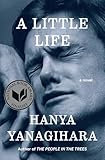
A Little Life vs The Secret History: Read First?
A Little Life and The Secret History are two intense literary novels of friendship and darkness. Here's how they differ and which to read first.
Two intense literary novels about close-knit friends and the darkness beneath their lives are frequently recommended together, and readers want to know how they compare: Donna Tartt’s The Secret History (1992) and Hanya Yanagihara’s A Little Life (2015). Both are immersive, beautifully written, and unafraid of devastation — but one is a propulsive dark academia mystery and the other a harrowing epic of trauma. Here is what separates them.
A Quick Side-by-Side
| The Secret History | A Little Life | |
|---|---|---|
| Author | Donna Tartt | Hanya Yanagihara |
| Published | 1992 | 2015 |
| Premise | A college clique and a murder | Four friends across decades in New York |
| Engine | Plot-driven dark academia | Character-driven trauma epic |
| Emotional weight | Tense and seductive | Devastating and relentless |
| Read first? | Yes | Second |
The Story of The Secret History
The Secret History opens by revealing a murder, then traces how a clique of brilliant, privileged Classics students at an elite Vermont college arrived there. Narrated by an outsider drawn into their charmed and dangerous circle, it is a study of beauty, elitism, and the moral corruption that follows when intellect convinces people they are above ordinary rules. Atmospheric, propulsive, and seductive, Tartt’s debut founded the dark academia genre and remains its defining text.
A Little Life in Brief
A Little Life follows four college friends — an actor, an artist, an architect, and a lawyer — as they build lives in New York, gradually centring on Jude, whose horrific past slowly emerges and casts a shadow over everything. Sprawling, immersive, and almost unbearably sad, Yanagihara’s novel is a character study of trauma, friendship, and the limits of love and recovery. It is one of the most divisive literary novels of recent years: readers find it either profound and cathartic or relentless and manipulative — but few are unmoved.
What Sets Them Apart
One key difference is plot versus character. The Secret History is propelled by a murder and its aftermath — there is a story pulling you forward. A Little Life has little conventional plot; it is an accumulation of life and suffering, immersing you in character rather than event. One grips; the other engulfs.
Another is emotional register. The Secret History is tense, ironic, and seductive, its darkness intellectual and atmospheric. A Little Life is overwhelming and raw, confronting abuse, self-harm, and grief without flinching. One unsettles; the other devastates.
A third is length and demand. The Secret History is long but propulsive and readable. A Little Life is a sprawling emotional marathon that asks far more of the reader’s stamina and heart. Your appetite for sustained sadness is the key factor.
Where to Begin
Read The Secret History first. It is the more accessible and controlled of the two — a gripping, seductive novel with a clear plot and a darkness you can hold at arm’s length. As the genre-defining classic, it is also simply the better entry point into this kind of intense literary fiction.
Read A Little Life second, when you know what you are signing up for. It is the more harrowing book by a wide margin, and coming to it with eyes open — aware of its content and its relentlessness — is the only way to read it well.
A Note on Content and Difficulty
It is essential to know that A Little Life contains graphic depictions of child abuse, self-harm, and trauma, and is one of the most emotionally punishing novels in contemporary fiction. It is not a book to enter lightly, and readers for whom those subjects are sensitive should weigh that carefully. The Secret History is dark but far less explicit, its violence more atmospheric than visceral. This difference is the single biggest reason to start with Tartt: it lets you acclimate to intense literary fiction before deciding whether you want the full emotional ordeal that A Little Life delivers.
Further Reading
Once you have read both, our books like The Secret History list and best dark academia books roundup point to more in Tartt’s vein, while our best contemporary literary fiction guide gathers more ambitious, emotionally serious novels like Yanagihara’s.
To put it simply, read The Secret History first for the seductive, propulsive dark academia classic, then A Little Life for the devastating epic of friendship and trauma — and you will have read two of the most powerful literary novels of their eras.
Frequently Asked Questions
Should I read A Little Life or The Secret History first?
Read The Secret History first. It is the more accessible and propulsive of the two, with a gripping plot and a manageable emotional weight, making it the better introduction to this kind of intense literary fiction. A Little Life is far more harrowing and emotionally demanding, so it rewards reading second, when you know what you are committing to.
Which is better, A Little Life or The Secret History?
Both are acclaimed and it depends on what you want. The Secret History is the more elegant and plot-driven — a dark academia murder story with seductive atmosphere. A Little Life is more emotionally overwhelming, a devastating epic of trauma and friendship that readers find either profound or punishing. The Secret History is the more controlled; A Little Life is the more shattering.
Are A Little Life and The Secret History similar?
They share an intense focus on a tight, intellectual group of friends, a literary register, and a willingness to go to very dark places, which is why fans of one often read the other. But they differ: The Secret History is a dark academia murder novel with a propulsive plot, while A Little Life is a sprawling, harrowing character study of trauma and male friendship across decades.