Hanya Yanagihara Books in Order: Complete Reading Guide
All Hanya Yanagihara books in publication order — The People in the Trees, A Little Life, and To Paradise. Where to start with one of the most discussed literary novelists of her generation.
Hanya Yanagihara has published three novels, each one large in scale and extreme in its subject matter. She is one of the most seriously discussed literary novelists of her generation — loved intensely by some readers, found excessive by others, and impossible to dismiss by anyone who has encountered her work.
Hanya Yanagihara Books in Publication Order
| # | Title | Year |
|---|---|---|
| 1 | The People in the Trees | 2013 |
| 2 | A Little Life | 2015 |
| 3 | To Paradise | 2022 |
1. The People in the Trees — 2013
Yanagihara’s debut — a Nobel Prize-winning scientist writes his memoir from prison, describing the 1950 expedition that discovered an apparently immortal jungle tribe. One of the most sophisticated unreliable narrators in recent literary fiction.
➡ Full review → | Buy on Amazon →
2. A Little Life — 2015
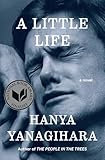
The essential Yanagihara. Four friends from a small New England college navigate their adult lives in New York over three decades — the novel focuses increasingly on Jude St. Francis, whose childhood was defined by trauma of almost incomprehensible severity. Finalist for the Booker Prize and the Pulitzer. One of the most discussed novels of the 2010s.
➡ Full review → | Buy on Amazon →
3. To Paradise — 2022
Three novellas set in the same New York apartment in 1893, 1993, and 2093 — connected by recurring names and the theme of what freedom means and what it costs. The dystopian 2093 section is among the most chilling fiction published this decade.
➡ Full review → | Buy on Amazon →
Where to Start with Hanya Yanagihara
For most readers: A Little Life is where most readers begin and is the correct choice — it is her defining work and the novel most likely to tell you whether Yanagihara is a writer you want to read.
For readers wanting a gentler introduction: The People in the Trees is no less morally complex but is structured as a literary thriller with a more conventional narrative arc than A Little Life’s sustained emotional accumulation.
After A Little Life: To Paradise rewards patience from readers who are already committed to Yanagihara. The 2093 dystopian section is extraordinary.
A Writer of Emotional Extremity
Hanya Yanagihara is a writer of profound emotional extremity, whose fiction, above all her acclaimed A Little Life, confronts the deepest reaches of human suffering, trauma, and endurance with an intensity and an unflinching honesty that have made her work both celebrated and demanding. Yanagihara’s fiction is distinguished by its willingness to confront the most extreme dimensions of human experience, the depths of suffering and trauma, the limits of endurance, and the darkest realities of human life, with an emotional intensity and an unflinching honesty that mark her work as exceptionally powerful and exceptionally demanding. Her celebrated A Little Life, in particular, confronts profound suffering and trauma with an unflinching intensity that has made it both deeply affecting and genuinely difficult, a novel of emotional extremity that confronts the darkest realities of human experience without flinching. This willingness to confront emotional extremity, to render the depths of suffering and trauma with unflinching intensity, is central to Yanagihara’s achievement and to the powerful, demanding character of her fiction. Her work does not offer easy consolation or shy from the darkest realities but confronts them directly, with an intensity that gives her fiction its power and its difficulty. For readers prepared for its emotional extremity, Yanagihara offers fiction of exceptional power, confronting the depths of suffering, trauma, and endurance with unflinching intensity. A writer of emotional extremity, Yanagihara confronts the deepest reaches of human suffering, trauma, and endurance with an intensity and an unflinching honesty that have made her work, above all A Little Life, both celebrated and demanding.
Friendship, Suffering, and Endurance
At the heart of Hanya Yanagihara’s most celebrated fiction lie the intertwined themes of friendship, suffering, and endurance, the bonds of love and friendship that sustain her characters and the profound suffering they must endure. Yanagihara’s fiction, particularly A Little Life, explores the deep bonds of friendship and love, the relationships that sustain her characters through profound suffering, and the question of endurance, of how human beings endure, or fail to endure, the deepest suffering and trauma. Her celebrated novel centers on a group of friends and on the profound suffering of one of them, exploring the power of friendship and love to sustain and the limits of their power in the face of trauma that may be beyond healing. The intertwined themes of friendship, suffering, and endurance give Yanagihara’s fiction its emotional depth and its devastating power, for she explores the bonds that sustain her characters alongside the profound suffering they must endure, and confronts the difficult question of whether love and friendship can heal the deepest wounds or whether some suffering is beyond their reach. This unflinching exploration of friendship, suffering, and endurance is central to the power and the difficulty of her fiction, which confronts the deepest realities of human suffering and the bonds that sustain, or fail to sustain, in its face. For readers, Yanagihara offers a profound and devastating exploration of friendship, suffering, and endurance, the bonds that sustain and the suffering that tests their limits. Friendship, suffering, and endurance are intertwined themes at the heart of Yanagihara’s most celebrated fiction, the bonds of love and friendship that sustain her characters and the profound suffering they must endure, explored with an unflinching intensity that gives her work its devastating power.
A Demanding and Polarizing Art
Hanya Yanagihara’s fiction is deliberately demanding and notably polarizing, dividing readers and critics through its emotional extremity and its unflinching confrontation with suffering, and an honest approach to her work requires an awareness of its demanding and divisive character. Yanagihara’s fiction, with its emotional extremity and its unflinching confrontation with the depths of suffering and trauma, is genuinely demanding, requiring of the reader a willingness to confront difficult and harrowing material, and it has proven notably polarizing, dividing readers and critics in their responses. Some readers and critics find her work profoundly powerful and affecting, praising its emotional intensity and its unflinching honesty, while others find its relentless confrontation with suffering excessive or its emotional extremity manipulative, and her fiction has provoked strong and divided responses. This demanding and polarizing character is an important feature of Yanagihara’s work, for her fiction is not for every reader, requiring a willingness to engage with harrowing and emotionally extreme material, and it has divided opinion through its intensity and its unflinching confrontation with suffering. An honest approach to her work requires an awareness of its demanding and divisive character, and readers are well served by understanding that her fiction is deliberately intense and harrowing, deeply affecting to some and excessive to others. For readers, an awareness of the demanding and polarizing character of Yanagihara’s fiction helps in approaching it, the emotional extremity and unflinching confrontation with suffering that divide readers and critics. A demanding and polarizing art marks Yanagihara’s fiction, which divides readers and critics through its emotional extremity and its unflinching confrontation with suffering, and an honest approach to her work requires an awareness of its demanding and divisive character.
A Note on Difficulty
Yanagihara’s novels are deliberately extreme. A Little Life in particular has provoked serious critical debate about whether the sustained depiction of suffering serves a literary purpose or constitutes a form of exploitation. Readers who find the debate interesting — rather than a reason to avoid the book — will find the novel itself a serious engagement with that question.
Affiliate disclosure: Links to Amazon on this page are affiliate links. We earn a small commission at no extra cost to you.
Frequently Asked Questions
What order should I read Hanya Yanagihara books in?
Publication order works well: The People in the Trees (2013), A Little Life (2015), To Paradise (2022). Many readers start with A Little Life — it is her most celebrated book — and then read the others. The People in the Trees is excellent preparation for A Little Life's moral complexity.
Is A Little Life as devastating as people say?
Yes. A Little Life is one of the most emotionally intense novels published in this century. It deals with severe childhood trauma and its lifelong consequences, and Yanagihara does not soften or resolve the suffering. Readers should approach it prepared for that.
Do Yanagihara's three novels connect to each other?
No. The three novels are entirely separate — different characters, different settings, different time periods. The connections are thematic: all three deal with the limits of love to repair damage, and all use extreme suffering as their central subject matter.