Best Books About Trauma and Survival: Fiction and Memoir
The best books about trauma and survival — from A Little Life and Beloved to The Body Keeps the Score and Shuggie Bain. Essential fiction and memoir.
By Lena Fischer
Trauma — the lasting effect of events that overwhelm the nervous system’s capacity to process them — is one of the most important subjects available to literature. The best books about trauma are those that take it seriously: that do not resolve it too quickly, that do not confuse survival with recovery, and that attend to the specific ways in which different kinds of trauma (childhood abuse, war, racial terror, addiction, bereavement) shape consciousness and identity.
The books listed here move between fiction and nonfiction, between the clinical and the literary, between collective historical trauma and individual suffering. What they share is the refusal to look away.
The Essential List
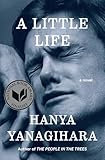
A Little Life — Hanya Yanagihara (2015)
The most sustained fictional engagement with childhood trauma and its lifelong consequences. Jude St. Francis — brilliant, successful, beloved — carries a history of abuse and exploitation that Yanagihara reveals slowly and in extraordinary detail. The novel is deliberately difficult: the abuse is explicit, cumulative, and does not stop, because that is how trauma works. Nothing else in recent literary fiction takes the subject as seriously or treats its subject with greater formal commitment. Not for every reader, and Yanagihara knows it; but for readers who can engage with it, it is unforgettable.
Beloved — Toni Morrison (1987)
Morrison’s account of slavery’s aftermath through a ghost story is the most literarily serious engagement with collective historical trauma available in American fiction. Sethe killed her infant daughter rather than let her be returned to slavery; the ghost of that daughter haunts her house and her life. Morrison’s prose — fragmented, non-linear, deliberately resistant to easy reading — enacts the way trauma disrupts narrative coherence and the sense of time. Won the Pulitzer Prize; widely considered the greatest American novel of the second half of the twentieth century.
Shuggie Bain — Douglas Stuart (2020)
Stuart’s debut is a portrait of addiction and its devastation, and of the specific trauma of watching a parent be destroyed by alcohol while loving them absolutely. Shuggie’s devotion to Agnes — who is beautiful, charming, funny, and incapable of sobriety — is the novel’s emotional centre; the novel refuses to sentimentalise either Agnes’s destruction or Shuggie’s suffering. Set in 1980s Glasgow, it is also a portrait of deindustrialisation and the communities it destroyed. Won the Booker Prize.
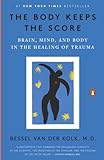
The Body Keeps the Score — Bessel van der Kolk (2014)
The essential nonfiction account of trauma. Van der Kolk’s central insight — that trauma is stored in the body and the nervous system rather than merely in narrative memory, and that effective treatment must address the body as well as the mind — has transformed clinical understanding of PTSD. The book covers the history of trauma research, the biology of the stress response, and the case for somatic therapies including EMDR, yoga, and neurofeedback. The most influential mental health book of the past decade.
The Lovely Bones — Alice Sebold (2002)
Sebold’s debut follows Susie Salmon, a fourteen-year-old girl who is raped and murdered and watches from heaven as her family, friends, and murderer navigate the aftermath. The novel is about grief as much as trauma — about the different ways people survive bereavement — and about the specific kind of harm that violent death does to the communities it leaves behind. One of the bestselling literary novels of the early twenty-first century, it remains distinctive for its narrator’s perspective and its refusal to sentimentalise grief.
Know My Name — Chanel Miller (2019)
Miller — known as Emily Doe during the trial of Brock Turner — wrote this memoir after Turner’s assault of her on the Stanford campus and the subsequent media coverage. The book is the definitive account of institutional betrayal: how the legal system, the university, and the media can compound the harm done to assault survivors rather than provide justice. Miller’s writing is precise and furious; the book is both a personal account of trauma and a structural critique of how institutions respond to it.
Speak — Laurie Halse Anderson (1999)
Anderson’s YA novel follows Melinda, a high school freshman who is ostracised by her peers after calling the police at a summer party — a call she made because she was raped there, though she cannot bring herself to say so. The novel traces Melinda’s year-long silence and the particular suffering of sexual assault trauma when the survivor lacks the language or safety to disclose what happened. One of the most important YA novels about assault and its aftermath; it has been challenged and banned repeatedly, which is itself a commentary on the discomfort its subject produces.
The Lasting Imprint of Trauma
The literature of trauma illuminates a profound and often misunderstood truth: that traumatic experience leaves a lasting imprint on those who endure it, shaping their lives, their minds, and their very being long after the traumatic event itself has passed — and understanding this lasting imprint is essential to understanding the experience of trauma and the long process of recovery. Trauma is not merely a painful event that, once over, is left behind; it is an experience that imprints itself deeply on those who endure it, continuing to shape their lives, their psychology, and their sense of themselves long after the event has passed. The literature of trauma explores this lasting imprint with insight and power, illuminating the ways that traumatic experience continues to affect those who have endured it: the intrusive memories and recurring nightmares, the heightened states of fear and vigilance, the emotional numbness or overwhelming distress, the difficulty of trust and connection, and the profound alteration of one’s sense of self and the world. This lasting imprint of trauma reflects the deep impact of traumatic experience on the human mind and being, the way that trauma can fundamentally alter a person, leaving marks that endure long after the traumatic event and that shape the entire subsequent course of a life. The literature of trauma bears witness to this lasting imprint, illuminating the deep and enduring effects of traumatic experience and the long shadow that trauma casts over the lives of those who have endured it. Understanding this lasting imprint is essential to understanding trauma, for it reveals that trauma is not a passing event but an enduring presence, continuing to shape the lives and minds of survivors long after the traumatic experience itself, and it is essential, too, to understanding the long and difficult process of recovery, which must contend with the deep and lasting imprint that trauma leaves. The literature’s exploration of the lasting imprint of trauma is among its most important contributions, illuminating the deep and enduring impact of traumatic experience on the human mind and being.
The Long Road to Healing
While the literature of trauma bears witness to the lasting imprint of traumatic experience, it also explores the possibility and the process of healing — the long, difficult, but real journey toward recovery, and the ways that survivors can, over time, reckon with their trauma and reclaim their lives — and this exploration of healing offers hope alongside its unflinching depiction of trauma’s impact. The literature of trauma does not merely document suffering; it also explores the path toward recovery, the long and arduous journey by which survivors can come to terms with their trauma and reclaim their lives. This journey is depicted with honesty, refusing easy or sentimental notions of recovery in favor of a truthful portrayal of the difficult, often non-linear, and rarely complete process of healing from trauma. The literature illuminates the various dimensions of this healing journey: the importance of bearing witness and giving voice to one’s trauma, of breaking the silence and isolation that trauma imposes; the role of connection and support, of being met with understanding and compassion by others; the long work of integrating the traumatic experience, of coming to terms with what has happened and reclaiming a sense of self and meaning; and the possibility, hard-won and never guaranteed, of moving forward, of building a life that contains the trauma without being wholly defined by it. This exploration of the healing journey offers hope alongside the literature’s unflinching depiction of trauma’s impact, for it reveals that recovery, however difficult and incomplete, is possible, and that survivors can, over time and with support, reckon with their trauma and reclaim their lives. The literature’s honest depiction of the long road to healing is among its most valuable contributions, offering to survivors the hope of recovery and the recognition of the difficulty of the journey, and illuminating the real but arduous path by which those who have endured trauma can come to terms with their experience and reclaim their lives.
Bearing Witness and the Power of Telling
A profound theme that runs through the literature of trauma is the power and the necessity of bearing witness — of giving voice to traumatic experience, of telling the story of what happened, and of the way that this act of telling can itself be a source of healing, both for the survivor and for the larger human community that must reckon with the realities of trauma. Trauma imposes silence, for traumatic experience is often difficult or impossible to speak of, overwhelming the capacity for language and isolating the survivor in an experience that cannot be shared, and this silence compounds the suffering of trauma, deepening the isolation and preventing the reckoning that healing requires. The literature of trauma confronts this silence, insisting on the power and necessity of bearing witness, of finding the words for the unspeakable and telling the story of what happened. This act of telling has profound value, both for the survivor and for the larger community. For the survivor, the act of giving voice to trauma can be a source of healing, breaking the silence and isolation that trauma imposes, integrating the traumatic experience into a narrative that can be shared and understood, and reclaiming a sense of agency and meaning in the face of an experience that overwhelmed and silenced. For the larger community, the witness borne by survivors is essential, documenting the realities of trauma, ensuring that what happened is acknowledged and remembered rather than denied or forgotten, and fostering the understanding and the response that the realities of trauma demand. The literature of trauma is itself an act of bearing witness, giving voice to traumatic experience and insisting on the power and necessity of telling, and it explores, within its pages, the healing and the importance of bearing witness for survivors and for the community alike. This theme of bearing witness and the power of telling is among the deepest in the literature of trauma, illuminating the necessity of breaking the silence that trauma imposes, the healing that can come from giving voice to traumatic experience, and the importance, for survivors and for the larger human community, of bearing witness to the realities of trauma.
Why These Books
The best books about trauma serve as witnesses — they record what it is to survive something that should not have happened and to carry that survival forward into a life. They refuse the consolation of resolution (trauma does not resolve; it becomes part of the person who experienced it) and the simplification of pity (survivors are not only their suffering). What they offer instead is recognition: the sense that the experience has been seen and taken seriously, which is the beginning of what the clinical literature calls ‘integration’ and what literature has always called understanding.
Frequently Asked Questions
What is the best book about trauma to start with?
The Body Keeps the Score (2014) by Bessel van der Kolk is the best nonfiction starting point — a comprehensive account of how trauma is stored in the body and nervous system, and what therapeutic approaches work to release it. A Little Life (2015) by Hanya Yanagihara is the most sustained fictional account of childhood trauma and its lifelong consequences, though it is deliberately and extremely difficult to read. Beloved (1987) by Toni Morrison is the most literarily serious engagement with collective historical trauma and its transmission across generations.
What is A Little Life about?
A Little Life (2015) by Hanya Yanagihara follows four friends from college — Willem, JB, Malcolm, and Jude — into their adult lives in New York, but the novel's centre is Jude St. Francis, a lawyer whose childhood of extreme abuse and exploitation is revealed gradually across the novel's 700+ pages. The book is the most sustained fictional account of the long-term consequences of childhood trauma available: how it shapes the capacity for intimacy, self-worth, and the relationship to one's own body. It is deliberately difficult to read — the abuse is explicit and cumulative — but nothing else in recent literary fiction takes trauma as seriously.
What is Shuggie Bain about?
Shuggie Bain (2020) by Douglas Stuart follows Hugh 'Shuggie' Bain, a sensitive, gay boy growing up in 1980s Glasgow, and his relationship with his alcoholic mother Agnes. The novel is simultaneously a portrait of addiction and its devastation, an account of growing up queer in a hostile environment, and a love story between a child and a parent who is incapable of being what he needs. Won the Booker Prize. Stuart based the novel on his own childhood; the autobiographical source intensifies both its specificity and its emotional weight.
How do fiction books about trauma help readers?
Fiction about trauma serves several purposes that nonfiction cannot. It provides distance — the ability to approach experiences that might be overwhelming in direct form — while also offering proximity, the sense of inhabiting another consciousness from the inside. It can show not just what happened but what it felt like from inside, including the ways in which trauma distorts perception, memory, and the sense of self. The best trauma fiction (Beloved, A Little Life, Speak) also refuses the consolation of resolution — it acknowledges that survival does not mean being unmarked, that trauma changes the person who survives it, and that that change is permanent.