Best Books About Memory and the Past: Essential Fiction and Memoir
The best books about memory and the past — from The Remains of the Day and Beloved to Atonement and The Sense of an Ending. Essential fiction and memoir.

Memory is not a record but a construction — a story we tell ourselves about what happened, shaped by who we need to be now and what we need to have been then. The best fiction about memory understands this: it is concerned not merely with what characters remember but with what they choose to remember, what they need to forget, and what the past does to the present when it refuses to stay buried.
The Essential List
The Remains of the Day — Kazuo Ishiguro (1989)
The most formally perfect novel about memory and self-deception. Stevens, a retired English butler who has devoted his life to the service of Darlington Hall, drives through the English countryside reviewing the choices — professional and personal — that have shaped his life. The novel’s central subject is not what Stevens remembers but what he refuses to remember: his emotional life, his loyalty to a pro-Nazi employer, the woman he loved and dismissed. Ishiguro’s achievement is that Stevens’s elaborate professional self-construction — the professional ‘dignity’ he has maintained at the cost of everything personal — collapses in the novel’s final pages, and the reader understands simultaneously why he built it and what it has cost him.
Beloved — Toni Morrison (1987)
The most psychologically raw account of memory’s relationship to trauma in American literature. Sethe’s murder of her infant daughter rather than allow her return to slavery — and the daughter’s return as a ghost, and then as a physical presence — is Morrison’s account of the way that extreme trauma cannot be assimilated into normal memory: it returns, unbidden, as physical sensation, hallucination, and finally embodiment. The novel is set in post-Civil War Cincinnati but its subject is universal: how the past that cannot be survived intact continues to inhabit the present, and what it costs to drive it out. Morrison’s most demanding novel; also her greatest.
Atonement — Ian McEwan (2001)
McEwan’s meditation on memory, fiction, and the relationship between what actually happened and what we remember. Briony Tallis’s false accusation — which destroys Cecilia and Robbie’s love affair and sends Robbie to prison and then war — is presented initially from her perspective, and the novel’s gradual revelation of what she misunderstood and misrepresented is both a love story and a study in the unreliability of witness. The novel’s final section reveals that the ‘happy ending’ we have been given is a fiction — Briony’s attempt to give her sister and Robbie the happy ending that the war denied them. Memory, guilt, and the consolations and limits of fiction are the novel’s central concerns.
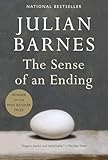
The Sense of an Ending — Julian Barnes (2011)
The most economical novel about unreliable memory. Tony Webster, reviewing his adolescence after receiving an unexpected bequest, discovers that his memories — carefully maintained as evidence of his own passivity and innocence — do not match the documentary evidence. The novel argues that memory is not merely imperfect but strategically unreliable: we remember what we need to remember to maintain the self-image we have constructed. Barnes’s achievement at 160 pages is to make the revision of Tony’s self-understanding feel as consequential as the revision of a full novel’s worth of character.
The Buried Giant — Kazuo Ishiguro (2015)
Ishiguro’s most explicitly allegorical novel. Post-Arthurian Britain is covered by a mist that causes communal forgetting; an elderly British couple travels through this landscape while the mist slowly lifts. The novel asks whether there are things too destructive to remember — whether communities maintain peace through collective amnesia — and whether the love that Axl and Beatrice have for each other can survive the return of memories they have suppressed. The least realistic of Ishiguro’s novels but the most ambitious in its meditation on the politics of memory.
The Year of Magical Thinking — Joan Didion (2005)
The most important memoir about grief and memory in recent American literature. Didion’s account of the year following her husband John Gregory Dunne’s sudden death — and of her simultaneous attempts to care for her critically ill daughter Quintana — is structured as an analysis of the irrational thinking that grief produces: the conviction that if she does everything correctly, John will return; the refusal to give away his shoes (because he will need them). Didion’s prose is precise and controlled; the control is itself part of the subject — the effort to think clearly about an experience that defeats clarity.
Speak, Memory — Vladimir Nabokov (1951, rev. 1966)
The most literarily ambitious memoir in the English language. Nabokov’s reconstruction of his Russian childhood, his family’s flight from the Revolution, and his decades as a European émigré treats memory itself as the subject: how the present consciousness recovers and shapes the past, what is lost in the recovery, and what is created. The prose is among the most beautiful in twentieth-century English — Nabokov’s third language — and the account of his father, his butterfly-hunting, and his early loves has a completeness that most novelists cannot achieve in fiction.
Memory as Theme
What unites these works is their understanding that the relationship between past and present is not passive but active — that we do not simply remember but reconstruct, and that the reconstructions serve the needs of the present rather than recording the facts of the past. The most honest fiction about memory — Ishiguro, Morrison, Barnes — makes this process visible, showing us characters who discover the difference between what happened and what they believed happened, and showing us the cost of the revision.
Frequently Asked Questions
What is the best novel about memory?
The Remains of the Day (1989) by Kazuo Ishiguro is the most formally perfect novel about memory — Stevens, an English butler, drives through the countryside reviewing the choices that have made his life what it is. The novel is structured entirely as reminiscence; its central subject is not what Stevens remembers but what he refuses to remember, the self-deceptions through which he has constructed a professional identity that excluded everything personal. Beloved (1987) by Toni Morrison is the most psychologically raw account of memory's relationship to trauma — the past that cannot be assimilated returns as a ghost.
What is The Sense of an Ending about?
The Sense of an Ending (2011) by Julian Barnes follows Tony Webster, a retired man who receives an unexpected bequest from the mother of a former girlfriend — and who, investigating this mystery, discovers that his memory of his early life has been systematically unreliable. The novel's central argument is that we construct our memories to serve our sense of ourselves rather than to record what actually happened; Tony's carefully maintained self-image as a 'bystander' rather than an agent in his own story is progressively dismantled. Won the Booker Prize; at 160 pages, it achieves the emotional weight of a much longer novel.
What is The Buried Giant about?
The Buried Giant (2015) by Kazuo Ishiguro is set in post-Arthurian Britain, where a mysterious mist has caused everyone to forget the past — including a massacre that occurred when King Arthur united the Saxon and British peoples. An elderly couple, Axl and Beatrice, travel across this landscape seeking their son, while the mist gradually lifts and the forgotten past begins to return. The novel is Ishiguro's most explicit meditation on collective memory and forgetting — whether there are things too terrible to remember, and whether a community can maintain peace only by not knowing its own history.
What is Speak, Memory about?
Speak, Memory (1951, revised 1966) by Vladimir Nabokov is the most literarily accomplished memoir in the English language — an autobiographical account of Nabokov's privileged Russian childhood, his family's flight from the Revolution, his years as an émigré in Europe, and his eventual arrival in America. Unlike most memoirs, it is structured thematically rather than chronologically: each chapter focuses on a specific theme (his governess, his father, butterflies, his first loves) and treats memory itself as the subject — how the past is recovered, transformed, and given meaning by the present consciousness that reconstructs it.