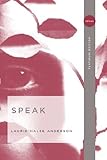
Editors Reads Verdict
Anderson's debut novel is a landmark of YA literature — a first-person account of rape and its aftermath so honest it has been banned repeatedly, and so needed that it has helped countless readers name their own experiences.
What We Loved
- Melinda's voice is one of YA literature's most authentic and memorable
- The fragmented, dissociative narrative style mirrors trauma with brilliant precision
- Art as therapy is rendered with genuine understanding
- A book that has helped countless assault survivors name and process their experiences
Minor Drawbacks
- The subject matter is genuinely difficult, especially for young readers
- Some characters outside Melinda are underdeveloped
- The resolution, while earned, arrives quickly
Key Takeaways
- → Trauma can make speech itself feel impossible and dangerous
- → The social consequences of assault are often worse than the legal system's response
- → Art and creative expression can be pathways to healing that words alone cannot provide
- → Adults who fail to listen to adolescents fail them completely
- → Speaking the truth, however late, is itself an act of healing
| Author | Laurie Halse Anderson |
|---|---|
| Publisher | Farrar, Straus and Giroux |
| Pages | 198 |
| Published | October 1, 1999 |
| Language | English |
| Genre | Young Adult, Contemporary Fiction |
| Difficulty | Beginner |
| Best For | YA readers; survivors of sexual assault; educators and counselors. |
How Speak Compares
Speak at a glance against 3 similar books readers weigh alongside it.
| Book | Author | Rating | Best for |
|---|---|---|---|
| Speak (this book) | Laurie Halse Anderson | ★ 4.3 | YA readers |
| All the Bright Places | Jennifer Niven | ★ 4.2 | YA readers |
| The Hate U Give | Angie Thomas | ★ 4.5 | YA readers and adults seeking authentic engagement with racialized police |
| The Perks of Being a Wallflower | Stephen Chbosky | ★ 4.3 | YA readers and adults revisiting the book that many remember as the one that |
The Girl Who Stopped Speaking
Melinda Sordino starts ninth grade with no friends. She had friends the previous summer, and then she called the police at a party, and now everyone hates her — for reasons she cannot explain, because to explain them would require speaking about something she has not yet found words for. Anderson renders Melinda’s first year of high school in short, fragmented chapters that capture the dissociation of trauma: she observes herself from outside, she retreats into an abandoned supply closet that becomes her sanctuary, she stops speaking in public because speech itself feels compromised.
The Fragmented Voice
Anderson’s great formal achievement is Melinda’s narrative voice — ironic, observational, occasionally darkly funny, and shot through with grief that Melinda herself cannot always access. The wit is a defense mechanism, the dark comedy a way of processing experiences that cannot be processed directly. This voice made the novel revolutionary when it was published in 1999, and it remains one of YA literature’s finest narrative achievements. Readers recognize Melinda not because she speaks for everyone but because she speaks so specifically that her particular truth becomes general.
Art and Survival
Throughout the novel, Melinda takes art class and struggles with a yearlong project on trees. The trees become her medium for processing what she cannot speak — dead in winter, resistant to growth, slowly finding their way toward something living. Anderson handles the art-as-therapy motif with genuine subtlety, never making it a simple solution but showing how creative expression can create a container for experiences that otherwise have no shape.
A Book That Saves Lives
“Speak” has been challenged and banned repeatedly by parents and school boards who believe it is inappropriate for young readers. Anderson has responded consistently: the inappropriate thing is the assault, not the honest account of surviving it. The novel has generated an enormous correspondence from readers who found in Melinda’s story language for their own experiences, who were able to seek help because the book gave them a way to name what happened. This is what literature at its most necessary looks like.
The Power of Withholding
The novel’s central formal device is its refusal to name the trauma directly until late, and this withholding is the source of its power. Melinda cannot say what happened to her — the assault at the summer party that made her call the police and lose all her friends — and Anderson keeps the reader inside that inability, communicating through silence, evasion, and the body’s reactions rather than statement. The slow approach toward speech mirrors the real process of trauma recovery, in which finding language for an unspeakable experience is itself the work of healing. When Melinda finally articulates what happened, both to herself and to others, the moment lands with enormous force precisely because the entire book has been a held breath. The title is the whole argument: the path out of trauma runs through the recovery of voice.
The Adults Who Fail and the One Who Helps
Part of Speak’s honesty is its unsparing portrait of the institutions that should protect Melinda and don’t. Her parents are distracted and uncomprehending; her teachers are mostly oblivious or actively hostile; the school’s social machinery punishes her for an act it never bothers to understand. Against this backdrop, the art teacher Mr. Freeman becomes the novel’s one functioning adult — not because he solves Melinda’s problem but because he offers her a space, through the yearlong tree project, to externalize what she cannot say. Anderson is careful not to make him a savior; the work of recovery remains Melinda’s. But the contrast between the adults who fail to see and the one who creates room for expression is a quietly devastating commentary on how easily a community can abandon a child in crisis.
A Cultural Landmark
Published in 1999, Speak became one of the most important young-adult novels of its generation, a National Book Award finalist that helped redefine what YA fiction could address. It anticipated, by nearly two decades, the cultural reckoning of the #MeToo movement, giving a generation of young readers language for experiences that adult institutions preferred to keep unspoken. A 2011 film adaptation starring Kristen Stewart and a later graphic-novel version extended its reach, and Anderson has spoken to countless students about it over the years. Its influence on the subsequent wave of issue-driven, emotionally honest YA fiction is hard to overstate; it proved that the form could carry the heaviest possible subject matter with seriousness and craft.
Why It Still Matters
Speak has been repeatedly challenged and banned by school boards and parents who deem its subject matter inappropriate for young readers — an irony Anderson has met head-on, insisting that what is inappropriate is the assault, not the honest account of surviving it. The book’s enduring value lies in its refusal to look away and its faith that naming a thing is the beginning of surviving it. Generations of readers have written to Anderson to say that Melinda’s story gave them the words for their own, or the courage to seek help, or simply the knowledge that they were not alone. That is literature performing its most necessary function, and it is why Speak remains as urgent now as on the day it was published.
Our rating: 4.3/5 — A landmark of YA literature — brave, formally innovative, and genuinely necessary, a book that has helped countless readers find their own voice.
Reading Guides
Frequently Asked Questions
What is "Speak" about?
Melinda Sordino begins ninth grade as a social pariah after calling the police at an end-of-summer party — haunted by a secret she cannot speak about and slowly losing her ability to function.
Who should read "Speak"?
YA readers; survivors of sexual assault; educators and counselors.
What are the key takeaways from "Speak"?
Trauma can make speech itself feel impossible and dangerous The social consequences of assault are often worse than the legal system's response Art and creative expression can be pathways to healing that words alone cannot provide Adults who fail to listen to adolescents fail them completely Speaking the truth, however late, is itself an act of healing
Is "Speak" worth reading?
Anderson's debut novel is a landmark of YA literature — a first-person account of rape and its aftermath so honest it has been banned repeatedly, and so needed that it has helped countless readers name their own experiences.
Ready to Read Speak?
Check the current price on Amazon.
Check Price on Amazon (paid link)Prices and availability are subject to change. See Amazon for current price.
Review last updated: