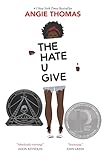
Editors Reads Verdict
Thomas's debut is one of the most important YA novels of the twenty-first century — its immediate emotional authenticity, Starr's fully realized voice, and its refusal to simplify the aftermath of racialized police violence make it essential reading for all ages.
What We Loved
- Starr's voice is one of YA fiction's finest — funny, specific, and utterly convincing
- The dual-world structure captures the specific experience of code-switching with precision
- The novel doesn't simplify the aftermath — it follows the full institutional and personal process
- The family dynamics, particularly with Maverick, are warmly and fully rendered
Minor Drawbacks
- Some secondary characters are drawn as types rather than fully complex individuals
- The resolution gestures toward hopefulness that the political reality may not fully support
- The length is occasionally stretched by subplot
Key Takeaways
- → Code-switching — presenting differently in different social contexts — has real psychological costs
- → Witnessing requires both the willingness to see and the courage to testify
- → Institutional systems (grand juries, media narratives) can produce injustice without individual malice
- → Community solidarity and individual courage are both necessary — neither alone is sufficient
- → The dead do not have voices; the living who witnessed their deaths do
| Author | Angie Thomas |
|---|---|
| Publisher | Balzer + Bray |
| Pages | 444 |
| Published | February 28, 2017 |
| Language | English |
| Genre | Young Adult, Contemporary Fiction |
| Difficulty | Beginner |
| Best For | YA readers and adults seeking authentic engagement with racialized police violence, code-switching, and what speaking truth to power costs the speaker. |
How The Hate U Give Compares
The Hate U Give at a glance against 3 similar books readers weigh alongside it.
| Book | Author | Rating | Best for |
|---|---|---|---|
| The Hate U Give (this book) | Angie Thomas | ★ 4.5 | YA readers and adults seeking authentic engagement with racialized police |
| American Street | Ibi Zoboi | ★ 4.1 | Young adult readers drawn to lyrical, culturally rich fiction about |
| Between the World and Me | Ta-Nehisi Coates | ★ 4.5 | Readers who want to understand anti-Black racism in America through literary |
| Children of Blood and Bone | Tomi Adeyemi | ★ 4.1 | YA fantasy readers seeking diverse worlds and culturally specific mythology, |
Two Worlds, One Person
Starr Carter has learned to be two people: Starr at Williamson Prep, her predominantly white private school, where she code-switches into someone her classmates are comfortable with, and Starr in Garden Heights, her Black neighborhood, where she is simply herself. The gap between these two versions has always been manageable. Then she watches her childhood friend Khalil get shot by a police officer, and nothing is manageable anymore.
Angie Thomas wrote The Hate U Give in the wake of Oscar Grant’s death and in the ongoing context of Trayvon Martin, Michael Brown, and the #BlackLivesMatter movement that emerged from their killings. The title comes from Tupac Shakur’s THUG LIFE acronym — “The Hate U Give Little Infants F**ks Everybody” — and the novel’s argument is embedded in that phrase: the specific violence done to Black communities is not contained within those communities but ripples outward in ways that affect everyone.
Starr’s Voice
Thomas’s greatest achievement is Starr’s first-person narration, which is among the finest in contemporary YA fiction. She is funny — genuinely funny, not performed-quirky — and her observations about the specific social performances her dual life requires are precise in the way that only the experience of living them can produce.
The humor provides necessary relief and makes the devastating sequences more devastating. We know Starr well enough by the time Khalil is shot that the shock is not just narrative but personal.
The Institutional Reality
The Hate U Give is unusual in following the full process: the shooting, the initial investigation, the grand jury deliberations, the verdict, and the aftermath. Most fictional treatments of police violence cut away before the institutional mechanics become painful. Thomas shows them in detail, which is both more accurate and more devastating.
The grand jury sequence is handled with particular care: Thomas shows how the system produces results that feel unjust without requiring individuals to be straightforwardly evil.
A Necessary Book
The novel was banned or challenged in multiple school districts — which is, by now, a reliable indicator that it is addressing something real and important about the communities in question. Its continued presence in classrooms across the country is a testament to teachers and librarians who understood that the discomfort it produces in some readers is precisely the point.
Our rating: 4.5/5 — One of the most important YA novels of this century, with a protagonist whose voice is as funny and specific as it is brave, and a willingness to follow racialized injustice through the full institutional process.
A Voice From the Center of the Storm
Angie Thomas’s The Hate U Give became a landmark of contemporary young-adult fiction by placing a teenage Black girl at the center of one of the most urgent issues of its time. Its narrator, Starr Carter, lives between two worlds — the poor, predominantly Black neighborhood where she grew up and the affluent, mostly white prep school she attends — and that double life is shattered when she witnesses a white police officer shoot and kill her unarmed childhood friend during a traffic stop. The novel follows Starr as she navigates grief, fear, and the agonizing decision of whether and how to speak out.
Identity, Code-Switching, and Belonging
One of the book’s great strengths is its honest portrayal of the pressures Starr faces in moving between her two communities. Thomas captures the constant code-switching, the exhausting calibration of how to speak and act in each setting, and the painful sense of never fully belonging to either. Starr’s struggle to reconcile these selves, and to find the courage to bring her full voice into the open, gives the novel its emotional core and makes it resonate far beyond the specifics of its plot.
Confronting Injustice Without Losing Humanity
The Hate U Give engages directly with police violence, systemic racism, and the activism that has risen in response, and it does so with real seriousness. Yet it never becomes a mere polemic, because Thomas grounds the larger issues in fully realized characters and relationships. Starr’s loving, complicated family, her friendships, her first romance, and the rhythms of her community are rendered with warmth and specificity, so that the reader experiences the injustice not as an abstraction but as something happening to people they have come to care about deeply.
Honest About Hard Things
The novel handles its difficult subject with both unflinching honesty and genuine sensitivity, appropriate to its young audience without condescending to it. It refuses easy answers, acknowledging the fear, anger, and moral complexity that surround its central tragedy, and it portrays the toll such events take on a family and a community. At the same time it is hopeful, insisting on the power of finding one’s voice and standing up for the truth, and that balance of gravity and hope is part of why it connected with so many readers.
Why It Matters
The Hate U Give was a cultural phenomenon, a long-running bestseller that brought urgent contemporary questions about race and justice to an enormous readership of young people and adults alike. It matters because it tells a timely, important story through a vivid and lovable narrator, because it humanizes issues too often reduced to headlines, and because it affirms the worth and the voice of readers who rarely saw themselves at the center of a major novel. Powerful, accessible, and deeply humane, it stands as one of the defining young-adult books of its generation and a moving call to speak even when speaking is hard.
Reading Guides
Frequently Asked Questions
What is "The Hate U Give" about?
Sixteen-year-old Starr Carter witnesses the police shooting of her childhood friend Khalil — and must navigate the collision between her Black neighborhood and her predominantly white private school as she decides whether to speak up.
Who should read "The Hate U Give"?
YA readers and adults seeking authentic engagement with racialized police violence, code-switching, and what speaking truth to power costs the speaker.
What are the key takeaways from "The Hate U Give"?
Code-switching — presenting differently in different social contexts — has real psychological costs Witnessing requires both the willingness to see and the courage to testify Institutional systems (grand juries, media narratives) can produce injustice without individual malice Community solidarity and individual courage are both necessary — neither alone is sufficient The dead do not have voices; the living who witnessed their deaths do
Is "The Hate U Give" worth reading?
Thomas's debut is one of the most important YA novels of the twenty-first century — its immediate emotional authenticity, Starr's fully realized voice, and its refusal to simplify the aftermath of racialized police violence make it essential reading for all ages.
Ready to Read The Hate U Give?
Check the current price on Amazon.
Check Price on Amazon (paid link)Prices and availability are subject to change. See Amazon for current price.
Review last updated: