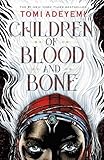
Editors Reads Verdict
Tomi Adeyemi's debut is a vibrant, emotionally charged YA fantasy rooted in West African mythology and fueled by urgent contemporary resonance — its exploration of state violence and marginalized identity gives the familiar hero's journey real weight.
What We Loved
- West African mythology and Yoruba-inspired worldbuilding are richly realized
- Political allegory about racial violence lands with genuine power
- Multiple POV characters prevent the narrative from feeling one-dimensional
- Adeyemi's prose has genuine lyrical ambition
Minor Drawbacks
- Hero's journey structure is conventional despite the original setting
- Some character motivations strain credulity in the middle section
- Pacing stumbles in the second act before rallying for the finale
Key Takeaways
- → Mythology rooted in specific cultural tradition creates richer worldbuilding
- → Political allegory is most effective when embedded in character motivation
- → Fantasy can carry the weight of real-world injustice without becoming didactic
- → The cost of power shapes the moral landscape of any story
- → Resistance against systemic oppression requires community, not just heroism
| Author | Tomi Adeyemi |
|---|---|
| Publisher | Henry Holt and Co. |
| Pages | 544 |
| Published | March 6, 2018 |
| Language | English |
| Genre | Fantasy, Young Adult |
| Difficulty | Beginner |
| Best For | YA fantasy readers seeking diverse worlds and culturally specific mythology, alongside readers interested in fantasy that engages seriously with social justice themes. |
How Children of Blood and Bone Compares
Children of Blood and Bone at a glance against 3 similar books readers weigh alongside it.
| Book | Author | Rating | Best for |
|---|---|---|---|
| Children of Blood and Bone (this book) | Tomi Adeyemi | ★ 4.1 | YA fantasy readers seeking diverse worlds and culturally specific mythology, |
| A Court of Thorns and Roses | Sarah J. Maas | ★ 4.2 | Fantasy romance readers who enjoy fae mythology, slow-burn romance, and |
| Six of Crows | Leigh Bardugo | ★ 4.7 | Fantasy readers who enjoy morally complex anti-heroes, ensemble casts, |
| The Hunger Games | Suzanne Collins | ★ 4.5 | Young adult and adult readers who want dystopian fiction with genuine political |
Magic as Political Act
In the kingdom of Orisha, King Saran has systematically exterminated the maji — those who could once channel the divine magic called ashe — and reduced their descendants, the Divíners, to second-class subjects. Zélie Adeyemi (no relation to the author) remembers her mother being killed for the crime of having white hair. When she stumbles into a chance to restore magic to Orisha, the quest becomes not just personal but political.
Tomi Adeyemi’s debut arrived in 2018 with extraordinary fanfare — a seven-figure deal, film rights optioned before publication — and much of it was justified. Children of Blood and Bone is a confident, ambitious YA fantasy built on West African mythology that had never been given this platform before.
The Weight of Representation
The book’s most significant achievement isn’t its magic system or its action sequences — though both are well-crafted — but its emotional honesty about what it feels like to exist in a body the state has marked for elimination. Adeyemi was explicit in interviews about writing in the immediate aftermath of the deaths of Trayvon Martin, Tamir Rice, and others; that context is visible on every page. The Divíners’ experience of systematic dehumanization has a specificity and anger that gives the fantasy trappings genuine stakes.
The three-POV structure — Zélie, her brother Tzain, and Princess Amari — allows Adeyemi to show the same oppressive system from inside and outside its architecture. Amari’s trajectory from sheltered royal to active rebel is particularly well-executed.
Where Convention Asserts Itself
The book’s weaknesses are mostly structural: the hero’s journey skeleton is conventional enough that readers who’ve consumed a lot of YA fantasy will feel they know where the plot is going. The middle section loses momentum, and a few character decisions feel engineered for plot convenience rather than organic motivation.
The climax, however, recovers fully — delivering emotional catharsis and world-stakes that set up the sequel with genuine urgency.
A Necessary Voice
Children of Blood and Bone matters not just as a story but as an event in publishing. It demonstrated that African mythology could anchor a mainstream fantasy franchise and that YA readers were hungry for protagonists who weren’t defaulting to European cultural templates.
West African Mythology on a Major Stage
The foundation of Children of Blood and Bone is its grounding in Yoruba cosmology, and this is its most significant contribution. Adeyemi builds her magic system around the Orïsha — the deities of Yoruba religion — and the maji who once channeled their power, drawing on names, concepts, and a spiritual framework that mainstream Western fantasy had almost entirely ignored. The land of Orïsha, its dark-skinned heroes, its gods and rituals, offered a generation of readers a epic fantasy whose default cultural template was African rather than medieval-European. For many Black readers in particular, the novel delivered the rare experience of seeing themselves at the center of the genre’s grandest mode, and its commercial success demonstrated to a risk-averse publishing industry that such stories could anchor a major franchise. That proof-of-concept is part of why the book matters beyond its own pages.
The Politics of the Page
Adeyemi has been explicit that she wrote Children of Blood and Bone in response to the killings of Black Americans by police — Trayvon Martin, Tamir Rice, and others — and that context is legible throughout. The maji are a people the state has marked for elimination, brutalized by guards, stripped of rights, and taught to fear their own power, and Zélie’s experience of moving through a world that views her body as a threat carries an anger and specificity that the fantasy trappings only sharpen. The novel includes an author’s note making the parallel direct, and the result is a YA fantasy with genuine political stakes, one that uses the distance of an invented world to write honestly about racism, state violence, and trauma. This fusion of epic adventure and contemporary urgency is the book’s emotional core.
Three Voices, One System
Structurally, Adeyemi rotates among three narrators — Zélie, the maji whose rage and power drive the quest; her brother Tzain, steady and protective; and Princess Amari, the king’s daughter who defects from the regime that oppresses Zélie’s people. The choice lets Adeyemi show the same brutal system from inside and outside its architecture, and Amari’s arc in particular — from sheltered, frightened royal to committed rebel — is among the book’s most satisfying, dramatizing the difficult work of unlearning one’s complicity. The multiple perspectives also broaden the novel’s emotional range, balancing Zélie’s fury with Amari’s awakening conscience and Tzain’s grounded loyalty. It is a familiar device, but Adeyemi uses it purposefully, ensuring that the story’s politics are felt from several angles rather than asserted from one.
Ambition and Its Limits
In honesty, Children of Blood and Bone is a debut whose reach occasionally exceeds its craft. The plot follows a recognizable hero’s-journey skeleton — the quest to restore magic, the gathering of artifacts, the race against a deadline — and readers steeped in YA fantasy will often sense where it is heading; the lengthy middle sags, and a few character decisions feel engineered for plot convenience. The romance, in particular, develops along well-worn lines. But the climax recovers fully, delivering genuine catharsis and world-stakes that propel the sequel, and the book’s emotional and cultural ambitions carry it past its mechanical familiarity. It is the rare debut whose significance as a publishing event — proof that African-inspired fantasy belonged at the center of the genre — is matched by real feeling on the page, even when the architecture shows its seams.
Our rating: 4.1/5 — A powerful and culturally vital YA fantasy debut that earns its emotional ambitions even when its plot mechanics feel familiar.
Reading Guides
Frequently Asked Questions
What is "Children of Blood and Bone" about?
In the West African-inspired land of Orisha, a young maji must complete a sacred ritual to restore magic before a ruthless king destroys it forever.
Who should read "Children of Blood and Bone"?
YA fantasy readers seeking diverse worlds and culturally specific mythology, alongside readers interested in fantasy that engages seriously with social justice themes.
What are the key takeaways from "Children of Blood and Bone"?
Mythology rooted in specific cultural tradition creates richer worldbuilding Political allegory is most effective when embedded in character motivation Fantasy can carry the weight of real-world injustice without becoming didactic The cost of power shapes the moral landscape of any story Resistance against systemic oppression requires community, not just heroism
Is "Children of Blood and Bone" worth reading?
Tomi Adeyemi's debut is a vibrant, emotionally charged YA fantasy rooted in West African mythology and fueled by urgent contemporary resonance — its exploration of state violence and marginalized identity gives the familiar hero's journey real weight.
Ready to Read Children of Blood and Bone?
Check the current price on Amazon.
Check Price on Amazon (paid link)Prices and availability are subject to change. See Amazon for current price.
Review last updated: