Books Like Percy Jackson: 12 Greek Myth Adventures
If you loved Percy Jackson, these fantasy and adventure series share the same mix of mythology, fast-paced quests, witty heroes, and worlds where ancient gods are very much alive.
Rick Riordan did something deceptively simple and almost impossibly difficult: he took the full, messy, violent, soap-operatic sprawl of Greek mythology and showed it hiding in plain sight inside modern America. The gods of Olympus bicker at the top of the Empire State Building. Monsters lurk on school buses and in shopping malls. The ancient world didn’t end — it just moved, and it is as dangerous and wonderful as it ever was. That collision of the mythological and the contemporary, filtered through the wisecracking first-person voice of a twelve-year-old with ADHD and a gift for getting into trouble, is why the Percy Jackson series became one of the defining children’s fantasy series of the twenty-first century.
The Disney+ adaptation has introduced a new generation to Percy, Annabeth, and Grover, staying closer to the source material than the earlier films ever managed. But the books are where the real magic lives — in Percy’s voice, in Riordan’s encyclopedic and playful command of mythology, and in the escalating sense that the stakes are genuinely cosmic even when the heroes are barely teenagers.
If you’ve finished Camp Half-Blood and need somewhere to go next, these twelve series will help. Some match the mythology angle, some match the chosen-one energy, some match the quest structure — but all of them deliver the same feeling: that the world is stranger, more dangerous, and more exciting than it looks from the outside.
Start Here: The Complete Percy Jackson Series
Before moving on, it’s worth noting that Riordan’s own series runs to five books, and if you haven’t read all of them, that’s the obvious first step.
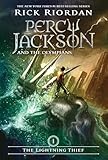
Percy Jackson and the Lightning Thief introduces Percy, a kid who has been expelled from every school he’s ever attended and has no idea why. The answer — that he is the son of Poseidon and has been framed for stealing Zeus’s master lightning bolt — kicks off one of the great first-novel premises in children’s fiction.
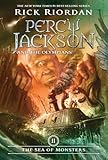
Percy Jackson and the Sea of Monsters sends Percy and his friends into the Bermuda Triangle — which turns out to be the ancient Sea of Monsters — in search of the Golden Fleece. The stakes are higher, the world wider, and the humour just as sharp.
Percy Jackson and the Titan’s Curse introduces Artemis and the Hunter goddesses, raises the series’ emotional stakes considerably, and begins the long build toward the series’ villain. This is where the arc starts to feel genuinely epic.
Percy Jackson and the Battle of the Labyrinth takes Percy into the legendary Labyrinth of Daedalus, which turns out to be an ever-shifting maze running beneath the entire country. It is arguably the most inventive book in the series in terms of mythology repurposing.
Percy Jackson and the Last Olympian is the series finale, delivering the Battle of Manhattan that everything has been building toward. Riordan sticks the landing — the emotional payoffs are real and the mythological imagination is at its peak.
For the Mythology Angle
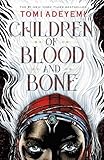
#1 — Children of Blood and Bone by Tomi Adeyemi
Ages 14+, older YA
What Riordan does with Greek mythology, Tomi Adeyemi does with the mythology of the Yoruba people of West Africa — with a rawness and emotional intensity that makes this debut novel feel urgent and necessary. Zélie Adebola lives in a land where magic has been violently suppressed, and she may be the only person who can bring it back. The world of Orïsha is richly imagined, drawing on real mythology and folklore to create something that feels both invented and ancient. The quest structure, the trio of protagonists, and the mounting stakes will feel immediately familiar to Percy fans, while the mythology itself is entirely new territory.
#2 — A Wizard of Earthsea by Ursula K. Le Guin
Ages 10+, middle grade to adult
Le Guin’s Earthsea series predates Hogwarts, Camp Half-Blood, and almost every magical school story that followed — Ged attends a school for wizards on the island of Roke, and the world of the Archipelago is mapped with the same loving precision Riordan brings to Olympian geography. But Le Guin’s project is philosophical as well as adventurous: the questions she asks about power, naming, and the shadow self are ones that reward thinking about long after the last page. The prose is quieter than Riordan’s, but the imaginative world-building is extraordinary. A perfect step up for Percy fans ready to try something deeper.
For the Magical School / Chosen One
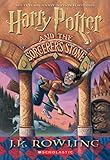
#3 — Harry Potter and the Sorcerer’s Stone by J.K. Rowling
Ages 9+, middle grade
The comparison almost goes without saying, but it bears making precisely: both series feature an ordinary-seeming kid who discovers a hidden world of magic, a summer camp or school where other kids like them are trained, a trio of loyal friends, an escalating series of threats tied to a hidden prophecy, and a villain whose power grows with each book. Harry Potter’s seven-book arc is more gradually darkening than Percy’s, more focused on school life and less on outward questing — but the sense of a world that is secretly mythological is identical. If you haven’t read all seven, this is the clearest possible recommendation.
#4 — City of Bones by Cassandra Clare
Ages 13+, older YA
Clary Fray has always assumed she’s an ordinary New York teenager, which is exactly wrong. She is a Shadowhunter — a warrior trained to fight demons — and the world of the Mortal Instruments series is a New York invisibly overlaid with a complete parallel supernatural society. Clare builds her world with Riordan-like density: there are Institutes and academies, ancient weapons with names and histories, and a mythology that blends angels, demons, warlocks, and werewolves into something original. The tone is darker and more romantic than Percy Jackson, but the hidden-world premise and the chosen-hero energy are directly comparable.
For the Quest Adventure
#5 — The Hobbit by J.R.R. Tolkien
Ages 10+, middle grade to adult
The grandfather of the quest fantasy, and still one of the finest examples of the form. Bilbo Baggins is a comfortable, unambitious hobbit who is recruited by a wizard and thirteen dwarves for an adventure that he absolutely does not want and turns out to be completely suited for. Tolkien’s world is mythological in the deepest sense — he built Middle-earth out of actual Norse and Old English sources — and the specific pleasure of watching a reluctant hero discover reserves of courage they didn’t know they had maps directly onto the Percy Jackson experience. Shorter and funnier than The Lord of the Rings, The Hobbit is the ideal entry point.
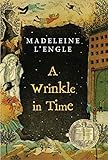
#6 — A Wrinkle in Time by Madeleine L’Engle
Ages 10+, middle grade
L’Engle’s classic is Percy Jackson by way of theoretical physics: Meg Murry is a socially awkward, deeply smart girl who discovers that the universe is stranger than her science teachers have taught, and that she and her brother have a role to play in a conflict between good and evil that extends across galaxies. The tesseract — a wrinkle in time that allows instantaneous travel — is as inventive as any of Riordan’s mythological mechanics, and Meg’s characterisation is warm and specific. Published in 1962, it has not dated in the ways that matter most.
For Older YA Fantasy
#7 — Shadow and Bone by Leigh Bardugo
Ages 13+, older YA
Bardugo’s Grishaverse begins with a premise that feels mythological even though the mythology is entirely invented: Alina Starkov is an orphaned soldier who discovers she has the power of the Sun Summoner — the only person who can destroy the Fold, a swath of permanent darkness teeming with winged monsters. The world of Ravka is heavily inspired by Tsarist Russia, and Bardugo builds it with the same obsessive cartographic detail Riordan brings to the ancient world. The Netflix adaptation introduced many readers to the series, but the books are richer, stranger, and considerably darker than Percy Jackson.
#8 — The Cruel Prince by Holly Black
Ages 14+, older YA
Black’s faerie world is ancient, amoral, and beautiful — and the mortals who blunder into it are always at a disadvantage. Jude Duarte was taken to the High Court of Faerie as a child and has spent years learning to survive among creatures who can’t lie but will deceive you in every other way imaginable. The political plotting and the enemies-to-lovers dynamic push this firmly into older YA territory, but the sense of an ancient mythological world pressing against the modern one — and of a human protagonist using wit and will to survive in it — is directly comparable to what makes Percy work. The world-building is dense and rewards re-reading.
For Sci-Fi Progression
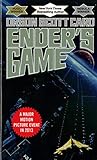
#9 — Ender’s Game by Orson Scott Card
Ages 12+, older middle grade to YA
If Percy Jackson is what you love about the genre and you find yourself wanting to push into more complex, more morally challenging territory, Ender’s Game is the natural step. Andrew “Ender” Wiggin is a child genius recruited by the military to train at a school in space — Battle School — where the games the children play are preparation for a real war. Card’s novel shares with Riordan the gifted-but-overlooked protagonist, the school setting as arena, and the revelation that the adults’ world is far more dangerous than it appears. The ending remains one of the great sucker punches in science fiction.
#10 — The Maze Runner by James Dashner
Ages 12+, YA
Thomas wakes up in a lift with no memory of who he is, surrounded by other boys who have carved out a community inside a vast stone maze. Every night the walls move. Every night the Grievers — mechanical creatures that kill — come out. The Maze Runner has the same propulsive, chapter-ending urgency as Percy Jackson, and the same fundamental question: what is this world, what are the rules, and how do we survive? The mystery is more science-fictional than mythological, but the pacing is as relentless as anything Riordan wrote, and the series escalates well.
How to Choose Your Next Read
If you want the closest mythology match: Children of Blood and Bone or A Wizard of Earthsea.
If you want the same hidden world / chosen one energy: Harry Potter or City of Bones.
If you want classic quest fantasy: The Hobbit or A Wrinkle in Time.
If you want to grow with the genre: Shadow and Bone or The Cruel Prince.
If you want a sharper edge and more complex moral stakes: Ender’s Game or The Maze Runner.
For the Best Fantasy Books
For the definitive guide to fantasy fiction — from Tolkien and Le Guin to Brandon Sanderson and George R.R. Martin — see our Best Fantasy Books of All Time list.
More YA Fantasy Reading Guides
- Rick Riordan Books in Order: Percy Jackson and All Series
- Harry Potter vs Percy Jackson: Which Series to Read First?
Affiliate disclosure: Links on this page may be affiliate links. We earn a small commission at no extra cost to you. This does not influence our editorial recommendations.
Frequently Asked Questions
What books are most similar to Percy Jackson?
The books most similar to Percy Jackson are the Heroes of Olympus series by Rick Riordan (the direct sequel series), The Kane Chronicles also by Riordan, and Magnus Chase and the Gods of Asgard. For readers ready for something more complex, The Name of the Wind by Patrick Rothfuss and An Ember in the Ashes by Sabaa Tahir deliver similar adventure-driven fantasy with richer world-building.
What should I read after finishing all 5 Percy Jackson books?
After Percy Jackson, the most recommended next series are Heroes of Olympus by Rick Riordan (direct continuation with the same characters), The Kane Chronicles (Egyptian mythology), and Magnus Chase (Norse mythology). All are by the same author. For readers ready to graduate to adult fantasy, The Final Empire by Brandon Sanderson is an excellent transition.
What age group are Percy Jackson-style books suitable for?
Percy Jackson itself is aimed at readers aged 8 to 12, though it is read enthusiastically by teenagers and adults. The Heroes of Olympus sequel series is aimed at a slightly older readership (10 to 14). For older teens ready for more complex fantasy, An Ember in the Ashes and Red Rising address similar themes with considerably more intensity.
What other books use mythology the way Percy Jackson does?
The books that draw on mythology with the same energy as Percy Jackson are the Magnus Chase series (Norse), The Kane Chronicles (Egyptian), and American Gods by Neil Gaiman (all mythologies in modern America). Rick Riordan also founded a publishing imprint for mythology-based middle grade fiction from other authors, including Dragon Pearl (Korean mythology) and Aru Shah (Hindu mythology).