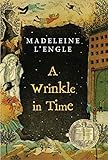
Editors Reads Verdict
L'Engle's Newbery Medal winner is one of the most audacious children's books ever written — a deeply weird fusion of quantum physics, Christian mysticism, and adventure that refuses to condescend to its readers. Its influence on a generation of writers and readers is incalculable.
What We Loved
- Intellectually ambitious in ways that children's fiction rarely attempts
- Meg's ordinariness — her struggles with school and self-doubt — makes her deeply relatable
- The cosmic scale is genuinely awe-inspiring
- The climax resolves through love rather than violence
Minor Drawbacks
- The Christian allegory may feel heavy-handed to some readers
- Some of the science fiction concepts are dated
- Charles Wallace can feel too precociously wise to be believable
Key Takeaways
- → Love is not a feeling but an active force that can overcome darkness
- → Being different, even when it feels like a disability, may be a gift
- → Evil is conformity taken to its logical extreme
- → Science and spirituality can coexist in a single vision
- → A child's love is as powerful as any adult's
| Author | Madeleine L'Engle |
|---|---|
| Publisher | Square Fish |
| Pages | 256 |
| Published | January 1, 1962 |
| Language | English |
| Genre | Young Adult, Science Fiction, Fantasy |
| Difficulty | Beginner |
| Best For | Young readers and nostalgic adults; anyone interested in the history of children's literature. |
How A Wrinkle in Time Compares
A Wrinkle in Time at a glance against 3 similar books readers weigh alongside it.
| Book | Author | Rating | Best for |
|---|---|---|---|
| A Wrinkle in Time (this book) | Madeleine L'Engle | ★ 4.2 | Young readers and nostalgic adults |
| A Wizard of Earthsea | Ursula K. Le Guin | ★ 4.5 | Fantasy readers of all ages who want the most concentrated and psychologically |
| Ender's Game | Orson Scott Card | ★ 4.7 | Science fiction readers from teenage years upward, fans of military fiction who |
| The Hobbit | J.R.R. Tolkien | ★ 4.8 | First-time fantasy readers of any age, children being introduced to Tolkien, |
The Child Who Was Rejected
Before “A Wrinkle in Time” became a beloved classic, it was rejected by more than two dozen publishers who didn’t know what to do with it. Too adult for children, too childlike for adults, too religious for secular publishers, too scientific for religious ones. L’Engle persisted, and the novel was eventually published in 1962, won the Newbery Medal, and went on to become one of the most beloved children’s books in the American canon. The things that confused publishers are exactly what make it extraordinary.
Meg Murry
At the center of the cosmic adventure is Meg Murry, a thirteen-year-old girl who is neither brilliant like her younger brother nor athletic nor socially confident. She is bad at school, gets into fights, and is defined by her relationship to her absent father and her own inadequacy. L’Engle’s revolutionary choice was to make her protagonist ordinary — struggling, resentful, imperfect — and then show that these qualities are precisely what the universe needs. Meg’s weapons against the great darkness are not genius or strength but stubbornness and love.
The Tesseract and Beyond
L’Engle takes the concept of the tesseract — a four-dimensional hypercube — and uses it as the mechanism for space-time travel, wrapping her adventure in genuine scientific concepts rather than arbitrary magic. The planets the children visit, particularly the terrifying Camazotz where individualism has been abolished by conformity, are simultaneously science-fictional and allegorical. Camazotz is what happens when a society achieves perfect efficiency by eliminating everything that makes individuals different from each other.
The Climax of Love
The resolution — in which Meg defeats the novel’s great antagonist not through cleverness or violence but through pure love — was considered by many publishers to be an unsatisfying ending. L’Engle considered it the whole point. The novel argues that love is not a sentiment but an ontological force, and its climax attempts to dramatize this with complete sincerity.
Our rating: 4.2/5 — One of children’s literature’s most audacious and enduring visions, a cosmic adventure that trusts its young readers completely.
Reading Guides
Twenty-Six Rejections
Before A Wrinkle in Time became one of the most beloved children’s books in American literary history, it was rejected by twenty-six publishers over two years. The reasons were consistent: it was too strange, too ambitious, too difficult to categorize. Too adult for children, too childlike for adults, too religious for secular publishers, too scientific for religious ones. L’Engle, born in New York in 1918, persisted, and the novel was published in 1962 by Farrar, Straus and Giroux. It won the Newbery Medal in 1963 and has been in print continuously since.
The things that confused publishers are exactly what make it extraordinary. A Wrinkle in Time is a children’s book that takes quantum physics, Christian mysticism, and the problem of evil entirely seriously — not as window dressing but as the actual substance of the story. L’Engle trusted children to follow her into this territory, and generations of child readers have confirmed that trust.
Camazotz and the Face of Evil
The planet Camazotz — where all individuality has been abolished in favor of perfect synchronized conformity — is one of children’s fiction’s most effective images of totalitarianism. L’Engle wrote in the Cold War shadow of both Soviet communism and McCarthyite conformism, and Camazotz reflects both: the horror is not violence but uniformity, the reduction of human beings to identical units of a collective will. The image of children bouncing balls in perfect synchronized rhythm is more disturbing than any explicit threat.
IT — the disembodied brain that controls Camazotz — represents pure rationality divorced from love, the logical extreme of a universe organized around efficiency rather than care. Meg’s defeat of IT through love rather than reason is L’Engle’s central theological argument dramatized as plot: love is not a feeling but an ontological force more powerful than intelligence.
The 2018 Film and L’Engle’s Legacy
The 2018 Disney film adaptation, directed by Ava DuVernay and starring Storm Reid as Meg, brought A Wrinkle in Time to a new generation. The film received mixed reviews and was criticized for smoothing over the novel’s stranger theological elements, but it introduced millions of young viewers to a story that many then sought out in its original form. L’Engle, who died in 2007, was not alive to see the adaptation, but the film’s production — and its emphasis on Meg’s ordinariness as her central heroic quality — honored the novel’s most important insight.
The Tesseract
A Wrinkle in Time (1962) was rejected by more than two dozen publishers before it won the Newbery Medal and became a touchstone of children’s literature. Meg Murry, her brother Charles Wallace and her friend Calvin are swept by the celestial Mrs Whatsit, Mrs Who and Mrs Which across the universe — “wrinkling” space via the tesseract — to rescue Meg’s father from the disembodied tyranny of IT on the planet Camazotz. Disney adapted it as a feature film in 2018.
L’Engle drew on her reading of modern physics and her deep Christian faith in equal measure, and the book’s refusal to keep science and religion in separate boxes was part of why so many publishers balked before its eventual triumph. Its vision of conformity as evil — the planet Camazotz where every house and child moves in lockstep under the disembodied brain IT — gave generations of young readers an early, unforgettable argument for the worth of the unruly individual.
Frequently Asked Questions
What is "A Wrinkle in Time" about?
Meg Murry, her genius brother Charles Wallace, and their friend Calvin travel through space and time using a tesseract to rescue Meg's father from an evil force controlling the universe.
Who should read "A Wrinkle in Time"?
Young readers and nostalgic adults; anyone interested in the history of children's literature.
What are the key takeaways from "A Wrinkle in Time"?
Love is not a feeling but an active force that can overcome darkness Being different, even when it feels like a disability, may be a gift Evil is conformity taken to its logical extreme Science and spirituality can coexist in a single vision A child's love is as powerful as any adult's
Is "A Wrinkle in Time" worth reading?
L'Engle's Newbery Medal winner is one of the most audacious children's books ever written — a deeply weird fusion of quantum physics, Christian mysticism, and adventure that refuses to condescend to its readers. Its influence on a generation of writers and readers is incalculable.
Ready to Read A Wrinkle in Time?
Check the current price on Amazon.
Check Price on Amazon (paid link)Prices and availability are subject to change. See Amazon for current price.
Review last updated: