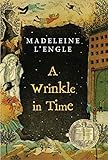
Madeleine L'Engle was an American author whose A Wrinkle in Time blended science, theology, and adventure into one of the most beloved and frequently challenged books in children's literature.
Madeleine L’Engle submitted A Wrinkle in Time to publishers for two years and collected 26 rejections before Farrar, Straus and Giroux published it in 1962. It won the Newbery Medal the following year, establishing L’Engle as a major voice in children’s literature. The novel — about a girl named Meg Murry who travels through time and space to rescue her scientist father from a dark evil — is genuinely unusual: it fuses physics, Christian mysticism, and a narrative about a girl who succeeds not by becoming conventionally heroic but by embracing her own specific, stubborn love.
The book has been challenged and banned throughout its publishing history by two completely opposed groups: religious conservatives who object to its unconventional theology and its favorable treatment of figures including Einstein alongside Jesus, and secular critics who object to its explicit Christian themes. This dual condemnation is, in its way, a tribute to how strange and resistant the novel actually is. L’Engle was a serious Episcopalian who believed in the compatibility of science and faith, and that conviction shapes a novel that takes both cosmology and love seriously.
A Wrinkle in Time is not without weaknesses — the final act can feel rushed compared to the conceptual richness of the middle section, and some of the later volumes in the Time Quintet do not match its quality. But for readers who encountered it as children, it tends to remain important because it was one of the first books that argued a bookish, awkward, rule-breaking girl could be exactly the right person to save the world.
A Visionary of Children’s Literature
Madeleine L’Engle was one of the most beloved and influential authors of children’s and young-adult fiction, a writer whose imaginative, intellectually ambitious novels blended science fiction, fantasy, and spiritual inquiry in ways that few had attempted for young readers. Best known for A Wrinkle in Time, L’Engle treated her young audience with extraordinary respect, weaving complex ideas about physics, philosophy, and faith into thrilling, emotionally rich adventures. Her work expanded the possibilities of children’s literature, and her influence on generations of readers and writers has been profound and lasting.
A Wrinkle in Time
L’Engle’s masterpiece, A Wrinkle in Time, is a landmark of children’s literature and the cornerstone of her reputation. The story of Meg Murry, who travels across space and time to rescue her father with the help of mysterious cosmic beings, the novel combines scientific concepts such as the tesseract with a moving tale of love, courage, and the struggle against conformity and darkness. Famously rejected by many publishers before its success, it went on to win the Newbery Medal and become a cherished classic, beloved for its blend of adventure, ideas, and heart.
Science and Wonder
A distinctive feature of L’Engle’s fiction is its embrace of science and big ideas. She drew on physics, astronomy, and mathematics, integrating real scientific concepts into her stories and conveying a sense of cosmic wonder at the universe and its mysteries. Rather than simplifying or avoiding complexity, she trusted young readers to engage with challenging ideas, and her work helped countless children fall in love with science and the imagination. This fusion of intellectual ambition and storytelling magic is central to her enduring appeal.
Faith and the Search for Meaning
L’Engle’s work is also notable for its engagement with spiritual and philosophical questions. A woman of deep Christian faith with an unusually open and inquiring mind, she explored themes of love, good and evil, free will, and the search for meaning, often blending the scientific and the spiritual in ways that resisted easy categorisation. Her willingness to grapple with profound questions, and her conviction that faith and reason, science and wonder, could coexist, gave her fiction a depth and seriousness that distinguished it from much writing for young people.
The Time Quintet and Beyond
A Wrinkle in Time is the first of the Time Quintet, a sequence of connected novels including A Wind in the Door and A Swiftly Tilting Planet that continued the adventures of the Murry family and deepened L’Engle’s exploration of her recurring themes. Beyond this series, she wrote prolifically across her career, producing other fiction series, poetry, and reflective nonfiction. This substantial body of work, unified by her distinctive sensibility, offers readers a rich world to explore beyond her single most famous title.
Champion of the Young Reader
Throughout her career, L’Engle was a passionate advocate for the intelligence and capacity of young readers, refusing to condescend to them or to shy away from difficulty, darkness, or complexity. She believed that children could handle serious ideas and genuine emotion, and her respect for her audience is felt throughout her work. This conviction, along with the warmth and imaginative generosity of her storytelling, is part of why her books have been so cherished and why they continue to inspire new generations.
Madeleine L’Engle’s Enduring Appeal
Madeleine L’Engle’s influence on children’s and young-adult literature is immense, and A Wrinkle in Time remains a beloved classic that has introduced countless readers to the pleasures of imaginative, idea-rich fiction. For newcomers, A Wrinkle in Time is the essential starting point and the gateway to the Time Quintet. For readers, young and old, seeking adventure that engages the mind and the heart, that takes science and wonder and the deepest questions seriously, L’Engle is an essential and enduringly inspiring author whose work has lost none of its power.
Where to Read Next
Among the next titles to reach for are An Acceptable Time.
Reading Guides