Best Classic Children's Books: Timeless Books for Young Readers
The best classic children's books — from The Secret Garden and Little Women to The Hobbit and A Wrinkle in Time. Timeless books every young reader should know.
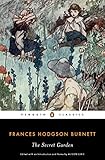
Classic children’s books are books that reward returning to across a lifetime — books that work for a nine-year-old and also for a forty-year-old reading them again. They ask real questions (about belonging, about courage, about what kind of person one wants to be) and they answer them with the honesty and seriousness that good fiction always does. The books below are the essential classics.
Best Classic Children’s Books at a Glance
| Book | Author | Best for |
|---|---|---|
| The Secret Garden | Frances Hodgson Burnett | Readers of all ages — particularly adults |
| Little Women | Louisa May Alcott | Classic Fiction |
| Anne of Green Gables | L.M. Montgomery | Readers of all ages, particularly those who love |
| The Hobbit | J.R.R. Tolkien | First-time fantasy readers of any age, children |
| The Lion, the Witch and the Wardrobe | C.S. Lewis | Young readers encountering fantasy for the first |
| A Wrinkle in Time | Madeleine L’Engle | Young readers and nostalgic adults |
| Treasure Island | Robert Louis Stevenson | Adventure |
| The Little Prince | Antoine de Saint-Exupéry | Everyone — children who will understand it |
| A Little Princess | Frances Hodgson Burnett | Children’s Literature |
| The Phantom Tollbooth | Norton Juster | Children aged 8-12 and every adult who wants |
The Beloved Classics
The Secret Garden — Frances Hodgson Burnett (1911)
The most universally beloved children’s novel — Mary Lennox’s discovery of the locked garden and the healing it brings to her and everyone around her. Burnett’s novel is genuinely wise about human nature: its argument that children (and adults) need outdoor air, purposeful work, and something growing to tend is as persuasive now as it was in 1911. One of the few children’s books that improves on re-reading as an adult.
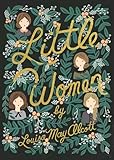
Little Women — Louisa May Alcott (1868)
The foundational American novel for young readers — the March sisters navigating poverty, ambition, love, and loss in Civil War-era New England. Jo March, who wants to be a writer and refuses to marry conventionally, remains one of the most important characters in children’s fiction: the first literary model for girls who wanted to be more than wives. Alcott based the novel on her own family.
Anne of Green Gables — L.M. Montgomery (1908)
The irrepressible Anne Shirley, orphan girl sent to Prince Edward Island by mistake, winning over the people who expected to send her back. Montgomery’s novel is about the power of imagination and the importance of belonging; Anne’s ability to find beauty in everything around her is the novel’s argument for the transformative power of a rich inner life.
Fantasy Foundations
The Hobbit — J.R.R. Tolkien (1937)
The foundation of modern epic fantasy — Bilbo Baggins’s journey to the Lonely Mountain with Gandalf and thirteen dwarves. Tolkien created Middle-earth as a fully imagined secondary world with its own languages, history, and mythology; The Hobbit is the most accessible entry point into that world and the most directly pleasurable of his books.
The Lion, the Witch and the Wardrobe — C.S. Lewis (1950)
The Pevensie children’s first journey to Narnia through the wardrobe — the White Witch, the perpetual winter, and Aslan the lion. Lewis’s Christian allegory is woven through the novel without overwhelming it; what most readers remember is the specific enchantment of the world he created.
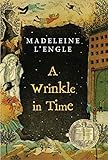
A Wrinkle in Time — Madeleine L’Engle (1962)
Meg Murry’s journey through time and space to rescue her father from the forces of darkness — science and magic, physics and faith, all woven together. One of the first major science fiction novels for young readers and the most intellectually ambitious; L’Engle was rejected by twenty-six publishers before it won the Newbery Medal.
Classic Adventure
Treasure Island — Robert Louis Stevenson (1883)
Jim Hawkins, Long John Silver, and the quest for buried pirate gold — the adventure novel that invented most of the tropes of the pirate story. Stevenson’s moral complexity is unusual for its era: Long John Silver is the most interesting character in the book, neither fully villainous nor fully sympathetic.
The Little Prince
The Little Prince — Antoine de Saint-Exupéry (1943)
The most widely translated book in French literature after the Bible — a pilot stranded in the Sahara meets a small prince from an asteroid, and through their conversations the novel explores love, responsibility, loneliness, and what adults lose as they grow up. Works differently at every age; the most melancholy children’s book on this list and the most beloved.
Fantasy for Slightly Older Readers
A Little Princess — Frances Hodgson Burnett (1905)
Sara Crewe’s transformation from wealthy student at a London boarding school to impoverished servant, and her maintenance of her dignity and imagination throughout. Burnett’s second great novel for children; less universally beloved than The Secret Garden but more psychologically complex.
The Phantom Tollbooth — Norton Juster (1961)
Milo’s journey through the Lands of Wisdom — the Kingdom of Dictionopolis and the Kingdom of Digitopolis, where words and numbers are at war. Juster’s wordplay is the most inventive in children’s literature; the novel is simultaneously a meditation on the value of curiosity and an extended pun.
The Books That Shape Us First
Classic children’s books occupy a uniquely powerful place in the life of literature, for they are the books that shape us first, encountered at the most impressionable age and lodging in the memory and imagination with a permanence that few later readings achieve — and this primacy gives the great children’s books an influence on the developing mind and heart that is difficult to overstate. The books we read or hear as children, before the critical faculties have hardened and while the imagination is at its most open and absorptive, sink deep into us, forming our earliest sense of story, wonder, and meaning, and shaping in ways we may never fully recognize the readers and the people we become. The classic children’s books endure precisely because they perform this formative work so powerfully, capturing the child’s imagination, awakening the love of story, and planting images, characters, and ideas that remain vivid across an entire lifetime. Many adults find that the books of their childhood retain a power and a place in their memory that few books read in maturity can match, that the worlds and characters they first encountered as children remain more real and more beloved than almost any met since, and that the experience of those early readings shaped their imaginative life in lasting ways. This formative power is the deepest significance of the classic children’s book, its capacity to reach the child at the most impressionable moment and to shape the developing imagination with images and stories that will endure for life. The great children’s books are not merely entertainments for the young but the foundational texts of the imaginative life, the books that shape us first and that remain with us longest, and their importance lies in this unique power to form the mind and heart at the very beginning.
Wonder, Wisdom, and the Double Audience
The greatest classic children’s books achieve a remarkable feat that distinguishes them from lesser works for the young: they speak simultaneously to children and to adults, offering the child wonder, delight, and adventure while offering the adult wisdom, depth, and meaning, and this double address is the mark of the truly great children’s book. The finest works in the genre are not written down to children, not simplified or condescending, but rather operate on multiple levels at once, providing the surface pleasures of story and imagination that captivate the young while embedding deeper themes, insights, and beauties that the adult reader discovers and that often only maturity can fully appreciate. This is why the classic children’s books reward rereading across a lifetime, why the adult returning to a beloved childhood book so often finds in it depths and meanings invisible to the child, and why so many of the greatest children’s books are cherished as deeply by grown readers as by young ones. The double audience reflects the genius of the great children’s authors, their ability to craft works that satisfy the child’s hunger for story and wonder while speaking, beneath the surface, to the adult’s appetite for wisdom and meaning, so that the same book can be a delightful adventure to the child and a profound and moving work to the grown reader. This capacity to address two audiences at once, to offer wonder to the young and wisdom to the old, is among the highest achievements of children’s literature, and it is the mark that separates the enduring classic, beloved across the generations and rewarding at every age, from the merely childish book that the reader outgrows. The greatest children’s books are great books, full stop, and their power to speak to children and adults alike is the proof of it.
Lessons That Last a Lifetime
Beneath their wonder and delight, the classic children’s books carry lessons of lasting value — about courage, kindness, friendship, honesty, resilience, and the deepest matters of how to live — and they impart these lessons not through preaching or moralizing but through the power of story, lodging in the child’s heart truths that will guide and sustain them throughout their lives. The great children’s books understand that the most effective moral education comes not through explicit instruction but through the experience of story, through the child’s identification with characters who face difficulties, make choices, and learn truths, and through the imaginative living-through of situations that teach without lecturing. By following beloved characters through their adventures and trials, children absorb, in a form far more powerful than any direct teaching could achieve, lessons about courage in the face of fear, kindness toward others, the value of friendship and loyalty, the importance of honesty and integrity, and the resilience to persevere through difficulty, and these lessons, learned through the heart rather than imposed on the mind, take root deeply and endure. The classic children’s books are, in this sense, among the most important moral teachers a person ever encounters, shaping at the most impressionable age the values and understandings that will guide an entire life, and doing so through the irresistible and unforgettable medium of story. The lessons these books impart are not the heavy-handed morals of inferior children’s literature but the deep and lasting truths that the greatest stories convey, absorbed by the child through the pleasure of the tale and carried forward, often unconsciously, into adulthood. This power to teach the deepest lessons through the delight of story, to shape the values and character of the child in lasting ways, is among the most precious gifts of the classic children’s book, and one of the strongest reasons for ensuring that every child encounters the great ones.
Reading Order
For young readers (ages 8-12): The Secret Garden → Anne of Green Gables → The Hobbit.
Fantasy focus: The Hobbit → The Lion, the Witch and the Wardrobe → A Wrinkle in Time.
Complete: The Secret Garden → Treasure Island → Little Women → Anne of Green Gables → The Little Prince → The Lion, the Witch and the Wardrobe → A Wrinkle in Time → The Hobbit → The Phantom Tollbooth.
Frequently Asked Questions
What is the best classic children's book to start with?
The Secret Garden (1911) by Frances Hodgson Burnett is the most universally beloved — a lonely, difficult girl discovers a locked garden and, in tending it, is transformed. The novel is about healing, about the relationship between the human and natural world, and about the possibility of change; it works for every age from nine to ninety. Little Women (1868) by Louisa May Alcott is the most important children's novel in American literature — the March sisters (Meg, Jo, Beth, and Amy) navigating poverty, ambition, love, and loss in Civil War-era New England. Jo March remains one of the most beloved characters in fiction.
What is The Secret Garden about?
The Secret Garden (1911) by Frances Hodgson Burnett follows Mary Lennox, a spoiled, sickly, lonely orphan sent from India to her uncle's Yorkshire estate. On the estate she discovers a locked, overgrown garden that has been sealed for ten years; with the help of a servant boy named Dickon and her invalid cousin Colin, she tends it back to life. As the garden grows, so do the children — the novel argues, through the metaphor of the garden, that human beings need attention, outdoor air, and purposeful work as much as plants do. One of the most genuinely wise books for young readers.
What is Anne of Green Gables about?
Anne of Green Gables (1908) by L.M. Montgomery follows Anne Shirley, an orphan girl sent by mistake to the Cuthbert farm on Prince Edward Island — Matthew and Marilla had asked for a boy to help with the farm work. Anne is imaginative, talkative, prone to scrapes, and absolutely irrepressible; Marilla, expecting to send her back, cannot quite bring herself to do it. The novel is about the power of imagination, the importance of belonging, and the relationship between spirit and circumstance. Anne Shirley is one of the most beloved characters in children's literature.
What is The Hobbit about?
The Hobbit (1937) by J.R.R. Tolkien follows Bilbo Baggins, a respectable, unadventurous hobbit, who is swept into an adventure by the wizard Gandalf — a journey to the Lonely Mountain to reclaim a dwarven kingdom from the dragon Smaug. The novel is simultaneously a children's adventure story and the foundation of modern epic fantasy: Tolkien created the world of Middle-earth in unprecedented detail, with its own languages, histories, and mythologies. The most foundational work of modern fantasy and the best introduction to Tolkien's world before the more demanding Lord of the Rings.