Editors Reads Verdict
The Little Prince is one of the most translated books in history for good reason — a story that seems to be for children and is for everyone, whose observations about the essential and the trivial accumulate into one of literature's most moving statements about what it means to love and to lose.
What We Loved
- The adult-child perspective creates a philosophical framework of extraordinary clarity and precision
- The fox's teaching about taming is one of literature's most important statements about love
- The book works simultaneously as children's story, philosophical fable, and meditation on grief
- The illustrations are integral to the text in a way rarely achieved in illustrated fiction
Minor Drawbacks
- The allegorical elements can be read as so personal to Saint-Exupéry's biography that they resist universal interpretation
- The ending is ambiguous in ways some readers find unresolved rather than beautifully open
- Some adult readers find the whimsy excessive rather than charming
Key Takeaways
- → What is essential is invisible to the eye — the most important things cannot be measured or observed directly
- → To tame something is to create a bond that makes you responsible for it — love is responsibility
- → Adults have forgotten how to see what matters and spend their lives counting and categorizing instead
- → Loneliness is not cured by proximity but by the quality of specific connection
- → The rose that is yours is unique not because it is objectively better but because you have made it yours
| Author | Antoine de Saint-Exupéry |
|---|---|
| Publisher | Harcourt |
| Pages | 96 |
| Published | April 6, 1943 |
| Language | English |
| Genre | Fiction, Children's Literature, Philosophy |
| Difficulty | Beginner |
| Best For | Everyone — children who will understand it differently than adults, adults who need to remember what children know, anyone who has loved and lost something irreplaceable. |
How The Little Prince Compares
The Little Prince at a glance against 3 similar books readers weigh alongside it.
| Book | Author | Rating | Best for |
|---|---|---|---|
| The Little Prince (this book) | Antoine de Saint-Exupéry | ★ 4.7 | Everyone — children who will understand it differently than adults, adults who |
| Siddhartha | Hermann Hesse | ★ 4.6 | Anyone at a turning point in their life or curious about Eastern philosophy, |
| The Alchemist | Paulo Coelho | ★ 4.7 | Anyone at a crossroads, seeking purpose, or wondering whether their dreams are |
| The Stranger | Albert Camus | ★ 4.5 | Readers interested in existentialist and absurdist philosophy — and anyone who |
The Book That Belongs to Everyone
The Little Prince was published in 1943, while its author Antoine de Saint-Exupéry was in New York as a French aviator in exile during the German occupation. He was fifty years old, his marriage was in perpetual crisis, he was deeply unhappy, and he was writing a children’s book. He died in a reconnaissance mission the following year and never saw how the book would be received.
It is now one of the most translated books in history, rivaled only by the Bible and a small number of other texts. The Little Prince has been translated into over three hundred languages. This is not a critical judgment about its literary sophistication; it is a statement about what it does for its readers.
The Prince and the Pilot
The story is simple in its architecture: a pilot, stranded in the Sahara after his engine fails, meets a small boy who has come from a tiny asteroid on which he tends a single rose. The prince has been traveling to various planets, each inhabited by a ridiculous adult — a king with no subjects, a businessman who counts stars he cannot use, a lamplighter following pointless instructions. None of them see what matters. The prince does not understand adults at all.
Saint-Exupéry captures with precision the particular myopia of grown life: the tendency to replace wonder with measurement, connection with utility, presence with productivity. The adults the prince encounters are not cruel but something worse — they are so absorbed in their small fixed orbits that they have lost the capacity to notice anything outside them.
The Fox and Taming
The fox the prince meets on Earth teaches him the most important thing in the book: what it means to be tamed. To tame is to establish ties — to create a relationship of specific, non-substitutable connection. Once you are tamed, the other person becomes unique to you. Before taming, “you are still nothing more to me than a little boy who is just like a hundred thousand other little boys. And I have no need of you. And you, on your part, have no need of me.” After taming, you are responsible, forever, for what you have tamed.
This is one of literature’s most precise statements about the nature of love and its costs.
What Is Essential
“What is essential is invisible to the eye.” The fox’s other teaching is the book’s enduring gift: an insistence that the most important things — love, connection, meaning, beauty — cannot be measured, counted, or observed from outside the relationship that holds them. They exist in the quality of attention, in the time taken, in the bond created by specific shared experience.
Our rating: 4.7/5 — One of the great books in any language, a story about love, loss, and what matters that works for every reader and never means quite the same thing twice — a permanent gift to the literature of the world.
A Fable for Children and Adults Alike
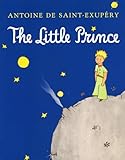
Antoine de Saint-Exupéry’s The Little Prince is one of the most beloved and widely translated books ever written, a deceptively simple fable that speaks to readers of every age. Framed by the narrator’s account of crash-landing in the Sahara, the story unfolds as he meets a small prince who has travelled from a tiny asteroid, and who recounts his journey across the planets and his arrival on Earth. Told in gentle, lyrical prose and illustrated with the author’s own watercolours, it has the surface of a children’s story and the depth of a philosophical meditation.
The Wisdom Beneath the Simplicity
What gives the book its lasting power is the way it smuggles profound reflection inside its childlike form. Through the prince’s encounters — with a vain man, a businessman counting stars he believes he owns, a fox who teaches him about love and attachment — Saint-Exupéry quietly critiques the misplaced priorities of adults, who have forgotten how to see what truly matters. The famous lesson that “what is essential is invisible to the eye” distills the book’s argument that love, connection, and imagination outweigh the grown-up obsessions with money, status, and mere facts.
Loss, Love, and the Things We Tame
Beneath its whimsy, The Little Prince is a tender meditation on love and loss. The prince’s relationship with his rose, and the fox’s teaching that we become responsible forever for what we have tamed, give the story an emotional weight that deepens with each rereading. The book does not shy away from sorrow; its ending is quietly devastating, and adult readers often find that what charmed them as children moves them more profoundly later in life. This is part of why it rewards return at different ages.
Why It Endures
Written during the Second World War by a pioneering aviator who would himself vanish on a flight not long after, The Little Prince carries an undertone of melancholy and longing that gives its gentleness real gravity. Its blend of fantasy, philosophy, and feeling has made it a touchstone across cultures and generations, a book given as a gift, taught in classrooms, and quoted endlessly. Short enough to read in a single sitting yet deep enough to last a lifetime, it remains a small masterpiece about seeing clearly, loving truly, and holding on to the wonder that growing up too often erases. Few books achieve so much in so few pages.
Frequently Asked Questions
What is "The Little Prince" about?
A pilot stranded in the Sahara meets a mysterious prince from a tiny asteroid, whose observations about adults, love, and what truly matters illuminate everything the narrator had forgotten.
Who should read "The Little Prince"?
Everyone — children who will understand it differently than adults, adults who need to remember what children know, anyone who has loved and lost something irreplaceable.
What are the key takeaways from "The Little Prince"?
What is essential is invisible to the eye — the most important things cannot be measured or observed directly To tame something is to create a bond that makes you responsible for it — love is responsibility Adults have forgotten how to see what matters and spend their lives counting and categorizing instead Loneliness is not cured by proximity but by the quality of specific connection The rose that is yours is unique not because it is objectively better but because you have made it yours
Is "The Little Prince" worth reading?
The Little Prince is one of the most translated books in history for good reason — a story that seems to be for children and is for everyone, whose observations about the essential and the trivial accumulate into one of literature's most moving statements about what it means to love and to lose.
Ready to Read The Little Prince?
Check the current price on Amazon.
Check Price on Amazon (paid link)Prices and availability are subject to change. See Amazon for current price.
Review last updated: