Where to Start with Antoine de Saint-Exupéry: A Reading Guide
Where to start with Antoine de Saint-Exupéry — whether to begin with The Little Prince, Night Flight, or Wind, Sand and Stars. A complete reading guide.
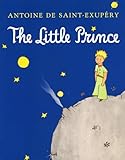
Antoine de Saint-Exupéry (1900–1944) was the French writer, poet, and aviator who wrote The Little Prince (1943) — one of the most translated books in the world, the best-selling French-language novel ever published, and a work that has been read as a children’s book, a philosophical fable, a meditation on grief and loss (Saint-Exupéry wrote it in New York exile, estranged from his wife, separated from a France under occupation), and an autobiography of the soul. He also wrote Night Flight (1931), Wind, Sand and Stars (1939), and Southern Mail (1929) — all drawing on his years as a pioneer airmail pilot in South America and North Africa. He disappeared on a reconnaissance mission in 1944, presumed shot down over the Mediterranean; his aircraft was found in 2000.
Where to Start: The Little Prince (1943)
The essential Saint-Exupéry — and one of the most beloved books ever written. A pilot has made a forced landing in the Sahara Desert. He has only enough water for a week. On the first night he is woken by a small, very serious voice: a child, asking him to draw a sheep.
The child is the Little Prince, from Asteroid B-612. He has come from his asteroid because he had a dispute with a rose — a rose who is beautiful and vain and who told him she loved him but was, in the ways that matter to roses, demanding — and he has been travelling the planets since, meeting a king, a vain man, a drunkard, a businessman, a lamplighter, and a geographer, each absorbed in adult absurdities.
On Earth he meets a fox, who teaches him the most important thing in the book: that to tame something — to establish ties — is to make yourself responsible for it forever. You become responsible for your rose. The things that matter are invisible to the eyes.
Saint-Exupéry wrote the book in New York in 1942 and drew the watercolour illustrations himself. It is a very short book that takes perhaps ninety minutes to read and remains with the reader for life.
Wind, Sand and Stars (1939)
Saint-Exupéry’s autobiographical masterpiece — the years of flying mail routes over the Sahara and the Andes, the forced landings, the near-deaths, the meditations on what solitude and danger reveal about human meaning. His finest prose work alongside The Little Prince.
Night Flight (1931)
Saint-Exupéry’s breakthrough novel — the airmail director Rivière driving his pilots to conquer the night. Short, taut, and morally demanding; his most novelistic work.
Southern Mail (1929)
Saint-Exupéry’s first novel — the earliest version of his themes and settings. More apprentice work than the later books; for devoted readers who want to complete his fiction.
Why The Little Prince Is the Ideal First Book
For a reader new to Antoine de Saint-Exupéry, The Little Prince is the ideal first book because it is his most beloved and enduring work, one of the most cherished books in the world, and the fullest expression of his distinctive gifts, the tenderness, the philosophical depth, and the poetic simplicity. The Little Prince tells, in the guise of a children’s tale, the story of a pilot stranded in the desert who meets a small prince from another planet, and through their encounter explores love, loss, and what truly matters in life. As an entry point it is ideal, for it is his most famous work and a perfect distillation of his sensibility, deceptively simple yet profound. It welcomes the newcomer with its gentle wisdom, its charm, and its emotional depth, drawing the reader into a story that speaks to children and adults alike. It is his defining work and the one that best represents his gifts, so the new reader encounters Saint-Exupéry at his most beloved. For the newcomer, then, The Little Prince is the natural and ideal starting point.
What to Expect as a New Reader
As a new reader, you can expect The Little Prince to be a tender, wise, and deceptively simple modern fable. You can expect a charming story, for the book tells of a pilot stranded in the desert who meets a small prince fallen to Earth from a distant asteroid. You can expect philosophical depth beneath the simplicity, for the tale explores love, loss, loneliness, and what truly matters, gently critiquing the narrowness of the grown-up world. You can expect poetic, lyrical prose and the author’s own beloved watercolor illustrations. You can expect emotional resonance, for the story moves readers of all ages and rewards rereading at different stages of life. You can expect a short, gentle, and luminous book that can be read in a sitting yet stays with you for years. Expect, in short, a tender, wise, and deceptively simple modern fable, a beloved introduction to Saint-Exupéry’s gifts.
Going Deeper After Your First Book
Once The Little Prince has introduced you to Saint-Exupéry’s sensibility, the reader who wishes to go deeper can explore his other works, which draw on his life as a pioneering aviator and continue his lyrical, philosophical reflection on courage, duty, and the meaning of life. Wind, Sand and Stars, his acclaimed memoir of flight and adventure, beautifully blends thrilling experience with profound meditation, while Night Flight and Southern Mail, his novels of the early days of aviation, render the danger and heroism of the airmail pilots. Reading these after The Little Prince deepens your appreciation of Saint-Exupéry’s distinctive gifts, the tenderness, the philosophical depth, and the poetic vision, while revealing the experiences that shaped them. His characteristic qualities run through his work. Building your reading journey through Saint-Exupéry is a matter of following his sensibility from The Little Prince into his memoirs and novels of flight. The reader who begins here and continues will find a uniquely tender and philosophical writer, and a pioneer of the air.
Reading Antoine de Saint-Exupéry
Begin with The Little Prince — it is short, essential, and like nothing else in literature. Read Wind, Sand and Stars as a companion piece; they illuminate each other. Night Flight is the best of his fiction after The Little Prince.
For the full Antoine de Saint-Exupéry bibliography, reviews, and biography, visit the Antoine de Saint-Exupéry author page on Editors Reads.
Affiliate disclosure: Links to Amazon on this page are affiliate links. We earn a small commission at no extra cost to you.
Frequently Asked Questions
Where should I start with Antoine de Saint-Exupéry?
The Little Prince (1943) is the essential starting point — Saint-Exupéry's fable about a pilot stranded in the Sahara who meets a small prince from an asteroid, and their conversations about love, loneliness, and what matters in a life. It is one of the most translated books in the world, written ostensibly for children but addressed as much to the adults who have forgotten how to see clearly. It can be read in under two hours and contains more wisdom per page than almost any book of its length.
What is Night Flight about?
Night Flight (Vol de nuit, 1931) is Saint-Exupéry's breakthrough novel — following the director of a South American airmail service, Rivière, who drives his pilots to fly dangerous night routes because he believes the conquest of fear and darkness has a value beyond mere commercial efficiency. The novel is short, taut, and deeply concerned with the question of whether the demands a cause places on individuals can ever be justified by the cause itself. Won the Prix Femina.
What is Wind, Sand and Stars about?
Wind, Sand and Stars (Terre des hommes, 1939) is Saint-Exupéry's autobiographical account of his years as a mail pilot — including his forced landings in the Libyan desert, his near-death from dehydration, and his meditations on what flying and solitude reveal about the human condition. Won the Grand Prix du Roman of the Académie Française and the U.S. National Book Award. For many readers it is his finest work alongside The Little Prince.
In what order should I read Saint-Exupéry?
The Little Prince is the essential Exupéry and the right place to begin. If you want to read more, Wind, Sand and Stars is the best follow-up — it is autobiographical where The Little Prince is fable, and the two books illuminate each other. Night Flight is shorter and can be read before or after Wind, Sand and Stars. Southern Mail is his earliest novel and more apprentice work; best left until after the major books.