Where to Start with Frances Hodgson Burnett: A Reading Guide
Where to start with Frances Hodgson Burnett — whether to begin with The Secret Garden, A Little Princess, or Little Lord Fauntleroy. A complete reading guide.
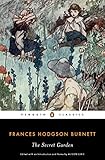
Frances Hodgson Burnett (1849–1924) was the British-American novelist whose The Secret Garden (1911) and A Little Princess (1905) are among the most beloved children’s novels in the English language, and whose Little Lord Fauntleroy (1886) was the most commercially successful children’s book of the nineteenth century. Born in Manchester and emigrating to Tennessee as a teenager, Burnett wrote in a tradition of Victorian and Edwardian fiction that took children’s inner lives seriously; her novels are about transformation — the unloved becoming capable of love, the humiliated discovering their own dignity, the closed garden coming back to life — rendered with a warmth and psychological precision that has kept them in print for over a century.
Where to Start: The Secret Garden (1911)
The essential Burnett — and one of the most enduring novels in the English language. Mary Lennox is left alone after her parents die of cholera in India: choleric, self-centred, and without a single person in the world who wants her company. She is sent to Misselthwaite Manor on the Yorkshire moors, to live with her reclusive, hunchbacked uncle Archibald Craven, who is never there.
The manor is vast and mostly locked. The moors are wild and grey. And somewhere in the walled gardens, there is a garden that has been locked for ten years, since Archibald’s wife died.
Mary finds the key. She finds the door. She enters.
The novel traces what happens next: how tending the garden — digging, planting, watching things grow — transforms a self-pitying, unpleasant child into someone capable of curiosity, friendship, and joy. Burnett’s central insight is that recovery comes through engagement with the living world: through attention, through work, through the specific pleasure of watching something grow because you tended it. This is expressed through a Victorian vocabulary of fresh air and outdoor exercise but it is also genuinely modern in its understanding of what depression is and what helps.
The novel also contains Colin Craven, Mary’s invalid cousin who has been told he will die and has believed it — and whose transformation, when Mary and Dickon bring the garden to him, is the novel’s second great movement. Burnett’s sympathy for children who have been failed by adults is complete and unsentimentalised.
A Little Princess (1905)
Burnett’s other great novel — Sara Crewe’s refusal to define herself by her circumstances is one of children’s literature’s most powerful lessons in dignity and inner sovereignty. More immediately engaging and warmer than The Secret Garden; equally sophisticated.
Little Lord Fauntleroy (1886)
Burnett’s earliest major success — the American boy who becomes an English earl. More sentimental than the later novels but charming and historically significant as the book that established her reputation.
Why The Secret Garden Is the Ideal First Book
For a reader new to Frances Hodgson Burnett, The Secret Garden is the ideal first book because it is her most beloved and enduring novel, a classic of children’s literature, and the fullest expression of her distinctive gift, the rendering of transformation, healing, and the restorative power of nature. The Secret Garden tells the story of a lonely, unhappy orphan who, sent to live at a remote English house, discovers a hidden, neglected garden and, through its restoration and the friendships she forms, is herself transformed and healed. As an entry point, it offers the fullest expression of Burnett’s gifts, the moving story of transformation and healing, the restorative power of nature, and the warmth and depth that have made the novel a beloved classic. It welcomes the newcomer with its compelling story, its emotional warmth, and its enduring charm, drawing the reader into a beloved classic of children’s literature. It is her most beloved novel and the one that best represents her gifts, so that the new reader encounters Burnett at her most characteristic. For the newcomer, then, The Secret Garden is the natural and ideal starting point.
What to Expect as a New Reader
As a new reader, you can expect The Secret Garden to be a moving and beloved classic of children’s literature, centered on transformation, healing, and the restorative power of nature. You can expect a compelling story, for the novel follows a lonely, unhappy orphan who, sent to live at a remote English house, discovers a hidden, neglected garden. You can expect themes of transformation and healing, for through the restoration of the garden and the friendships she forms, the once sour and unhappy heroine is herself transformed, healed, and brought to life, as are others around her. You can expect the restorative power of nature, for the garden and the natural world are at the heart of the novel’s vision of healing and renewal. You can expect emotional warmth and depth, for the novel is genuinely moving as well as charming. You can expect a beloved classic that has delighted readers of all ages for generations. Expect, in short, a moving and beloved classic centered on transformation, healing, and the restorative power of nature, a charming introduction to Burnett’s gifts.
Going Deeper After Your First Book
Once The Secret Garden has introduced you to Burnett’s gifts, the reader who wishes to go deeper can explore her other beloved children’s classics, which continue her gift for moving, warm-hearted stories of transformation, kindness, and the inner worth of children. Her other celebrated novels include the story of a girl whose fortunes change but whose dignity and imagination endure, and other tales marked by her warmth, her moral feeling, and her gift for storytelling. Reading these after The Secret Garden deepens your appreciation of Burnett’s distinctive gifts, the moving stories of transformation and healing, the warmth and depth, and the enduring charm that mark her work. Her characteristic qualities run through her children’s fiction, and the reader who has been moved by The Secret Garden will find them in her other beloved classics. Building your reading journey through Burnett’s work is a matter of following her warm, moving children’s classics from The Secret Garden to her other beloved novels. The reader who begins with The Secret Garden and continues through her work will find a beloved writer of warm and moving children’s classics.
Reading Frances Hodgson Burnett
Begin with The Secret Garden — it is her masterwork and the richest reading experience. Read A Little Princess as a companion piece. Little Lord Fauntleroy is best read as a historical curiosity and a charming earlier novel.
For the full Frances Hodgson Burnett bibliography, reviews, and biography, visit the Frances Hodgson Burnett author page on Editors Reads.
Affiliate disclosure: Links to Amazon on this page are affiliate links. We earn a small commission at no extra cost to you.
Frequently Asked Questions
Where should I start with Frances Hodgson Burnett?
The Secret Garden (1911) is the most widely recommended starting point — Burnett's novel about Mary Lennox, a spoiled, unloved orphan who comes to live on the Yorkshire moors and discovers a secret walled garden that gradually transforms her and everyone around her. It is Burnett's masterwork and one of the most beloved children's novels in the English language, as much about the transformative power of nature and purposeful work as about an orphan finding her way. A Little Princess is the alternative for readers who prefer Burnett's other great heroine.
What is A Little Princess about?
A Little Princess (1905) is Burnett's novel about Sara Crewe — a girl of imagination and dignity who arrives at Miss Minchin's Seminary for Girls as the wealthy daughter of an Indian Army captain and is reduced to a cold attic servant when her father dies bankrupt. Sara's refusal to define herself by how she is treated — her insistence on her own inner sovereignty — makes the novel one of children's literature's most powerful portraits of dignity under humiliation. Psychologically sophisticated and warmer in tone than The Secret Garden.
What is Little Lord Fauntleroy about?
Little Lord Fauntleroy (1886) is Burnett's earliest major success — the story of Cedric Errol, an American boy who discovers he is heir to an English earldom and who gradually wins over his cold, suspicious grandfather through his natural warmth and generosity. The novel was enormously popular in its day (the velvet suit with lace collar that Cedric wore became a fashion for boys throughout the English-speaking world) and remains readable as a charming portrait of a boy who assumes good faith in everyone and is usually right.
Are Burnett's books only for children?
The Secret Garden and A Little Princess are officially children's novels but are widely reread by adults with the same pleasure. The Secret Garden in particular has an ecological and spiritual dimension — its account of what attention to living things does to a closed-off consciousness — that functions differently for adult readers than for children and is no less powerful for being familiar. Both novels have sustained adult readership because their central insights (about recovery, dignity, and the relationship between inner and outer life) are not confined to childhood.