Where to Start with Mary Shelley: A Reading Guide
Where to start with Mary Shelley — whether to begin with Frankenstein, The Last Man, or Mathilda. A complete reading guide to the inventor of science fiction.
Mary Shelley (1797–1851) was the English novelist who at eighteen wrote Frankenstein (1818) during a ghost story competition at the Villa Diodati on Lake Geneva, publishing it anonymously at twenty-one. The novel invented science fiction as a literary genre, created one of the most enduring figures in all of fiction, and asked philosophical questions about creation, responsibility, and consciousness that two centuries of subsequent literature, science, and technology have not exhausted. Shelley was the daughter of the philosopher William Godwin and the feminist philosopher Mary Wollstonecraft (who died giving birth to her), the wife of the poet Percy Bysshe Shelley, and the mother of four children, three of whom died before her; her life was defined by exceptional intellectual inheritance and exceptional personal loss, both of which find expression in her fiction.
Where to Start: Frankenstein (1818)
The essential Shelley — and one of the most important novels ever written. Victor Frankenstein is a student of natural philosophy who discovers the secret of life and, in a moment of hubris and obsession, creates a human being from assembled corpse parts and galvanic electricity. He succeeds. He then flees in terror from what he has made.
The Creature — never named — is left alone in the world, beautiful to himself and horrifying to every human who sees him. He teaches himself to read; he reads Milton, Goethe, and Plutarch; he watches a family from hiding for months, learning language and social feeling without ever daring to approach them. When he finally does approach them, they flee in horror. He finds his creator’s journal. He understands what he is.
What distinguishes the novel from its popular adaptations is the Creature’s extraordinary articulateness. In the novel’s heart — a long embedded narrative in which the Creature tells Frankenstein what his life has been — he argues his case with a philosophical precision that makes him the most sympathetic figure in the book. His fundamental question — you made me without my consent; you owe me something; why will you give me nothing? — is unanswerable by any moral framework Frankenstein can apply.
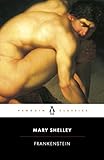
The 1818 first edition, written at eighteen, is rawer and in some ways stronger than the 1831 revision Shelley made as a more mature author; the Penguin Classics edition of the 1818 text is generally recommended.
The Last Man (1826)
Shelley’s most ambitious novel — a pandemic apocalypse set in a republican twenty-first century England. Written in grief for Percy Shelley, Byron, and the idealism of the Romantic generation, it is one of the earliest and most devastating works of apocalyptic fiction. Visionary, deeply felt, and far more readable than its obscurity suggests.
Mathilda (1819)
A short Gothic novella — suppressed by Shelley’s father and unpublished until 1959 — about a young woman destroyed by her father’s incestuous obsession. Autobiographically raw and psychologically precise; one of the most honest works in the Gothic tradition.
Why Frankenstein Is the Essential First Book
For a reader new to Mary Shelley, Frankenstein is the essential first book because it is her masterpiece, one of the most influential novels ever written, and the fullest expression of her distinctive gifts, the imaginative power, the philosophical depth, and the profound engagement with the moral consequences of human ambition. Frankenstein tells the story of Victor Frankenstein, who creates a living being from dead matter and then recoils from his creation, setting in motion a tragedy that has resonated for two centuries. As an entry point it is both natural and essential, for it is her defining work, the founding text of science fiction, and the clearest window onto her imagination and her themes. It welcomes the newcomer with its gripping and tragic story, its enduring resonance, and its profound questions, drawing the reader into one of the most important and influential novels in literature. It is her most famous work and the foundation of her reputation, so the new reader encounters Shelley at her finest. For the newcomer, then, Frankenstein is the natural and essential starting point.
What to Expect as a New Reader
As a new reader, you can expect Frankenstein to be a profound, tragic, and endlessly resonant novel of ambition and its consequences. You can expect a famous and gripping story, for the novel follows Victor Frankenstein, who creates a living being from dead matter and then abandons it in horror, with tragic results. You can expect philosophical depth, for the novel engages profound questions about creation, responsibility, ambition, alienation, and what it means to be human. You can expect sympathy for the creature, for one of the novel’s powers is its compassion for the abandoned being it portrays, making it far more than a horror story. You can expect a layered, framed narrative and rich, Romantic prose. You can expect its founding role in science fiction and its vast cultural influence. Expect, in short, a profound, tragic, and endlessly resonant novel of ambition and its consequences, the essential introduction to Shelley’s gifts.
Going Deeper After Your First Book
Once Frankenstein has introduced you to Shelley’s gifts, the reader who wishes to go deeper can explore her other novels, which continue her imaginative power and her engagement with profound themes, even if none has matched the fame of her masterpiece. The Last Man, an ambitious and prescient novel imagining the end of humanity by plague, is increasingly admired, while her other fiction and her shorter works reveal further dimensions of her imagination and concerns. The reader can also place her within the rich world of Romantic literature to which she belonged. Reading these after Frankenstein deepens your appreciation of Shelley’s distinctive gifts, the imaginative power, the philosophical depth, and the engagement with ambition, alienation, and the human condition. Her characteristic concerns run through her work. Building your reading journey through Shelley is a matter of following her imagination from Frankenstein into The Last Man and her other fiction. The reader who begins here will have encountered one of the most influential and visionary novelists in the English language.
Reading Mary Shelley
Begin with Frankenstein — it is incomparably her greatest achievement. Read The Last Man for her most ambitious secondary work. Mathilda is the most personal of her shorter pieces. All three are standalone.
For the full Mary Shelley bibliography, reviews, and biography, visit the Mary Shelley author page on Editors Reads.
Affiliate disclosure: Links to Amazon on this page are affiliate links. We earn a small commission at no extra cost to you.
Frequently Asked Questions
Where should I start with Mary Shelley?
Frankenstein (1818) is the only starting point — written when Shelley was eighteen and published anonymously, it invented science fiction as a literary genre and remains the most philosophically profound horror novel ever written. Victor Frankenstein's creation of life from dead matter, and his immediate abandonment of the creature he made, generates questions about creation, responsibility, and what it means to be human that are still being answered by AI ethics researchers two centuries later. Nothing else Shelley wrote approaches its achievement.
What is Frankenstein actually about?
Frankenstein is often summarised as a horror story about a monster, but the Creature is the novel's moral centre, not its villain. Victor Frankenstein creates a being of extraordinary sensitivity and intelligence and then flees in horror from his own creation. The Creature, abandoned and rejected by everyone who sees him, asks — in articulate, philosophically sophisticated terms — why his creator brought him into existence only to refuse him the companionship that makes existence bearable. The novel is about the ethics of creation and the cruelty of abandonment; the Creature is the most sympathetic figure in the book.
What is The Last Man about?
The Last Man (1826) is Shelley's most ambitious and most underrated novel — set in a twenty-first century England as a plague sweeps across the world, killing humanity country by country, until Lionel Verney walks the earth alone. Written after the deaths of her husband Percy and most of her close circle, the novel is a sustained elegy for humanity and for a specific generation of Romantic idealists that reads with extraordinary prescience. One of the earliest pandemic novels and a visionary work of apocalyptic fiction.
Is Frankenstein worth reading today?
Frankenstein is more urgent today than at any point since its publication. Shelley's questions — what are the responsibilities of creators toward what they create? What happens to a being made intelligent and then abandoned? What makes us human? — are precisely the questions being asked about artificial intelligence. The novel also works as Gothic horror and as an adventure story; its frame narrative (the Creature's account of its own suffering) is genuinely moving. The 1818 first edition (available in Penguin Classics) is generally preferred to the 1831 revision.