Where to Start with Charlotte Brontë: A Reading Guide
Where to start with Charlotte Brontë — whether to begin with Jane Eyre or Villette. A complete reading guide to the Victorian novelist.
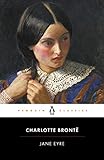
Charlotte Brontë (1816–1855) was the British novelist who published Jane Eyre (1847) under the pseudonym Currer Bell and produced, in that single novel, one of the most influential books in the history of English literature — a template for the romance novel, a foundational text of feminist literary history, and a work that has never been out of print in nearly two centuries. She was the eldest of the three Brontë sisters who all published in 1847 (Anne Brontë’s The Tenant of Wildfell Hall followed a year later); she survived her siblings and published Shirley (1849) and Villette (1853) before dying of pneumonia at thirty-eight, almost certainly while pregnant.
Where to Start: Jane Eyre (1847)
The essential Charlotte Brontë — and one of the great novels in English. Jane is an orphan, plain, poor, and entirely without social advantage. She grows up at Gateshead with relatives who resent her, is sent to Lowood School where the conditions are austere, and eventually becomes a governess at Thornfield Hall, home of the brooding, unconventional Edward Rochester.
Brontë gives Jane a distinctive, uncompromising voice from the first page. Jane does not apologise for her opinions, her feelings, or her refusal to be treated as less than fully human. When Rochester begins to fall in love with her, she resists the power imbalance — she will not be his kept creature, no matter how much she loves him. And when she discovers his secret, her response is to leave — alone, with no money and nowhere to go — rather than compromise her integrity.
The novel’s central argument, made through Jane’s first-person narration, is that dignity and self-respect are not conditional on wealth, beauty, or social position. Jane’s famous declaration — “I am no bird; and no net ensnares me: I am a free human being with an independent will” — is one of the foundational statements of female autonomy in English literature.
The Gothic elements (the mad wife in the attic, the fire, Rochester’s injuries) are inseparable from the emotional argument; Brontë uses the Gothic machinery to externalise Jane’s internal struggle.
Villette (1853)
Charlotte Brontë’s darkest and most accomplished novel — Lucy Snowe alone in Brussels, falling in love without resolution. More psychologically complex than Jane Eyre; preferred by many serious readers. The ending does not comfort.
Why Jane Eyre Is the Ideal First Book
For a reader new to Charlotte Brontë, Jane Eyre is the ideal first book because it is her masterpiece, one of the most beloved and influential novels in English literature, and the fullest expression of her distinctive achievement, the powerful first-person rendering of a passionate, independent heroine’s inner life. Jane Eyre follows its orphaned heroine from a harsh childhood through her growth into an independent woman, her love for the brooding Mr. Rochester, and her insistence on her own dignity and integrity, all rendered in a passionate, immediate first-person voice that revolutionized the novel. As an entry point, it offers the fullest expression of Charlotte Brontë’s gifts, the passionate intensity, the powerful heroine, and the combination of romance, drama, and moral seriousness that have made it beloved. It welcomes the newcomer with its compelling story, its unforgettable heroine, and its passionate voice, drawing the reader into one of the great novels in English. It is her masterpiece and the one that best represents her gifts, so that the new reader encounters Charlotte Brontë at her finest. For the newcomer, then, Jane Eyre is the natural and ideal starting point.
What to Expect as a New Reader
As a new reader, you can expect Jane Eyre to be a passionate, intense, and unforgettable novel, rendering the inner life of an independent heroine in a powerful first-person voice. You can expect a compelling story, for the novel follows its orphaned heroine from a harsh childhood through her growth into an independent woman, her position as a governess, her love for the brooding Mr. Rochester, and the secrets and trials that test her. You can expect an unforgettable heroine, for Jane is passionate, independent, and morally serious, insisting on her own dignity and integrity even at great cost, a revolutionary heroine for her time. You can expect a passionate first-person voice, for the novel’s immediate, intense rendering of Jane’s inner life was a landmark in fiction. You can expect a combination of romance, drama, mystery, and moral seriousness, gripping and emotionally powerful. Expect, in short, a passionate, intense, and unforgettable novel of an independent heroine, a powerful introduction to Charlotte Brontë.
Going Deeper After Your First Book
Once Jane Eyre has introduced you to Charlotte Brontë’s passionate fiction, the reader who wishes to go deeper can explore her other novels, which continue her powerful rendering of women’s inner lives and her distinctive intensity. Her other fiction, including her profound and underrated later novel drawing on her own experience, continues her passionate rendering of the inner life, her exploration of women’s experience and longing, and her psychological depth, in a more mature and complex register. Reading these after Jane Eyre deepens your appreciation of Charlotte Brontë’s distinctive gifts, the passionate intensity, the powerful rendering of women’s inner lives, and the psychological depth that mark her work. Her characteristic qualities run through her fiction, and the reader who has been gripped by Jane Eyre will find them developed in her other novels. You may also wish to read her sisters’ novels, encountering Charlotte’s work in dialogue with the remarkable achievement of the Brontë family. Building your reading journey through Charlotte Brontë’s work is a matter of following her passionate fiction from her masterpiece into her other novels. The reader who begins with Jane Eyre and continues through her work will discover one of the great novelists in English.
Reading Charlotte Brontë
Begin with Jane Eyre — it is the essential novel and the most immediately engaging. Read Villette next if you want her most psychologically ambitious work; it rewards the reader who comes to it having understood what Jane Eyre established about her voice and concerns.
For the full Charlotte Brontë bibliography, reviews, and biography, visit the Charlotte Brontë author page on Editors Reads.
Affiliate disclosure: Links to Amazon on this page are affiliate links. We earn a small commission at no extra cost to you.
Frequently Asked Questions
Where should I start with Charlotte Brontë?
Jane Eyre (1847) is the essential starting point — Charlotte Brontë's novel about Jane, an orphan who becomes a governess at Thornfield Hall, falls in love with the brooding, difficult Rochester, and discovers the secret he has kept hidden in his attic. One of the most beloved novels in the English language and the foundation of the modern romance novel; its portrait of female self-determination, refusal to compromise self-respect for love, and the famous declaration 'I am no bird; and no net ensnares me' have made it a touchstone of feminist literary history.
What is Villette about?
Villette (1853) is Charlotte Brontë's final and most autobiographical novel — Lucy Snowe travels alone to the fictional city of Villette (modelled on Brussels, where Brontë studied and taught) after suffering unspecified losses, takes a position at a girls' school, and falls in love twice, with outcomes that are not conventionally romantic. Darker and more psychologically intense than Jane Eyre; many literary critics consider it her finest novel, though it is less widely read than its predecessor. The ending is famously ambiguous.
How does Jane Eyre compare to Wuthering Heights?
Jane Eyre and Wuthering Heights were published in the same year (1847) — Charlotte Brontë's Jane Eyre and her sister Emily Brontë's Wuthering Heights are both Gothic novels with intense romantic relationships, but they are temperamentally opposite. Jane Eyre is ultimately optimistic — its heroine finds love on her own moral terms. Wuthering Heights is more radical and more nihilistic; its love is destructive and irresolvable. Both are essential Victorian novels; many readers read them as companion pieces.
Should I read Shirley and The Professor?
Charlotte Brontë published four novels: The Professor (written first but published posthumously), Jane Eyre, Shirley, and Villette. The Professor and Shirley are lesser works than Jane Eyre and Villette, though Shirley has historical interest as a novel about the Luddite uprisings in Yorkshire. Most readers find Jane Eyre and Villette sufficient; The Professor and Shirley are for devoted readers who want to complete the canon.