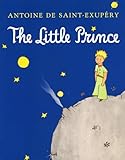
Antoine de Saint-Exupéry was a French aviator and author whose fable The Little Prince has become one of the most translated and widely loved books in the history of literature.
Antoine de Saint-Exupéry was a pioneering aviator as well as a writer — he flew mail routes over North Africa and South America — and his books about flight are infused with the particular knowledge of a man for whom the sky was a working environment rather than a metaphor. The Little Prince, published in 1943 shortly before his disappearance on a reconnaissance mission, was his last work.
The Little Prince is a short book — a fable, really — in which a pilot forced down in the Sahara meets a small prince from another planet who tells him about his travels and his home. It operates on multiple levels simultaneously: it is a children’s book in its illustrations and its simplicity, but its themes — love, loss, imagination, the corruption of adult seriousness, the cost of forgetting what matters — are addressed to adults. The fox’s teaching about taming and the rose’s contradictions are among the most quoted passages in French literature for good reason.
The book has been sentimentalized in its popular reception to a degree that sometimes obscures how melancholy and clear-eyed it actually is. Saint-Exupéry is not simply saying that adults should be more childlike; he is saying something more precise and harder about what is lost in the process of becoming a person who counts things and manages things and forgets to look at sunsets. Written in exile in New York as France fell to the Germans, The Little Prince is a book about grief and beauty written by someone who did not survive the war in which he wrote it.
The Aviator-Writer
To read Saint-Exupéry only as the author of a children’s fable is to miss the experience that gave his writing its distinctive gravity. He belonged to the heroic early age of aviation, flying for the pioneering Aéropostale airmail service over the Pyrenees, the Sahara, and the Andes in fragile, unreliable machines, at a time when each flight carried a real chance of death. He survived crashes, was once stranded for days in the Libyan desert near death from dehydration — an ordeal that fed directly into both The Little Prince and his earlier reportage — and knew intimately the solitude of the night sky and the comradeship of fellow pilots. This was not the romance of an armchair adventurer but the lived knowledge of a working aviator, and it suffuses books such as Night Flight (1931) and Wind, Sand and Stars (1939), the latter of which won France’s Grand Prix du Roman de l’Académie française and, in the United States, the National Book Award. For Saint-Exupéry, flight was a vantage point from which the meaning of human life came into focus: the smallness of human quarrels against the vastness of the earth, and the value of duty, courage, and connection.
A Philosophy of Responsibility and Bonds
Across his work runs a consistent moral vision, one shaped by his experience of danger, duty, and human solidarity. Saint-Exupéry was preoccupied with what binds people to one another and to their obligations — the pilot to his mail and his comrades, the gardener to the rose, the individual to a cause larger than personal comfort. The fox’s lesson in The Little Prince, that one becomes responsible forever for what one has tamed, is the distilled form of an ethic that appears throughout his writing: meaning is created through commitment, through the patient investment of time and care that transforms the anonymous into the beloved. His unfinished, posthumously published Citadelle (translated as The Wisdom of the Sands) is the most ambitious and sprawling statement of this philosophy, a vast meditation on civilization, leadership, and human purpose. Though uneven and demanding, it reveals the seriousness of his ambitions as a thinker. He was, in the end, a moralist in the best French tradition, using narrative and image to pose the oldest questions about how a person ought to live.
Disappearance and Enduring Legacy
In July 1944, flying a reconnaissance mission for the Free French forces, Saint-Exupéry took off from Corsica and never returned, vanishing over the Mediterranean at the age of forty-four. For decades his fate was a mystery that deepened the legend; only later did the discovery of wreckage off the coast near Marseille confirm where his aircraft had gone down. That he disappeared into the sky he had spent his life describing gave his death an almost literary symmetry, and it sealed his identification with the pilot-philosopher of his books. His legacy is double. The Little Prince has become one of the most translated and best-selling works ever written, beloved across cultures and generations, its drawings and aphorisms instantly recognizable. But his aviation memoirs endure as well, admired as some of the finest writing about flight and human endeavour ever produced. Saint-Exupéry remains a singular figure — a man of action who was also a genuine artist, who turned the dangers of an extraordinary life into reflections on love, loss, and meaning that continue to move readers the world over.
Where to Start Reading Saint-Exupéry
Most readers will arrive through The Little Prince, and rightly so — it is the natural entry point, deceptively simple and rewarding at any age, best read with attention to its melancholy rather than only its charm. Those moved by it should not stop there, because the aviation memoirs reveal the experience that gave the fable its depth. Wind, Sand and Stars is the essential next step, a luminous, prize-winning meditation on flight, danger, comradeship, and the meaning of human endeavour, including his harrowing account of a desert crash and rescue. Night Flight, a taut, dramatic short novel about the airmail pilots who risked everything to keep the mail moving, shows his fiction at its most intense. The more philosophically inclined may venture into the unfinished Citadelle (The Wisdom of the Sands), though it is demanding and uneven. Read together, these works reveal a writer for whom the sky was both a workplace and a vantage point on what makes a human life worthwhile.
Reading Guides