Editors Reads Verdict
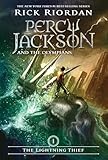
Rick Riordan's series-opener is one of middle-grade fiction's great achievements — a book that made classical mythology feel urgent, funny, and emotionally relevant to a generation of readers who went on to become lifelong mythology enthusiasts.
What We Loved
- Percy's voice is immediately distinctive, funny, and genuinely likable
- Greek mythology integrated seamlessly into modern American settings
- Pacing is relentless without sacrificing character development
- ADHD and dyslexia representation handled with warmth and invention
Minor Drawbacks
- Adult readers may find the plotting straightforward
- Some mythological interpretations take significant liberties with source material
- Villain motivations are occasionally thin
Key Takeaways
- → Mythology stays alive when it's embedded in contemporary emotional reality
- → Protagonists with specific neurodivergent traits require specific narrative validation
- → Humor and high stakes are not mutually exclusive in adventure fiction
- → A child's perspective can reveal adult hypocrisies with devastating clarity
- → Found family is a more compelling loyalty than blood family in quest narratives
| Author | Rick Riordan |
|---|---|
| Publisher | Miramax Books |
| Pages | 377 |
| Published | July 1, 2005 |
| Language | English |
| Genre | Fantasy, Young Adult, Mythology |
| Difficulty | Beginner |
| Best For | Middle-grade readers discovering fantasy and mythology, plus adults revisiting a beloved series or looking for accessible mythology fiction. |
How Percy Jackson and the Lightning Thief Compares
Percy Jackson and the Lightning Thief at a glance against 3 similar books readers weigh alongside it.
| Book | Author | Rating | Best for |
|---|---|---|---|
| Percy Jackson and the Lightning Thief (this book) | Rick Riordan | ★ 4.4 | Middle-grade readers discovering fantasy and mythology, plus adults revisiting |
| Harry Potter and the Sorcerer's Stone | J.K. Rowling | ★ 4.7 | Readers of all ages who want to understand one of the most culturally |
| The Hobbit | J.R.R. Tolkien | ★ 4.8 | First-time fantasy readers of any age, children being introduced to Tolkien, |
| The Hunger Games | Suzanne Collins | ★ 4.5 | Young adult and adult readers who want dystopian fiction with genuine political |
The Myth That Came to Brooklyn
Percy Jackson is twelve years old, has been expelled from six schools, and has just learned that his best friend is a satyr, his mother has been kidnapped by the Minotaur, and his father is Poseidon, God of the Seas. He has approximately ten days to retrieve Zeus’s stolen lightning bolt, prevent a war among the Olympians, and get home for the school year.
Rick Riordan conceived The Lightning Thief as a bedtime story for his son Haley, who had ADHD and dyslexia and struggled to connect with the mythology Riordan taught in school. That origin story is embedded in the book’s DNA: Percy shares Haley’s diagnosis, and Riordan reframes both conditions as divine gifts — the hyperactivity of a warrior, the pattern-recognition of someone whose brain was wired for ancient texts.
A Voice That Earns Everything
Percy’s first-person narration is the book’s primary engine. The voice is self-deprecating, observational, and consistently funny without ever undercutting the emotional stakes. When the novel reaches its genuine emotional core — Percy’s relationship with his absent father, his fierce protectiveness of his mother — the comedy makes those moments more affecting rather than less.
Riordan’s Olympus-relocated-to-Manhattan concept is brilliantly executed. The idea that Western civilization moved west, taking its gods with it, places the Olympians in the Empire State Building and gives Percy a quest that cuts across recognizable American geography — the St. Louis Arch, Las Vegas, Los Angeles — while hitting genuine mythological beats.
Mythology Made Urgent
What separates the Percy Jackson series from its imitators is Riordan’s actual knowledge of Greek mythology and his ability to recontextualize it without trivializing it. The gods in these books are recognizably the gods of Hesiod and Homer: capricious, powerful, emotionally adolescent, and entirely capable of cruelty toward their own children. That darkness gives the books their emotional truth.
The central mystery — who stole the lightning bolt and why — is well-constructed, and the answer, when it arrives, lands with genuine impact.
A Generation’s Gateway
Millions of adults who now read serious myth scholarship, academic history, and literary fiction can trace a direct line back to Percy Jackson. That’s not hyperbole — it’s the observable effect of a book that made mythology feel personally relevant at exactly the right age.
Our rating: 4.4/5 — An endlessly charming and cleverly constructed middle-grade adventure that has sent more readers to classical mythology than any textbook ever will.
Reading Guides
- Books Like Percy Jackson: 12 Adventure Series for Fans of Greek Mythology
- Rick Riordan Books in Order: Percy Jackson and All Series (2026)
- Harry Potter vs Percy Jackson: Which Fantasy Series Should You Read First?
Screen Adaptations and the Disney+ Series
The Lightning Thief has had two distinct lives on screen. The 2010 film directed by Chris Columbus, with Logan Lerman as Percy, was poorly received by both fans and Riordan himself — the liberties taken with the plot and characters were significant enough that Riordan publicly distanced himself from it. A 2013 sequel, Sea of Monsters, fared no better, and the film franchise was quietly abandoned.
The Disney+ series Percy Jackson and the Olympians, which premiered in 2023, took a different approach. Walker Scobell plays Percy, and Riordan was substantially involved in the production from early development — an involvement he had specifically requested after his experience with the films. The series has been praised for its closer adherence to the books and its casting. The contrast between the two screen iterations illustrates how differently an adaptation lands when the source material’s creator is a genuine collaborator rather than an afterthought.
Legacy and Cultural Impact
The Percy Jackson series has sold over 180 million copies worldwide, a figure that reflects not just the books’ initial popularity but their sustained readership across more than two decades. The series sits alongside Harry Potter as one of the defining children’s book franchises of its era, and it occupies a particular place in contemporary mythology education: librarians and teachers regularly report that The Lightning Thief is the most reliable gateway to further reading in classical studies.
Riordan’s success with Greek mythology opened the door to the broader Riordanverse — the Heroes of Olympus series bringing Roman mythology, the Kane Chronicles exploring Egyptian mythology, Magnus Chase addressing Norse mythology, and the Trials of Apollo following Apollo himself through a new cycle of quests. The model Riordan established in The Lightning Thief — contemporary American setting, relatable neurodivergent protagonist, mythological knowledge embedded in fast-paced adventure — proved transferable across every pantheon he turned it toward.
The Disney+ Series and the Original Films
The Lightning Thief has lived two distinct screen lives. The 2010 film directed by Chris Columbus, with Logan Lerman as Percy, diverged significantly from the source material — Riordan publicly distanced himself from it. A 2013 sequel, Sea of Monsters, performed no better, and the film franchise ended there. The Disney+ series Percy Jackson and the Olympians, which premiered in January 2024, represented a deliberate reset. Walker Scobell plays Percy, Leah Sava Jeffries plays Annabeth, and Aryan Simhadri plays Grover. Riordan served as an active creative collaborator from the earliest stages of development, the involvement he had specifically sought after the film experience. The contrast between the two screen adaptations illustrates how differently a beloved story lands when its author is a genuine participant rather than an afterthought — and why The Lightning Thief’s readership, two decades after publication, shows no sign of diminishing.
Frequently Asked Questions
What is "Percy Jackson and the Lightning Thief" about?
Twelve-year-old Percy Jackson discovers he is the son of a Greek god and must prevent a war among the Olympians by recovering Zeus's stolen master lightning bolt.
Who should read "Percy Jackson and the Lightning Thief"?
Middle-grade readers discovering fantasy and mythology, plus adults revisiting a beloved series or looking for accessible mythology fiction.
What are the key takeaways from "Percy Jackson and the Lightning Thief"?
Mythology stays alive when it's embedded in contemporary emotional reality Protagonists with specific neurodivergent traits require specific narrative validation Humor and high stakes are not mutually exclusive in adventure fiction A child's perspective can reveal adult hypocrisies with devastating clarity Found family is a more compelling loyalty than blood family in quest narratives
Is "Percy Jackson and the Lightning Thief" worth reading?
Rick Riordan's series-opener is one of middle-grade fiction's great achievements — a book that made classical mythology feel urgent, funny, and emotionally relevant to a generation of readers who went on to become lifelong mythology enthusiasts.
Ready to Read Percy Jackson and the Lightning Thief?
Check the current price on Amazon.
Check Price on Amazon (paid link)Prices and availability are subject to change. See Amazon for current price.
Review last updated: