Books Like Harry Potter: 15 Magical Series to Read Next
Finished Harry Potter and need more magic? These 15 fantasy series — from Percy Jackson to The Name of the Wind — capture the same wonder and adventure.

J.K. Rowling’s seven-book series did something rare: it created an entire generation of readers. The combination of a relatable outsider hero, a richly mapped magical world, year-by-year school structure, genuine danger, and a theme of love triumphing over power is almost unrepeatable. Almost.
If you’ve finished the series and the world feels slightly grayer without it, these 15 fantasy series will help. Each one captures at least part of what made Hogwarts feel like home — rich world-building, the power of friendship, moral stakes that actually matter, and magic that still feels wondrous rather than mechanical.
Rich Worlds with School and Mentor Structures
#1 — The Chronicles of Narnia by C.S. Lewis
The series that prefigures Harry Potter in many important ways: children from the ordinary world transported into a magical one, a great and terrible conflict between good and evil, and a mentor figure (Aslan) who is both warm and frightening. The Lion, the Witch and the Wardrobe is the obvious entry point, but the seven-book series rewards reading in full. Lewis builds Narnia with the same attention to detail Rowling gives to Hogwarts — every corner has a history.
#2 — His Dark Materials by Philip Pullman
Pullman’s trilogy beginning with The Golden Compass is frequently cited as the closest match to Harry Potter in terms of ambition and emotional depth. Lyra Belacqua is an orphan with a hidden destiny, the world she inhabits is a parallel version of ours with its own rich mythology, and the stakes escalate book by book toward something genuinely cosmic. Where Rowling is warmer, Pullman is darker — but the sense of wonder is identical.
#3 — Eragon (The Inheritance Cycle) by Christopher Paolini
A farm boy discovers a dragon egg and is swept into a conflict between an empire and the rebels who would overthrow it. Paolini began writing Eragon at fifteen, and the story wears its influences — Tolkien, Star Wars, McCaffrey — openly. What it delivers is a deeply satisfying classic fantasy adventure with a coming-of-age arc, a mentor who doesn’t survive long enough, and a world full of Elves, Dwarves, and ancient languages that feel genuinely constructed.
Epic Magic Systems and World-Building
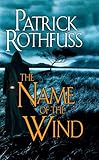
#4 — The Name of the Wind by Patrick Rothfuss
Kvothe is the most famous hero of his age, now living in hiding as an innkeeper — and this is the story of how he got there, told in his own words. The Name of the Wind is set partly at a University where students learn the science of magic, which should feel immediately familiar to any Potter reader. Rothfuss’s prose is extraordinary, and Kvothe’s voice — brilliant, impulsive, prone to catastrophic mistakes — is one of the most compelling in modern fantasy.
#5 — Mistborn: The Final Empire by Brandon Sanderson
Sanderson is the master of the “hard magic system” — magic with defined rules, costs, and consequences that can be learned and exploited. The Final Empire is set in a world where the Dark Lord won a thousand years ago and still rules. The protagonist, Vin, is a street thief who discovers she has extraordinary powers, finds found family among a crew of rebels, and is drawn into a plot to overthrow an empire. The world-building is meticulous and the plotting is airtight.
#6 — A Wizard of Earthsea by Ursula K. Le Guin
Le Guin’s Earthsea series is the ancestor of the magical school story — Ged attends a school for wizards on the island of Roke decades before Hogwarts existed. Le Guin’s prose is quieter and more philosophically dense than Rowling’s, but the questions she asks — about power, naming, the shadow self — are profound. The four-book series is short enough to read in a weekend and rich enough to think about for years.
Adventure and Found Family
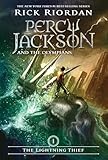
#7 — Percy Jackson and the Olympians by Rick Riordan
If you love the way Rowling drops a mythological world into the ordinary one and then maps it obsessively, Riordan’s series does the same with Greek mythology. Percy Jackson is a dyslexic, ADHD kid who discovers he is the son of a Greek god and that Camp Half-Blood is training young heroes for exactly the kind of dangers only a child of the gods could face. The tone is funnier than Potter but the friendship dynamics and escalating stakes are closely analogous.
#8 — The Hobbit and The Lord of the Rings by J.R.R. Tolkien
The foundation under almost everything on this list. If you’ve somehow come to Harry Potter before Tolkien, this is a necessary correction. The Hobbit is the more directly analogous read — a small, comfortable creature swept into an adventure larger than himself — while The Lord of the Rings is the epic that will recalibrate your sense of what fantasy world-building can achieve. The Shire has the same warmth as the Burrow.
#9 — Sabriel by Garth Nix
Sabriel opens the Old Kingdom trilogy with a premise that shouldn’t work but absolutely does: a boarding school student on the border between the living world and a land of the undead inherits her father’s role as the Abhorsen — the necromancer who sends the dead back rather than raising them. Nix builds one of the most original and internally consistent magical systems in YA fantasy, and Sabriel herself is one of the genre’s finest protagonists.
For Younger Readers Ready for More
#10 — The Alchemyst (The Secrets of the Immortal Nicholas Flamel) by Michael Scott
Nicholas Flamel is a real historical figure — an alchemist who legend says achieved immortality. Scott uses this as the springboard for a globe-trotting series in which twin teenagers Josh and Sophie Newman discover that every myth and legend is real, and that they may be the most powerful magicians in history. The series is pacier than Potter and revels in its own mythology-blending.
#11 — Inkheart by Cornelia Funke
Meggie’s father has a magical ability: when he reads aloud, characters step out of the pages of books and into the real world. When a villain named Capricorn escapes from the book Inkheart, Meggie and her father must navigate a world where the boundary between story and reality has dissolved. Funke writes with the same love of story that Rowling has, and Inkheart is as much about why we read as it is about what happens next.
#12 — The Phantom Tollbooth by Norton Juster
For readers who loved the way Rowling made the ordinary world strange and the strange world logical, The Phantom Tollbooth is essential. Milo drives through a magic tollbooth and into the Kingdom of Wisdom, where letters and numbers are at war and everything is an extended, brilliant pun. It is the funniest book on this list and, despite being published in 1961, hasn’t dated a day.
Series with Long Arcs and Growing Complexity
#13 — Ranger’s Apprentice by John Flanagan
Will is an orphan who hopes to be trained as a knight but is instead apprenticed to Halt, one of the kingdom’s mysterious Rangers. Flanagan’s fifteen-book series follows Will from childhood to adulthood with the same year-by-year progression that made the Harry Potter series so satisfying. The mentor-apprentice relationship between Will and Halt has the warmth of Harry and Dumbledore, and the action plotting is some of the best in YA fantasy.
#14 — Septimus Heap by Angie Sage
The seventh son of a seventh son, Septimus Heap is destined to become a great Wizard — but his first years involve a great deal of chaos, a feral princess, and a Wizard tower full of secrets. Sage’s seven-book series is the most directly Rowling-adjacent on this list: it has the same cozy-but-dangerous tone, an apprenticeship structure, and a villain who is more menacing in reputation than in initial appearance.
#15 — The Magicians by Lev Grossman
Quentin Coldwater has grown up obsessing over a series of fantasy novels about a magical land called Fillory — and then discovers that both Fillory and a real school of magic exist. The Magicians is Harry Potter for adults in the deepest sense: it interrogates what it actually means to have magical power, what you do when the wish comes true, and whether the fantasy of escaping into a better world holds up under scrutiny. It is darker, funnier, and more self-aware than anything on this list.
How to Choose Your Next Read
If you want the closest tone match: Percy Jackson or Ranger’s Apprentice.
If you want richer world-building: Mistborn or The Name of the Wind.
If you want more ambition and darkness: His Dark Materials or The Magicians.
If you want the classics that shaped the genre: Earthsea or The Lord of the Rings.
Harry Potter: Complete Reading Order
For the full series in order, age guidance per book, and where to start if you’re new, see our Harry Potter Books in Order guide.
For the Best Fantasy Books
For the definitive guide to fantasy fiction — from Tolkien and Le Guin to Brandon Sanderson and George R.R. Martin — see our Best Fantasy Books of All Time list.
Affiliate disclosure: Links to Amazon on this page are affiliate links. We earn a small commission at no extra cost to you. This does not influence our editorial recommendations.
Frequently Asked Questions
What books are most similar to Harry Potter?
The closest books to Harry Potter are Percy Jackson and the Olympians by Rick Riordan, The Name of the Wind by Patrick Rothfuss, and The Chronicles of Narnia by C.S. Lewis. All feature young protagonists discovering a magical world with rich lore and strong friendships.
What should adults read if they loved Harry Potter?
Adults who loved Harry Potter often enjoy The Name of the Wind by Patrick Rothfuss, Jonathan Strange and Mr Norrell by Susanna Clarke, and The Night Circus by Erin Morgenstern. These are more complex but carry the same sense of magical wonder.
Are there any 7-book fantasy series like Harry Potter?
The Throne of Glass series by Sarah J. Maas is also 7 books and follows a similar arc of a young protagonist growing into their power across an expanding magical world. The Chronicles of Narnia is 7 books and is a closer age match for younger readers.
What age group are books like Harry Potter suitable for?
Most Harry Potter alternatives are suitable for ages 10 and up, though Percy Jackson skews slightly younger (8+) and The Name of the Wind is aimed at adults. The recommendations on this list are grouped by whether they suit younger readers or older teens and adults.