Best Fantasy Books of All Time — The Definitive Reading List
From Tolkien to Rothfuss, Martin to Le Guin — the greatest fantasy novels ever written, ranked and reviewed by our editorial team. The ultimate guide to the fantasy genre.

Fantasy is the oldest form of storytelling. The Epic of Gilgamesh is fantasy. The Iliad is fantasy. Every mythology ever recorded is fantasy. The genre’s modern form — secondary worlds with their own rules, histories, and peoples — was largely invented by one Oxford professor in the 1950s, and has been in constant expansion ever since.
These are the novels that define the genre: the ones that every serious reader of fantasy should encounter, the ones that set the standard against which everything else is measured.
The Foundations (The Books That Built the Genre)
The Lord of the Rings — J.R.R. Tolkien ⭐⭐⭐⭐⭐
The foundational text. Tolkien invented modern fantasy with this novel — not just a story but an entire civilisation, with invented languages, deep histories, and a mythology spanning thousands of years. Every fantasy novel written since 1954 is, in some sense, a response to this one.
Frodo Baggins, a humble hobbit, inherits the One Ring — the instrument of the Dark Lord Sauron’s absolute power — and must carry it across a continent to destroy it. What makes the novel extraordinary is not the plot but the world: the depth of Middle-earth’s reality, the weight of its history, the way every location carries the residue of thousands of years.
Why it’s essential: The same reason Homer is essential. It’s the origin.
➡ Read our full review → | Buy on Amazon →
A Game of Thrones — George R.R. Martin ⭐⭐⭐⭐⭐
Martin took what Tolkien built and injected the brutal political realism of actual medieval history. No moral safety nets, no guaranteed survival of protagonists, no clear good versus evil. The death of Ned Stark — which readers genuinely did not see coming in 1996 — permanently changed fantasy’s relationship with its own conventions.
The world of Westeros is as fully realised as Middle-earth, but built differently: from the inside of its politics, economics, and power structures rather than from its mythology and language.
Why it’s essential: The novel that proved fantasy could sustain the same moral complexity as literary fiction.
➡ Read our full review → | Buy on Amazon →
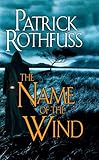
The Name of the Wind — Patrick Rothfuss ⭐⭐⭐⭐½
The most beautifully written fantasy novel of its generation. Kvothe — legend, innkeeper, the most infamous man alive — tells his own story to a Chronicler over three days. The prose is literary in a way fantasy rarely demands, the magic system (Sympathy, governed by physics) is the most intellectually satisfying ever designed, and the University sequences capture the joy of learning with rare specificity.
Why it’s essential: The best writing in the genre — and the only fantasy novel that literary fiction readers consistently love without reservation.
Caveat: Book Three remains unpublished after 17 years. Go in knowing this.
➡ Read our full review → | Buy on Amazon →
Essential Fantasy: The Broader Canon
A Wizard of Earthsea — Ursula K. Le Guin ⭐⭐⭐⭐⭐
Le Guin was the finest prose stylist in the history of science fiction and fantasy, and Earthsea is her masterwork. A young wizard on the island of Roke accidentally releases a shadow creature and must pursue it across an archipelago world to confront it. Short, perfect, and deeper than most novels four times its length.
Le Guin’s magic system — based on the true names of things — predates Rothfuss’s by forty years and is equally compelling. Her prose is flawless.
Why it’s essential: The best argument that fantasy can be great literature, not just great storytelling.
The Lies of Locke Lamora — Scott Lynch ⭐⭐⭐⭐½
Ocean’s Eleven set in a Venetian fantasy city built on the ruins of an ancient alien civilisation. Locke Lamora and his Gentlemen Bastards are the most talented thieves in Camorr — running an elaborate con against the city’s nobility while an unknown force begins destroying the criminal underworld around them.
Lynch writes dialogue like Tarantino and plots like a Swiss watchmaker. The world-building is wickedly inventive and the relationship between Locke and his crew is the warmest, funniest, most genuinely affectionate in modern fantasy.
Why it’s essential: The best heist fantasy ever written, and the most fun 500 pages in the genre.
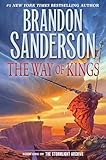
The Way of Kings — Brandon Sanderson ⭐⭐⭐⭐½
The first volume of The Stormlight Archive — Sanderson’s 10-book epic set on the storm-ravaged world of Roshar. Sanderson is the most systematic world-builder in contemporary fantasy: his magic systems (Stormlight, Surgebinding) are rigorously designed with internal physics, his political structures are detailed, and his plotting is architecturally precise.
At 1,000+ pages it requires commitment, but the payoff in the final third is extraordinary.
Why it’s essential: The best current ongoing epic fantasy — and Sanderson is the most reliably productive major fantasy author alive.
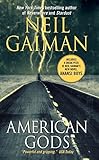
American Gods — Neil Gaiman ⭐⭐⭐⭐½
Shadow Moon is released from prison and hired by the mysterious Mr. Wednesday — and drawn into a conflict between the old gods (brought to America by immigrant believers across centuries) and the new gods (Media, Technology, the Internet). Gaiman’s novel is a road trip, a mythology, and a meditation on belief and identity in America.
Why it’s essential: The most original fantasy premise of the 2000s and Gaiman’s most ambitious novel.
The Fifth Season — N.K. Jemisin ⭐⭐⭐⭐⭐
The first volume of The Broken Earth trilogy — winner of three consecutive Hugo Awards (one per volume), the only trilogy to achieve this. Set in a world where catastrophic geological events (“fifth seasons”) regularly devastate civilisation, populated by people with the power to control seismic activity who are simultaneously persecuted for that power.
Jemisin writes in second person — you do this, you feel that — a choice that should be alienating and instead creates an intimacy unlike anything else in the genre.
Why it’s essential: The most formally innovative fantasy since Le Guin, with the most urgent themes in the field.
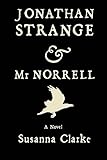
Jonathan Strange & Mr Norrell — Susanna Clarke ⭐⭐⭐⭐⭐
Set in an alternate 19th-century England where magic was once practiced and has fallen into academic dispute, Jonathan Strange & Mr Norrell follows the only two practicing magicians in England as they are drawn into the Napoleonic Wars and an ancient supernatural rivalry.
Clarke writes in the style of Jane Austen and Anthony Trollope — dry, precise, socially satirical — applied to a world of faeries and impossible magic. The footnotes alone are a masterwork.
Why it’s essential: The most original fantasy novel of the 2000s and one of the best debut novels ever published.
How to Start Reading Fantasy
If you’ve never read fantasy before, or have tried and found it overwhelming:
| If you want… | Start with… |
|---|---|
| The best possible prose | The Name of the Wind |
| The most political complexity | A Game of Thrones |
| The fastest, most fun read | The Lies of Locke Lamora |
| The deepest mythology | The Lord of the Rings |
| The most formally daring | The Fifth Season |
| The shortest classic | A Wizard of Earthsea |
The mistake most new fantasy readers make is starting with the longest, most famous book (usually Tolkien or Jordan) before they’ve found their footing in the genre. Start with something shorter and faster — then build up to the epics once you know what kind of fantasy you love.
FAQ
What is the best fantasy book ever written?
The Lord of the Rings by J.R.R. Tolkien is the most frequently cited answer — it is the foundational text of the genre and the most fully realised imaginary world in literature. For prose quality, The Name of the Wind (Rothfuss) or A Wizard of Earthsea (Le Guin) are the strongest contenders. For contemporary readers who prefer moral complexity and political realism, A Game of Thrones (Martin) is the answer.
Is fantasy worth reading if I usually read literary fiction?
Yes. The best fantasy — Le Guin, Clarke, Jemisin, Tolkien — achieves everything literary fiction aims for: psychological depth, beautiful prose, moral complexity, and insight into the human condition. The secondary world setting is a tool for illuminating aspects of reality that realism cannot easily access, not a retreat from seriousness.
Should I read The Lord of the Rings or watch the Peter Jackson films first?
Both are excellent; the films are among the greatest cinema adaptations ever made. For the fullest experience, read the book first — the films compress and simplify significantly, and the book contains depths (Tom Bombadil, the Scouring of the Shire, the full Appendices) that the films had no room for.
What’s the best fantasy series for someone who liked Game of Thrones (the TV show)?
If you liked the political complexity and moral ambiguity: A Game of Thrones by George R.R. Martin (the source material, which is richer), or The First Law trilogy by Joe Abercrombie. If you liked the epic scope and world-building: The Way of Kings by Brandon Sanderson.
Affiliate disclosure: Amazon links are affiliate links. We may earn a commission at no extra cost to you. This does not affect our editorial judgements — we only recommend books we believe in.
Frequently Asked Questions
What is the best fantasy book of all time?
The Lord of the Rings by J.R.R. Tolkien is most commonly cited as the greatest fantasy novel ever written, having defined the genre for seven decades. A Game of Thrones by George R.R. Martin and The Way of Kings by Brandon Sanderson are the most frequently cited modern equivalents.
Where should a new fantasy reader start?
New fantasy readers should start with either The Hobbit by Tolkien (short, accessible, perfect introduction), The Name of the Wind by Patrick Rothfuss (modern, literary), or The Final Empire by Brandon Sanderson (self-contained, excellent magic system). All three are complete stories that do not require reading further books.
What is the longest fantasy series worth reading?
The Wheel of Time by Robert Jordan is 14 books and widely considered the most rewarding long fantasy series. Brandon Sanderson's Cosmere spans 20+ novels across multiple series. Both reward the investment but require significant commitment.
What fantasy books are similar to Game of Thrones?
The best fantasy books similar to Game of Thrones are The Blade Itself by Joe Abercrombie, The Name of the Wind by Patrick Rothfuss, and The Lions of Al-Rassan by Guy Gavriel Kay. All feature morally complex characters, political intrigue, and a reluctance to protect their heroes.