Best Nonfiction Books of All Time: 25 Essential Reads
A ranked guide to the greatest nonfiction books ever written — from psychology and history to memoir and science — with every pick earning its place.
By Elena Marsh
Great nonfiction does what only the best novels attempt: it makes the familiar strange and the strange legible. The books on this list were chosen because each one genuinely altered the intellectual landscape after it was published. Some reshaped entire academic fields; others gave millions of readers a vocabulary for experiences they had never been able to name. None are here for prestige alone.
The list draws from five categories — psychology and behaviour, history and society, science, memoir, and self-improvement — because the most well-read minds tend to read across categories, not within a single lane.
Quick-Reference Table
| # | Title | Author | Category | Best For |
|---|---|---|---|---|
| 1 | Thinking, Fast and Slow | Daniel Kahneman | Psychology | Understanding your own mind |
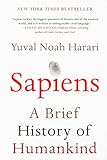
| 2 | Sapiens | Yuval Noah Harari | History | The big picture of humanity |
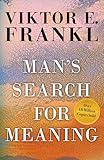
| 3 | Man’s Search for Meaning | Viktor Frankl | Memoir/Philosophy | Finding purpose under pressure |
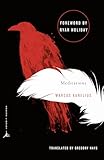
| 4 | Meditations | Marcus Aurelius | Philosophy | Stoic daily practice |
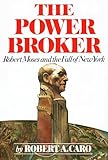
| 5 | The Power Broker | Robert Caro | Biography/History | Power, cities, and corruption |
| 6 | The Selfish Gene | Richard Dawkins | Science | Evolutionary biology foundation |
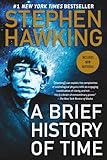
| 7 | A Brief History of Time | Stephen Hawking | Science | Cosmology for general readers |
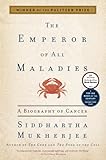
| 8 | The Emperor of All Maladies | Siddhartha Mukherjee | Science/Medicine | History of cancer |
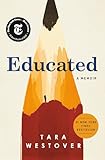
| 9 | Educated | Tara Westover | Memoir | Education as self-creation |
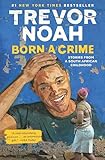
| 10 | Born a Crime | Trevor Noah | Memoir | Apartheid, identity, and survival |
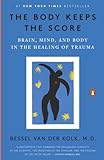
| 11 | The Body Keeps the Score | Bessel van der Kolk | Psychology | Trauma and the body |
| 12 | Atomic Habits | James Clear | Self-Improvement | Behaviour change systems |
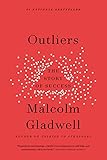
| 13 | Outliers | Malcolm Gladwell | Psychology/Society | Success and circumstance |
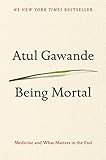
| 14 | Being Mortal | Atul Gawande | Medicine/Society | Ageing and end-of-life care |
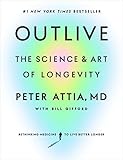
| 15 | Outlive | Peter Attia | Health/Science | Longevity medicine |
| 16 | Why We Sleep | Matthew Walker | Science/Health | Sleep science |
| 17 | The Sixth Extinction | Elizabeth Kolbert | Science/Environment | Mass extinction happening now |
Psychology and Behaviour
1. Thinking, Fast and Slow — Daniel Kahneman
Thinking, Fast and Slow is the most important book about the human mind written in the past fifty years. Kahneman, a Nobel laureate, lays out the architecture of two cognitive systems — the quick, pattern-matching intuition (System 1) and the slower, deliberate reasoning (System 2) — and then methodically demonstrates how System 1 leads us into predictable errors. Every field that involves human decision-making, from medicine to finance to public policy, has been reshaped by this framework. Reading it is not a comfortable experience: by the end, you will have catalogued your own biases in embarrassing detail.
11. The Body Keeps the Score — Bessel van der Kolk
The Body Keeps the Score permanently changed the clinical understanding of trauma by demonstrating that trauma is not merely a psychological wound — it is a physiological one, stored in the nervous system and expressed through the body. Van der Kolk draws on decades of clinical work and neuroscience research to argue that talk therapy alone is insufficient for many trauma survivors, and that modalities engaging the body — EMDR, theatre, yoga — can reach where words cannot. The book is both rigorous and deeply humane, and its influence on mental health practice has been substantial.
13. Outliers — Malcolm Gladwell
Outliers dismantles the myth of the self-made individual by showing, case by case, how success is entangled with timing, culture, and accumulated opportunity. Gladwell’s analysis of why so many elite Canadian hockey players are born in January, or why Korean Air had a disproportionate crash rate tied to cockpit culture, are memorable illustrations of a single powerful argument: context shapes outcomes more than talent alone. Some of Gladwell’s later work has attracted criticism for oversimplification, but Outliers remains his most carefully constructed book and the most persuasive case for structural thinking about human achievement.
History and Society
2. Sapiens — Yuval Noah Harari
Sapiens is the most ambitious overview of human history written for a general audience. Harari’s central argument — that Homo sapiens conquered the planet not through superior strength or intelligence but through the unique ability to believe in shared fictions, from money to nations to corporations — is both simple and deeply unsettling. The book covers 70,000 years in fewer than 500 pages without ever feeling rushed, and it asks questions at the end that most history books are too cautious to ask: Is the agricultural revolution really progress? Are we happier than our ancestors? Whether or not you accept every argument, Sapiens permanently changes the questions you bring to other history reading.
5. The Power Broker — Robert Caro
The Power Broker is the definitive study of how unelected power operates in a democratic society. Caro’s biography of Robert Moses — the New York City planner who never held elected office but shaped the physical environment of millions — is nearly 1,200 pages and reads like a thriller. Moses built highways through neighbourhoods, destroyed communities, and excluded Black residents from public parks through deliberate design choices baked into the concrete. The book is nominally about Moses, but its real subject is the nature of power itself: how it is accumulated, how it is exercised without accountability, and how rarely it is surrendered.
Science
6. The Selfish Gene — Richard Dawkins
The Selfish Gene introduced the gene-centred view of evolution in 1976 and remains the clearest account of why natural selection works the way it does. Dawkins argues that organisms are best understood as vehicles built by genes to ensure their own replication — not the other way around — and that altruism, cooperation, and even culture can be explained through this lens. The book also gave the world the concept of the “meme” as a cultural replicator, a metaphor that has since taken on a life entirely its own. The writing is consistently excellent: precise, economical, and willing to follow an argument wherever it leads.
7. A Brief History of Time — Stephen Hawking
A Brief History of Time has the unusual distinction of being one of the bestselling science books of all time and also one of the most commonly started-but-not-finished. Read it slowly and without embarrassment at re-reading paragraphs. Hawking explains black holes, the Big Bang, and the unresolved tension between quantum mechanics and general relativity with more clarity than almost any subsequent writer on the subject. What makes it irreplaceable is that it was written by the scientist doing the frontier work — the authority is on every page, and the willingness to sit honestly with open questions is its greatest intellectual virtue.
8. The Emperor of All Maladies — Siddhartha Mukherjee
The Emperor of All Maladies is a biography of cancer — its history, its biology, and the long and often tragic arc of treatments developed to fight it. Mukherjee is a practising oncologist, and his clinical experience gives the narrative a weight that a purely historical account could not achieve. The book traces the shift from radical surgery to chemotherapy to targeted therapies, and in doing so tells the story of twentieth-century medicine’s growing sophistication and humility. It won the Pulitzer Prize for good reason: it is a masterwork of science writing.
16. Why We Sleep — Matthew Walker
Why We Sleep makes a case that most people are walking around in a state of chronic sleep deprivation without realising how profoundly it is affecting their cognition, physical health, and emotional regulation. Walker synthesises a large body of sleep science and presents it in terms any reader can follow. Some of Walker’s more alarming statistics have been questioned by other researchers, and readers should know that debate exists; but the book’s core message — that sleep is not optional maintenance but a biological necessity that society systematically undermines — is well-supported and genuinely important.
17. The Sixth Extinction — Elizabeth Kolbert
The Sixth Extinction documents, in vivid journalistic prose, the evidence for a mass extinction event currently underway, driven by human activity. Kolbert visits field sites on multiple continents, interviewing researchers watching species disappear in real time — from Panamanian golden frogs to the great auk. She situates the current crisis alongside the five previous mass extinctions in Earth’s history, making clear that what is happening now is geologically unprecedented in its speed. The book won the Pulitzer Prize and is essential reading for anyone trying to understand the environmental stakes of this century without resorting to polemic.
Memoir
3. Man’s Search for Meaning — Viktor Frankl
Man’s Search for Meaning was written in nine days, describes Frankl’s experiences as a prisoner in Auschwitz and three other Nazi concentration camps, and argues that the human capacity to choose one’s response to suffering — even the most extreme suffering — is the foundation of psychological survival. The book gave rise to logotherapy, Frankl’s form of existential psychoanalysis, but you don’t need to accept his therapeutic framework to find the memoir itself devastating and essential. It is the most important book about human resilience in this list, and at 165 pages it is also the shortest. There is no excuse not to read it.
9. Educated — Tara Westover
Educated is a memoir about growing up in a survivalist family in rural Idaho, never attending school, and eventually earning a PhD from Cambridge — but its real subject is the question of what you owe yourself versus what you owe your family. Westover’s prose is precise and her self-analysis unflinching; she does not flatten her parents into villains, which makes the book far more unsettling than a simpler account would be. It is a story about education in the broadest sense: the process of learning to think for yourself when the people who shaped you did not want you to.
10. Born a Crime — Trevor Noah
Born a Crime is the most entertaining book on this list and also one of the most politically instructive. Noah grew up in apartheid and post-apartheid South Africa as a mixed-race child — his very existence literally a crime under apartheid law — and his memoir uses comedy as both a coping mechanism and a precision instrument for exposing the absurdities of race-based governance. The relationship between Noah and his mother, Patricia, gives the book an emotional core that keeps the political analysis from feeling abstract and the humour from feeling evasive.
4. Meditations — Marcus Aurelius
Meditations was never intended for publication — it is the private journal of a Roman emperor practising Stoic philosophy on campaign. That quality of raw, unguarded self-examination is exactly what makes it extraordinary: Aurelius is not writing for posterity but drilling himself to act better under pressure. The Stoic principles on display — focus on what you control, accept what you cannot, treat obstacles as opportunities for practice — are neither passive nor optimistic. They are practical tools, and their durability across 1,800 years of readers is the strongest endorsement possible. Use Gregory Hays’s translation.
Self-Improvement
12. Atomic Habits — James Clear
Atomic Habits is the most practically useful book in this category because it is relentlessly specific. Clear argues that the path to sustained behaviour change runs not through motivation but through system design: the environment you build around yourself, the cues you introduce or remove, and the way identity interacts with habit formation. The four-step habit loop he describes — cue, craving, response, reward — is derived from established behavioural science, and the implementation advice is detailed enough that readers can act on it the same day they finish a chapter. It is not a book about willpower; it is a book about architecture.
14. Being Mortal — Atul Gawande
Being Mortal is a book about how modern medicine has failed to handle the one thing it cannot fix: death. Gawande, a surgeon, examines how elderly and terminally ill patients are often subjected to aggressive treatment that extends life by weeks while destroying its quality, largely because neither patients nor doctors have been trained to have honest conversations about limits. The book is a quiet, evidence-based argument for palliative care and for reclaiming what a good death might look like. Anyone with ageing parents should read it before a crisis forces the conversation.
15. Outlive — Peter Attia
Outlive represents a new genre of evidence-based longevity writing. Attia, a physician who has spent his career studying the science of healthspan, argues that conventional medicine’s approach to chronic disease — treating conditions after they arise — is the wrong strategy, and that the research now supports a proactive framework built around metabolic health, cardiovascular fitness, strength training, and cognitive maintenance. The book is dense with clinical detail but never inaccessible, and it will fundamentally change how readers think about what they are trying to preserve as they age, and when the decisions that matter most actually need to be made.
How to Use This List
The best approach is not to read these sequentially. Instead, pick one from each category and work through them across a few months. The variety prevents fatigue and creates unexpected cross-connections: the evolutionary framework in The Selfish Gene illuminates the habit loops in Atomic Habits; the structural analysis of The Power Broker echoes in the systemic arguments of Sapiens; Man’s Search for Meaning gives Meditations a companion voice across two millennia.
Read broadly, read slowly, and return to the ones that stay with you.
Frequently Asked Questions
What makes a nonfiction book truly essential rather than just popular?
Essential nonfiction earns the label by changing how readers think, not just what they know. A book like Thinking, Fast and Slow doesn't only describe cognitive bias — it rewires the reader's everyday reasoning. Essential books also tend to hold up across decades: their core insights remain valid even as surrounding details are updated by newer research. Popularity helps, but plenty of bestsellers fade; what endures is the quality of the argument and the precision of the evidence behind it.
How should I approach a demanding nonfiction book like A Brief History of Time or The Power Broker?
Read with a pencil, not a highlighter. Underlining creates the illusion of engagement; marginal notes force you to translate the author's ideas into your own words, which is where real comprehension happens. For long books like The Power Broker, set a daily page target rather than a chapter target — chapters vary wildly in length. For dense science writing, read the conclusion of each chapter before the body; knowing where an argument ends makes it easier to follow the steps getting there.
Is self-help nonfiction worth reading alongside more 'serious' nonfiction?
Absolutely, provided you're selective. Atomic Habits is grounded in behavioural science and cites its sources; it belongs on the same shelf as Thinking, Fast and Slow. The distinction to draw is between books that offer a testable framework and books that traffic in vague inspiration. The best self-help nonfiction is really applied psychology or applied economics — the 'self-help' label is a marketing category, not a quality ceiling.
Which of these books should I read first if I'm new to serious nonfiction?
Start with Man's Search for Meaning. It is short (under 200 pages), accessible, and asks the most fundamental question in this list — what makes human life bearable under extreme conditions? Its brevity means you can finish it in a weekend, and the ideas it surfaces will inform how you read everything else here. From there, Sapiens offers the broadest canvas, making it the natural second read before you narrow into specific disciplines like science, psychology, or memoir.