100 Books to Read Before You Die: The Essential Reading List
An editorial guide to the books that define a life of reading — from the untouchable classics to the nonfiction that reshapes how you see the world.
No list can actually contain 100 books worth reading before you die. That number is arbitrary, and any honest editor will tell you that the work of narrowing to even thirty defensible choices is where the real argument happens. What follows is that argument made visible: a reference table for breadth, and then deep editorial attention to the ten books I believe are most irreplaceable — the ones where “read it before you die” is not a figure of speech.
The selections span three thousand years, four continents, and every major literary mode. The unifying criterion is not prestige or academic consensus, but this: each book does something that cannot be adequately experienced secondhand. You cannot be told what these books do to you. You have to read them.
Top-30 Reference Table
| # | Title | Author | Genre |
|---|---|---|---|
| 1 | 1984 | George Orwell | Dystopian Fiction |
| 2 | Hamlet | William Shakespeare | Drama/Tragedy |
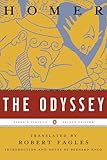
| 3 | The Odyssey | Homer | Epic Poetry |
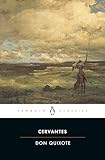
| 4 | Don Quixote | Miguel de Cervantes | Novel |
| 5 | Crime and Punishment | Fyodor Dostoevsky | Literary Fiction |
| 6 | Anna Karenina | Leo Tolstoy | Literary Fiction |
| 7 | War and Peace | Leo Tolstoy | Historical Fiction |
| 8 | Ulysses | James Joyce | Modernist Fiction |
| 9 | Middlemarch | George Eliot | Victorian Fiction |
| 10 | One Hundred Years of Solitude | Gabriel García Márquez | Magical Realism |
| 11 | Beloved | Toni Morrison | Literary Fiction |
| 12 | To Kill a Mockingbird | Harper Lee | Literary Fiction |
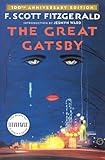
| 13 | The Great Gatsby | F. Scott Fitzgerald | Literary Fiction |
| 14 | Brave New World | Aldous Huxley | Dystopian Fiction |
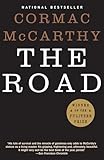
| 15 | The Road | Cormac McCarthy | Literary Fiction |
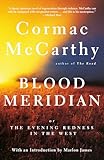
| 16 | Blood Meridian | Cormac McCarthy | Literary Fiction |
| 17 | Song of Solomon | Toni Morrison | Literary Fiction |
| 18 | The Remains of the Day | Kazuo Ishiguro | Literary Fiction |
| 19 | Never Let Me Go | Kazuo Ishiguro | Speculative Fiction |
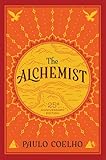
| 20 | The Alchemist | Paulo Coelho | Philosophical Fiction |
| 21 | Man’s Search for Meaning | Viktor Frankl | Memoir/Philosophy |
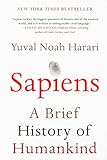
| 22 | Sapiens | Yuval Noah Harari | History |
| 23 | Meditations | Marcus Aurelius | Philosophy |
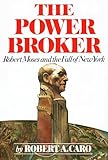
| 24 | The Power Broker | Robert Caro | Biography |
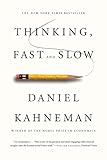
| 25 | Thinking, Fast and Slow | Daniel Kahneman | Psychology |
| 26 | The Selfish Gene | Richard Dawkins | Science |
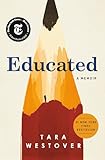
| 27 | Educated | Tara Westover | Memoir |
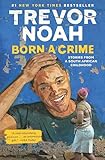
| 28 | Born a Crime | Trevor Noah | Memoir |
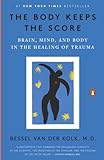
| 29 | The Body Keeps the Score | Bessel van der Kolk | Psychology |
| 30 | Atomic Habits | James Clear | Self-Improvement |
The Ten Most Irreplaceable Books
1. 1984 — George Orwell
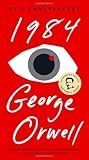
1984 is not merely a political novel. It is a linguistics experiment, a study of memory, and the most precise fictional account ever written of how totalitarianism operates from the inside out. Orwell’s invention of Newspeak — a language designed not to suppress dangerous thoughts but to make them literally unthinkable — is the book’s most radical idea, and it has become impossible to discuss propaganda, political language, or media manipulation without reaching for Orwell’s vocabulary. Winston Smith’s tragedy is not that he is destroyed by an enemy he understands. It is that by the end, the destruction is complete in ways he does not and cannot recognise. No other novel has proved so prophetically useful to so many different political moments.
2. Hamlet — William Shakespeare
Hamlet is the most performed, most quoted, most argued-over work in the English language, and familiarity has done it real damage. Read it, or watch a production that does not sentimentalise it, and what you encounter is a work of almost shocking psychological modernity: a man who cannot act because he cannot stop thinking, who uses theatre and language to avoid confronting what he already knows, and who destroys everyone he loves in the process. The play invented the introspective protagonist. Everything from Raskolnikov to Leopold Bloom to Holden Caulfield is downstream of Hamlet. Reading it is not optional if you want to understand where Western literary psychology came from.
3. The Odyssey — Homer
The Odyssey is the template for every story about the journey home, about the pull between adventure and belonging, about the shape a life takes when tested by everything the world can throw at it. Emily Wilson’s 2017 translation finally gives English readers a text as direct and swift as the original Greek without sacrificing its strangeness. What strikes modern readers is how psychologically immediate the characters are — Odysseus’s grief, Penelope’s intelligence, Telemachus’s longing for a father he has never known — across three thousand years of distance. The novel as a form is still drawing on this blueprint.
4. Crime and Punishment — Fyodor Dostoevsky
Crime and Punishment achieves the nearly impossible: it puts you inside the mind of a man who has committed murder, makes you understand the rationalisation before, and then walks you through the psychological disintegration after. Raskolnikov’s theory — that extraordinary people stand above ordinary moral laws — is not a straw man Dostoevsky sets up to knock down. It is rendered with enough intelligence that it is genuinely unsettling, which is the only way the novel’s eventual repudiation of it carries weight. Dostoevsky understood guilt as a physiological process fifty years before Freud described the unconscious, and no novelist since has written interior experience under extreme moral pressure with comparable authority.
5. Beloved — Toni Morrison
Beloved is the greatest American novel of the twentieth century, and making that case requires only pointing to what it does: Morrison takes the true story of an escaped enslaved woman who killed her infant daughter rather than return her to slavery, and transforms it into a ghost story, a love story, a communal trauma narrative, and a formal experiment in non-linear time — all without any element overwhelming the others. The prose operates at a pitch of intensity sustained across the entire novel. Morrison described it as her attempt to fill in “the sixty million and more” — all those who died in the Middle Passage and under slavery and were never memorialised — and the book bears that weight without buckling.
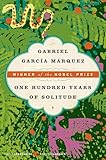
6. One Hundred Years of Solitude — Gabriel García Márquez
One Hundred Years of Solitude is the novel that established magical realism as a world literary form and remains its highest achievement. García Márquez traces seven generations of the Buendía family in the fictional town of Macondo, where miracles and atrocities occur with equal matter-of-factness, and where the central tragedy is not violence or poverty but solitude — the inability of the characters to genuinely know or connect with each other across all that time. The book is also a compressed history of Latin America’s political cycles of revolution and reaction. It is simultaneously local and universal, intimate and epic, and there is no other novel quite like it.
7. Anna Karenina — Leo Tolstoy
Anna Karenina begins with one of literature’s most famous opening sentences and immediately delivers on its promise: the novel is a precise taxonomy of the different shapes happiness and unhappiness take across marriage, ambition, faith, and passion. Anna’s fate is inevitable from the first pages, and Tolstoy’s genius is in making the inevitability feel earned rather than rigged — the reader watches her make the choices that produce the outcome, understanding each one as it happens. The parallel story of Levin, Tolstoy’s self-portrait, gives the novel its philosophical ballast and its unexpected note of earned hope. It is the most complete novel ever written about the interior life of adults.
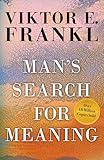
8. Man’s Search for Meaning — Viktor Frankl
Man’s Search for Meaning is on this list for a different reason than the novels above. Where the novels expand the reader’s experience and emotional range, Frankl’s memoir does something more urgent: it offers a framework for surviving anything. Written in nine days from notes composed in the camps, the book describes Auschwitz with a psychiatrist’s precision and argues that the last human freedom — the freedom to choose one’s attitude toward suffering — is the one that cannot be taken away. That argument, made by someone who had every reason not to believe it, is the most persuasive statement of human resilience ever written.
9. Middlemarch — George Eliot
Middlemarch is the novel that most serious readers cite when asked which book they wish they had read earlier. Eliot’s portrait of provincial English life in the 1830s is also the most sophisticated examination of how intelligent people trap themselves — through idealism, through social constraint, through the quiet accumulation of small self-deceptions — that English fiction has produced. The two central characters, Dorothea Brooke and Tertius Lydgate, both possess exceptional gifts and both find those gifts thwarted in different ways by the world they inhabit. Eliot never sentimentalises the outcome, but neither does she offer despair. The famous final paragraph about “unhistoric acts” is the most just and humane statement about the scale of an ordinary life that literature has produced.
10. The Road — Cormac McCarthy
The Road is the most emotionally demanding book in this list and the one readers are most likely to abandon. Don’t. McCarthy’s post-apocalyptic novel — a father and son walking through a destroyed America toward the coast — strips the novel form down to its irreducible core: two people, one relationship, the question of whether that relationship is reason enough to keep going. The prose style, which dispenses with punctuation and dialogue tags, is not an affectation; it mirrors the stripped world and forces a reading pace that becomes genuinely trance-like. By the end, what McCarthy has made is an argument about love as the only thing that survives when everything else is gone.
Beyond the Top 10
The remaining twenty books in the table above all deserve their places. A few notes on the less obvious choices:
Never Let Me Go by Kazuo Ishiguro works as a science fiction novel about cloning, but its real subject — what it means to live a life fully while knowing it will be cut short — applies to every reader who has ever confronted mortality. The Remains of the Day is the quieter of Ishiguro’s two masterworks on this list, and the more devastating: a butler who has given his entire self to an institution that did not deserve it, and who cannot admit what he has lost until it is far too late.
Blood Meridian is the most morally serious novel about violence in the American literary tradition. It is not for every reader and should not be. Song of Solomon is Morrison’s most exuberant novel — mythic, funny, alive — and the ideal entry point for readers coming to her for the first time before tackling Beloved.
Among the nonfiction: Sapiens and Thinking, Fast and Slow represent the two most important big-idea books of the past twenty years. The Power Broker is the standard against which all long-form biography is measured. Educated and Born a Crime are the memoirs most likely to make a non-memoir reader into one.
Read as many as you can. Start with whatever frightens you most.
Frequently Asked Questions
Why do 'books to read before you die' lists always skew toward the Western literary canon?
Because most such lists are compiled by Western critics, journalists, and institutions — the BBC, the Modern Library, the Guardian — and the canon those institutions valorise is Anglo-American and European. This is a real limitation. The lists in this article include One Hundred Years of Solitude, Beloved, Song of Solomon, Crime and Punishment, and other non-Anglophone or non-majority works precisely to push against that narrowing. The most honest reading list draws from world literature and acknowledges that Homer, Murasaki Shikibu, and Cervantes were not writing in English.
Should I read War and Peace and Ulysses even if they're notoriously difficult?
Yes to War and Peace, with the caveat that you use the Pevear and Volokhonsky or Anthony Briggs translation. The reputation for difficulty is overblown — it reads more like a great nineteenth-century novel than a demanding modernist one, and the first hundred pages establish the characters so vividly that the length stops feeling daunting. Ulysses is genuinely hard and requires a companion guide; the Don Gifford annotations are standard. Start with a chapter-by-chapter summary alongside the text. The effort is worth it, but you should know you are signing up for work.
How do I build a realistic reading list from a 100-book bucket list?
Set a five-year horizon, not a one-year sprint. At a pace of one substantial book per month, you cover 60 titles in five years — more than enough to move through this entire list. Prioritise by category: read the great nineteenth-century novels in winter when you have time for sustained immersion; read the shorter classics and memoirs in summer; keep the dense nonfiction for when you can read in long, focused sessions. The goal is not to check boxes but to let each book open into the next.
Which books on this list are most underrated compared to their reputation?
The Remains of the Day by Kazuo Ishiguro is systematically underrated because it looks quiet. Nothing explodes, no one shouts, the narrator is a repressed English butler — and yet it is one of the most devastating portraits of self-deception and wasted life in all of English fiction. Similarly, Middlemarch is often assigned in university and therefore avoided later; reading it as an adult, without obligation, is a completely different experience. George Eliot's psychological precision and moral intelligence have no equal in Victorian fiction.