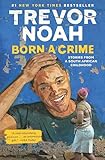
Editors Reads Verdict
One of the most entertaining and emotionally powerful memoirs in years. Noah transforms the brutal absurdity of apartheid South Africa into a story of extraordinary warmth, humour, and human triumph.
What We Loved
- Noah's comic voice makes an incredibly dark subject accessible and even joyful
- The portrait of his mother, Patricia Noah, is one of the great figures in memoir
- Provides an intimate, child's-eye view of apartheid that history books cannot
- The chapters on race, language, and identity in South Africa are remarkably insightful
Minor Drawbacks
- Some readers want more political analysis and less personal narrative
- The episodic structure means some chapters feel less integrated than others
Key Takeaways
- → Identity under apartheid was legally determined by race in ways that defied ordinary human complexity
- → Language is power — Noah's ability to speak many South African languages allowed him to navigate across racial groups
- → His mother's extraordinary combination of faith, intelligence, and defiance is the book's moral centre
- → Humour is a survival strategy as much as an entertainment skill
- → The absurdity of racist systems is best exposed through the specific human experiences they produce
| Author | Trevor Noah |
|---|---|
| Publisher | Spiegel & Grau |
| Pages | 304 |
| Published | November 15, 2016 |
| Language | English |
| Genre | Memoir, Biography, Comedy |
| Difficulty | Beginner |
| Best For | Anyone interested in apartheid South Africa, memoir as a form, questions of race and identity, or simply outstanding storytelling. |
How Born a Crime Compares
Born a Crime at a glance against 3 similar books readers weigh alongside it.
| Book | Author | Rating | Best for |
|---|---|---|---|
| Born a Crime (this book) | Trevor Noah | ★ 4.8 | Anyone interested in apartheid South Africa, memoir as a form, questions of |
| Becoming | Michelle Obama | ★ 4.8 | Anyone interested in American political history, the Obama era, or memoir as a |
| Educated | Tara Westover | ★ 4.7 | Anyone interested in memoir, education, or the psychology of escaping |
| The Diary of a Young Girl | Anne Frank | ★ 4.8 | Everyone |
The Impossible Child
Trevor Noah was born in apartheid South Africa in 1984. His mother, Patricia, was Black. His father, Robert, was Swiss. Their relationship was illegal. Trevor’s birth was literally a crime under apartheid law — a child of their union had no legitimate place in the racial categories on which apartheid depended.
This impossible origin — and his mother’s fierce determination that Trevor would survive and thrive despite and through the absurdities of the system — is the core of one of the most extraordinary memoirs published in the twenty-first century.
Patricia Noah
The book’s moral centre is Trevor’s mother, and she is one of the most remarkable figures in contemporary memoir. Patricia is deeply religious but not passive. She is joyful but not naive. She is determined beyond what her circumstances could have reasonably produced. She had Trevor despite the law, raised him in Soweto with ingenuity and love, taught him to read and think, and navigated the daily indignities of apartheid with a stubborn dignity that her son absorbed and reflects.
The chapter describing how Patricia survived being shot by her former husband — and her response upon learning she had survived — is one of the most affecting passages in recent memoir literature.
Language as Survival Technology
One of the book’s most intellectually interesting themes is language. Noah grew up speaking Zulu, Xhosa, Sotho, Tswana, and Afrikaans alongside English. In apartheid South Africa, where racial identity was everything and violence was always possible, speaking a group’s language functioned as a kind of identity pass — if you could speak like them, you belonged, at least provisionally.
Noah uses this observation to illuminate something profound about language and identity: that belonging is partly performed, partly claimed, and partly conferred by others, and that fluency across boundaries is a form of freedom.
Comedy as Survival
Throughout the memoir, Noah’s comic voice — the voice that would eventually take him to The Daily Show — is clearly visible. His instinct to find the absurdity in any situation, to defuse danger with humour, to transform terrible experiences into stories worth telling, is both a personality trait and a coping mechanism. The memoir itself is an exercise in that transformation.
A Crime by Law
The book’s title is no metaphor. Under apartheid’s Immorality Act, sexual relationships across the colour line were illegal, so Trevor — the son of a Black Xhosa mother and a white Swiss father — was living proof of a crime. As a small child he could not be seen in public with either parent: his mother sometimes had to walk on the other side of the street and pretend he was not hers, or hire a light-skinned woman to pose as his mother in the park. Noah uses these surreal, frightening details to expose apartheid’s logic more devastatingly than any textbook could — by showing how it warped the most ordinary human bonds, criminalising love and rendering a child legally impossible.
Faith, Soweto, and Mischief
The memoir is structured as a series of vivid, self-contained stories, many genuinely hilarious: the family’s grinding Sunday circuit of three different churches; the time a young Trevor was thrown from a moving minibus by his mother to escape danger; his teenage hustle selling pirated CDs and DJ-ing in the township of Alexandra; the disastrous prom date with a girl named Babiki; and the cheerfully oblivious dancer named Hitler whose name caused an international incident. Beneath the comedy runs a sharp anthropology of poverty, religion, and the granular hierarchies of a society obsessed with shade and category. Noah is especially astute on how being mixed-race left him belonging fully to no group — too light for the Black kids, too Black for the white world — and how he turned that outsider status into a kind of chameleon’s freedom.
The Darkness Beneath the Comedy
For all its warmth, Born a Crime does not flinch from horror. The looming presence throughout is Abel, Patricia’s abusive second husband, whose violence escalates across the book until — in the shattering final chapters — he shoots Patricia in the head. That she survives, and that her first reaction is to joke with her son, crystallises everything the memoir has been building toward: humour not as evasion but as defiance, the refusal to let cruelty have the last word. Widely praised in its acclaimed audiobook edition, read by Noah himself, it is that rare memoir that is at once laugh-out-loud funny and genuinely harrowing.
Final Verdict
Born a Crime is one of the most entertaining, moving, and illuminating memoirs of recent years. Noah’s voice is exceptional, his mother is unforgettable, and the historical context it provides is essential.
It is, finally, less a book about apartheid than a book about a mother and a son — a tribute to the formidable woman who broke every rule to give her impossible child a chance, and who emerges from these pages as one of the great characters in modern memoir.
Our rating: 4.8/5 — A masterpiece of comic memoir. Noah’s story of growing up in apartheid South Africa is both darkly hilarious and deeply moving.
Reading Guides
Frequently Asked Questions
What is "Born a Crime" about?
The memoir of The Daily Show host Trevor Noah, born in apartheid South Africa to a Black mother and white father — an act that was literally a crime under apartheid law.
Who should read "Born a Crime"?
Anyone interested in apartheid South Africa, memoir as a form, questions of race and identity, or simply outstanding storytelling.
What are the key takeaways from "Born a Crime"?
Identity under apartheid was legally determined by race in ways that defied ordinary human complexity Language is power — Noah's ability to speak many South African languages allowed him to navigate across racial groups His mother's extraordinary combination of faith, intelligence, and defiance is the book's moral centre Humour is a survival strategy as much as an entertainment skill The absurdity of racist systems is best exposed through the specific human experiences they produce
Is "Born a Crime" worth reading?
One of the most entertaining and emotionally powerful memoirs in years. Noah transforms the brutal absurdity of apartheid South Africa into a story of extraordinary warmth, humour, and human triumph.
Ready to Read Born a Crime?
Check the current price on Amazon.
Check Price on Amazon (paid link)Prices and availability are subject to change. See Amazon for current price.
Review last updated: