Best Books About Race in America: 16 Essential Reads
These 16 books — spanning history, memoir, fiction, and polemic — are the essential reading list for understanding race in America, from slavery to the present day.
By Aisha Patel

Any reading list on race in America faces an immediate challenge: the subject is not a discrete topic but the entire history of the country, present in every institution, every policy, every neighbourhood map. You cannot read your way to a complete understanding of it. What you can do — what the books on this list do — is develop a more accurate, more specific, and more historically grounded understanding of how race has functioned in America from the Middle Passage to the present.
This matters because the dominant cultural narrative about race in America is still, in many contexts, a story of linear progress: slavery was bad, the civil rights movement fixed the most obvious legal inequalities, and the work since has been refinement. The books on this list, read together, tell a different story — one in which the mechanisms of racial inequality have repeatedly adapted to new circumstances without being dismantled, in which progress and backlash have moved in tandem, and in which the structures erected to maintain racial hierarchy have proven far more durable than the rhetoric surrounding them suggests.
They are not all in agreement with each other. Coates and Obama disagree about the primacy of race versus class; Wilkerson’s caste framework and Alexander’s mass incarceration argument emphasise different mechanisms. That disagreement is part of what makes this literature valuable. These books are not a curriculum — they are a conversation.
History, Polemic & Political Analysis
1. Between the World and Me — Ta-Nehisi Coates ⭐⭐⭐⭐⭐
Written as a letter to his teenage son, Coates’s meditation on what it means to inhabit a Black body in America is the most important work of American racial polemic published in decades. The argument is unflinching: that the plunder of Black bodies — as labour, as property, as the raw material for American wealth — is not a historical aberration but the foundation on which the American Dream is built. Those who dream the Dream, Coates argues, can only do so by not seeing clearly.
At 150 pages, Between the World and Me is the natural entry point for anyone beginning this reading list. It does not offer comfort or solutions — it offers clarity, and clarity is where this work must begin.
➡ Full review → | Buy on Amazon →
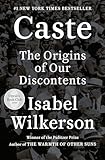
2. Caste — Isabel Wilkerson ⭐⭐⭐⭐⭐
Wilkerson’s framework is the most conceptually powerful tool on this list: she argues that America’s racial hierarchy is best understood not as racism — a term so contested it has lost analytical precision — but as a caste system, structurally comparable to the Brahmin/Dalit hierarchy of India and the racial hierarchy of Nazi Germany. Caste is inherited, enforced by social sanction and violence, and maintained through the dehumanisation of those at the bottom.
The comparison to Nazi Germany is particularly illuminating: Wilkerson documents that American Jim Crow laws were studied by Nazi jurists drafting the Nuremberg Laws as a model for institutionalised racial hierarchy. The Germany they drew on was not some aberration — it was, as they recognised, their own country’s techniques applied elsewhere.
3. The New Jim Crow — Michelle Alexander ⭐⭐⭐⭐⭐
Michelle Alexander’s argument, published in 2010, transformed how a generation of Americans understood mass incarceration: the War on Drugs, she argues, was not a crime-fighting initiative but a mechanism for reinstating a racial caste system after the formal dismantling of Jim Crow. The result — a system in which a Black man is more likely to be imprisoned than a white man was likely to be enslaved in antebellum states — is not a failure of the system but its design.
The New Jim Crow is meticulously sourced and argued with the rigour of the civil rights lawyer Alexander is. It remains the essential text for understanding the American carceral state.
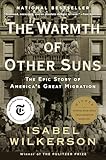
4. The Warmth of Other Suns — Isabel Wilkerson ⭐⭐⭐⭐⭐
Wilkerson’s earlier book is the definitive history of the Great Migration — the movement of six million Black Americans from the Jim Crow South to the cities of the North and West between 1915 and 1970. She tells it through three individuals: Ida Mae Brandon Gladney from Mississippi to Chicago, George Swanson Starling from Florida to New York, and Robert Joseph Pershing Foster from Louisiana to Los Angeles.
The result is narrative history at its finest: the specific texture of individual lives used to carry the weight of demographic transformation. Wilkerson spent fifteen years on the research; the book’s achievement is that it never shows the labour. It reads like a novel and changes how you see a century of American urban history.
5. The Autobiography of Malcolm X — Malcolm X with Alex Haley ⭐⭐⭐⭐⭐
The most important political memoir in American history and one of its greatest books in any genre. Malcolm X’s account of his life — from childhood poverty through street crime and imprisonment to the Nation of Islam and his eventual break with it — is a record of a mind working at extraordinary speed, in real time, on the hardest questions in American life.
What makes The Autobiography essential is not just the history but the intellectual trajectory: the Malcolm who arrives at the book’s end, having moved through Black nationalism to a more universal humanism after his pilgrimage to Mecca, is a different and more complex figure than the one most Americans think they know. Read it whole, not in excerpts.
6. We Should All Be Feminists — Chimamanda Ngozi Adichie ⭐⭐⭐⭐
At 64 pages, Adichie’s essay — adapted from her TEDx talk — is the shortest entry on this list and among the most widely read. Its inclusion here reflects the intersection of race and gender that any serious reading on race in America must address: the specific experience of Black women, the compounding of racial and gender discrimination, and the inadequacy of frameworks that treat them as separate.
Adichie’s essay is an argument for feminism addressed to everyone, made through the specific lens of growing up female in Nigeria and the particular forms of gender constraint she encountered. Brief, clear, and worth pressing on anyone who thinks feminism is someone else’s concern.
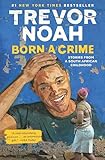
7. Born a Crime — Trevor Noah ⭐⭐⭐⭐⭐
Trevor Noah’s memoir of growing up mixed-race in apartheid and post-apartheid South Africa sits at the edge of this reading list’s stated focus — America — but belongs here as an essential comparative text. Apartheid is the racial caste system that Wilkerson’s framework explicitly invokes; Noah’s first-person account of living inside it, illegal at birth because his Black mother and Swiss father had violated the Immorality Act, illuminates in intimate detail what the abstraction of “racial hierarchy” actually produces in human lives.
Born a Crime is also, improbably, very funny — Noah is a gifted storyteller, and the humour never softens the material, it sharpens it.
Literary Fiction
8. Beloved — Toni Morrison ⭐⭐⭐⭐⭐
The masterwork of American literature and the most important novel on this list. Sethe, a formerly enslaved woman living in post-Civil War Ohio, is haunted — literally — by the ghost of the baby daughter she killed rather than allow to be returned to slavery. Morrison builds the novel in fragments, the way memory works, refusing a chronological reconstruction that would make the horror manageable.
Beloved is not the most accessible book on this list but it is the most essential. Morrison’s argument — that the trauma of slavery cannot be “passed over” or resolved, only acknowledged and survived — is the argument this entire reading list is built around. Start here if you’re ready; return to it if you start elsewhere.
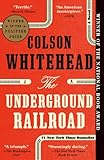
9. The Underground Railroad — Colson Whitehead ⭐⭐⭐⭐⭐
Whitehead’s Pulitzer Prize-winning novel literalises the metaphor of the Underground Railroad — in his version, it is an actual network of tunnels and trains — and uses the mechanism to move his protagonist Cora through a series of alternative Americas, each representing a different strategy of racial control: violent elimination, medical experimentation, cultural assimilation. The novel is an allegory for the full range of anti-Black ideology, not just the most obviously brutal.
Whitehead’s prose is precise and controlled, and his structural ambition — to map the entire architecture of American racism through a single escape narrative — is fully realised.
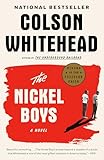
10. The Nickel Boys — Colson Whitehead ⭐⭐⭐⭐⭐
Whitehead’s second Pulitzer Prize, and the more devastating of the two novels for its quietness. Based on the Dozier School for Boys in Florida — a reform school where Black children were systematically abused and sometimes killed, their bodies buried on the grounds — The Nickel Boys follows Elwood Curtis, a young Black man of exceptional promise who is wrongly sent to Nickel Academy in 1960s Florida.
Where The Underground Railroad is expansive, The Nickel Boys is compressed and precise. The ending, which reframes the entire novel, is one of the most powerful structural decisions in recent American fiction.
11. Homegoing — Yaa Gyasi ⭐⭐⭐⭐⭐
Gyasi’s debut novel begins in eighteenth-century Ghana with two half-sisters — one who marries a British slave trader, one who is sold into slavery — and traces their parallel descendants across seven generations, from the Gold Coast to the American South to contemporary Harlem. Each chapter introduces a new protagonist, and together they form a map of how the slave trade’s consequences moved through time and across oceans.
Homegoing is the most structurally ambitious novel on this list and one of the most emotionally overwhelming. For readers new to fiction about slavery and its legacy, it may be the best entry point — its chapter-by-chapter structure makes the accumulating history legible in a way that a more continuous narrative might not.
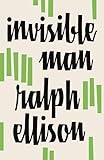
12. Invisible Man — Ralph Ellison ⭐⭐⭐⭐⭐
Ellison’s 1952 novel — its unnamed narrator declares in the opening pages that he is invisible, not because he is a ghost but because people refuse to see him — remains the defining literary account of Black identity in America: the way a Black man must navigate a white world that sees only the projection of its own fears and expectations, never the person. The picaresque structure, moving from the South to Harlem, through the Brotherhood (a thinly veiled Communist Party) and into the radical underground, maps the ideological landscapes available to a Black intellectual in mid-century America.
A longer and more demanding read than most entries on this list, Invisible Man rewards the investment with a vision of American race politics that has not dated.
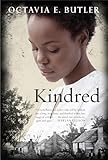
13. Kindred — Octavia Butler ⭐⭐⭐⭐⭐
Dana, a Black woman living in 1970s California, is repeatedly pulled back in time to antebellum Maryland — always to save the life of her white ancestor, a slaveholder whose survival is necessary for her own existence. Butler’s time travel mechanism is a device for making the past physically present rather than historically distant: Dana must navigate the plantation system not as a historical observer but as an enslaved person, and the compromises she makes to survive complicate her relationship to her own moral clarity.
Kindred is science fiction’s most direct engagement with American slavery, and its most uncomfortable question — what would you do to survive? — resonates long after the final page.
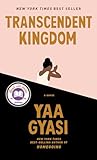
14. Transcendent Kingdom — Yaa Gyasi ⭐⭐⭐⭐⭐
Gyasi’s second novel is entirely different in scope from Homegoing: intimate, contemporary, focused on Gifty, a Ghanaian-American neuroscience PhD student at Stanford whose brother died of a heroin overdose and whose mother is in a depressive collapse in Gifty’s apartment. The novel sits at the intersection of race, immigration, addiction, faith, and scientific materialism — examining what it means to be a Black woman in elite American academia, what the American Dream costs the families it selects, and whether science and faith can coexist in a single person.
A quieter, more personal book than anything else on this list, and an essential bridge between the historical and contemporary dimensions of the African American experience.
Young Adult & Memoir
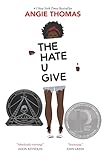
15. The Hate U Give — Angie Thomas ⭐⭐⭐⭐⭐
Starr Carter witnesses the police shooting of her childhood friend Khalil and must decide whether to speak publicly about what she saw. Thomas’s YA novel, published in 2017 in the immediate aftermath of the Black Lives Matter movement’s emergence, is the most important young adult novel about race in America published in the last decade.
The power of The Hate U Give is in its specificity: the double consciousness Starr navigates between her Black neighbourhood and her predominantly white private school, the community’s complex relationship with Khalil’s drug dealing, the legal system’s predictable failure to deliver accountability. It is written for teenagers and essential for everyone.
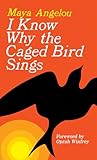
16. I Know Why the Caged Bird Sings — Maya Angelou ⭐⭐⭐⭐⭐
The first volume of Angelou’s autobiographical series covers her childhood and adolescence in Stamps, Arkansas — the Jim Crow South in the 1930s and 40s — and in San Francisco. It is both a specific account of one childhood and a comprehensive mapping of what that society required of a Black girl: the constant performance of deference, the sexual vulnerability, the spiritual discipline necessary to maintain dignity in an environment designed to deny it.
Angelou’s prose is lyrical without obscuring the material’s weight; the book remains, nearly sixty years after publication, one of the most important American memoirs ever written.
Where to Start
If you’re new to this reading list, the order matters less than beginning. But some starting points:
For nonfiction first: Between the World and Me (Coates) is the shortest and most immediately powerful entry point. Follow it with Caste (Wilkerson) for the structural framework, then The New Jim Crow (Alexander) for the contemporary mechanism.
For fiction first: Homegoing (Gyasi) is structurally accessible and historically comprehensive. Follow it with Beloved (Morrison) when you’re ready for the most demanding and most rewarding entry on the list.
For younger readers: The Hate U Give (Thomas) followed by I Know Why the Caged Bird Sings (Angelou) followed by Born a Crime (Noah) forms a sequence that moves from contemporary America to mid-century America to apartheid South Africa.
These books are a conversation-starter, not a curriculum endpoint. They disagree with each other in productive ways; they will disagree with you in productive ways. The goal is not to finish the list. It is to read more clearly than before.
Race in America: Books by Type
| Type | Best Book |
|---|---|
| Polemic / essay | Between the World and Me |
| Historical framework | Caste |
| Mass incarceration | The New Jim Crow |
| Narrative history | The Warmth of Other Suns |
| Literary fiction (slavery) | Beloved |
| Multi-generational fiction | Homegoing |
| YA / contemporary | The Hate U Give |
| Memoir | The Autobiography of Malcolm X |
| Science fiction | Kindred |
For the Best Fiction Books
For the definitive guide to fiction — the greatest novels across literary fiction, classics, and contemporary writing — see our Best Fiction Books of All Time list.
More Social Justice and History Reading Guides
- Books Like Homegoing: Multigenerational African Diaspora Fiction
- Books Like The Underground Railroad: Slavery and Freedom
- Books Like Beloved: Historical Fiction About Trauma and Memory
More Classic American Literature Guides
Affiliate disclosure: Book links are Amazon affiliate links. We earn a small commission at no extra cost to you.
Frequently Asked Questions
What is the best book to understand race in America?
Between the World and Me by Ta-Nehisi Coates and The New Jim Crow by Michelle Alexander are the most cited books for understanding the contemporary experience of race in America. Caste by Isabel Wilkerson provides the broadest historical and structural framework.
What books about race should I read first?
Start with Between the World and Me by Ta-Nehisi Coates if you want a personal, urgent entry point. Start with Caste by Isabel Wilkerson if you want the broadest historical analysis. The Warmth of Other Suns by Isabel Wilkerson is the best introduction to the Great Migration and is written as compellingly as narrative fiction.
What books are similar to Between the World and Me?
Books with a similar voice and urgency to Between the World and Me include I Know Why the Caged Bird Sings by Maya Angelou, Bad Feminist by Roxane Gay, and We Should All Be Feminists by Chimamanda Ngozi Adichie. All are personal, direct, and written with literary care.
What books about race work well for book clubs?
The best books about race in America for book clubs are Americanah by Chimamanda Ngozi Adichie, The Hate U Give by Angie Thomas, and Homegoing by Yaa Gyasi. These are novels rather than essays, which tend to generate more nuanced discussion and are more accessible to readers who do not normally read non-fiction on the topic.