Best Historical Fiction Books of All Time: 20 Essential Reads
The best historical fiction does more than recreate the past — it makes it feel alive and urgent. These 20 novels span centuries and continents, from Tudor England to wartime Europe to colonial West Africa.
History books record what happened. Historical fiction records what it felt like. The difference is the difference between a death toll and a single soldier’s last letter home — between knowing that Paris was occupied and understanding what it meant to queue for bread under a swastika flag, to hear your neighbour’s name on a list, to decide whether to collaborate or resist.
The best historical fiction gives you access to something no archive can: the interior life of people who never wrote their memoirs, the texture of daily life that historians compress into paragraphs, the private conversations that changed everything and left no trace. It puts you inside the body of someone living through events whose significance they cannot yet know.
The 20 novels on this list span three thousand years of human history — from Achilles on the plain of Troy to a South Indian family across a century of postcolonial transformation. What they share is the novelist’s gift: the ability to make the past feel not just real but immediate.
The Second World War: Europe’s Defining Catastrophe
No historical period has generated more essential fiction than the Second World War and its Holocaust. These novels are not comfort reading — but they are among the most important fiction of the last century.
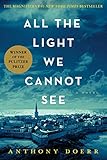
All the Light We Cannot See — Anthony Doerr ⭐⭐⭐⭐⭐
Marie-Laure, a blind French girl, flees Paris with her father carrying what may be a legendary diamond. Werner, a German orphan recruited into the Wehrmacht for his gift with radio, tracks resistance broadcasts across occupied France. Their paths converge in the besieged city of Saint-Malo in 1944.
Doerr won the Pulitzer Prize for a novel that deserved it: All the Light We Cannot See is impeccably researched, written in prose of extraordinary precision, and constructed with the kind of architectural care that makes each chapter feel inevitable. It is both a war novel and a meditation on beauty surviving in impossible circumstances.
Best for: Readers new to WWII fiction, and anyone who values exquisite prose.
The Nightingale — Kristin Hannah ⭐⭐⭐⭐½
Two French sisters in occupied France choose different forms of resistance. Vianne, the elder, tries to survive quietly and protect her daughter; Isabelle, the younger, joins the underground and helps Allied airmen escape over the Pyrenees. Hannah tells the story of women in wartime — largely absent from traditional war narratives — with devastating emotional intelligence.
The novel does not flinch from collaboration, from the moral compromises survival demands, or from the cost exacted on those who resist. One of the bestselling WWII novels ever published, and one that earns its readership.
Best for: Readers who want emotional immediacy and a strong plot alongside the history.
The Book Thief — Markus Zusak ⭐⭐⭐⭐⭐
Nazi Germany, narrated by Death. Liesel Meminger, a young girl living with a foster family in a small town outside Munich, steals books and learns to read. Her family hides a Jewish man named Max in their basement. What follows is one of the most formally inventive war novels ever written — Death is a compassionate, exhausted narrator, processing the incomprehensible volume of souls it must collect.
Zusak’s novel works because its formal audacity (the narrator, the occasional typographic experiments) serves genuine emotional purpose. The ending is as devastating as anything in the genre.
Best for: Literary fiction readers, and those who respond to unconventional narration.
The Tattooist of Auschwitz — Heather Morris ⭐⭐⭐⭐
Based on the true story of Lale Sokolov, a Slovakian Jew assigned to tattoo prisoner numbers onto new arrivals at Auschwitz-Birkenau — and who fell in love with one of those prisoners, Gita Furman. Morris’s novel is the most direct and least literary entry on this list, but its power comes from that directness: this happened, to these specific people, in this specific way.
The love story at its centre is not a distraction from the horror but a document of human persistence within it. Read it alongside the more formally ambitious WWII novels on this list.
Best for: Readers who want a true story told with emotional directness.
We Were the Lucky Ones — Georgia Hunter ⭐⭐⭐⭐½
Also based on true events — Hunter’s own family history. The Kurc family, a Jewish Polish family, is scattered by the war across four continents: Siberian labour camps, Brazilian exile, Italian prison, the American army. The novel follows each family member simultaneously, tracking their survival across the war’s full geography.
What distinguishes it from other Holocaust fiction is its scale — the true size of what the war did to a single family — and the specificity Hunter brings to each sibling’s story. The reunion chapters are among the most affecting in WWII literature.
Best for: Readers who want the full scope of WWII displacement on a human scale.
Birdsong — Sebastian Faulks ⭐⭐⭐⭐⭐
The definitive First World War novel. Stephen Wraysford, a young Englishman, falls into a passionate and destructive love affair in Amiens in 1910; we follow him six years later into the trenches of the Somme, and into the tunnels dug beneath the battlefield by miners tasked with planting underground explosives.
Faulks’s tunnel sequences are among the most claustrophobic and frightening passages in English fiction. His account of the Battle of the Somme — in which 57,000 British soldiers became casualties on the first day — is written with a controlled fury that remains, thirty years after publication, the most powerful fictional reckoning with that catastrophe.
Best for: Readers who want the physical reality of the trenches and the psychological cost of that generation.
Tudor and British History: Courts, Cathedrals, and the English Past
Wolf Hall — Hilary Mantel ⭐⭐⭐⭐⭐
Thomas Cromwell — blacksmith’s son, fixer, architect of the English Reformation — rises through the court of Henry VIII. Mantel’s Booker Prize-winning novel is the most technically accomplished historical fiction of the 21st century: written in close third-person present tense, with “he” always referring to Cromwell, it places you so completely inside a 16th-century mind that the modern world temporarily disappears.
The prose is dense, demanding, and brilliant. Mantel understands power — who has it, who wants it, what it costs — better than any historical novelist working today.
Best for: Literary fiction readers who want a serious, demanding novel. Not an easy read, but a transcendent one.
Bring Up the Bodies — Hilary Mantel ⭐⭐⭐⭐⭐
The second Cromwell novel narrows its focus to the months between Henry VIII’s infatuation with Jane Seymour and the execution of Anne Boleyn. Where Wolf Hall was expansive, Bring Up the Bodies is a scalpel — a precise, merciless account of how a man in Cromwell’s position manufactures the evidence required to remove a queen.
It won a second Booker Prize (making Mantel the first author to win twice for consecutive novels in a series), and it earned it. The final chapters are among the most chilling in historical fiction.
Best for: Read Wolf Hall first — this rewards everything the first novel builds.
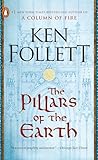
The Pillars of the Earth — Ken Follett ⭐⭐⭐⭐½
12th-century England. A prior wants to build a cathedral. Around that ambition, Follett constructs an 800-page epic spanning decades, following a cast of characters across the civil war between King Stephen and Empress Maud, the murder of Thomas Becket, and the slow, astonishing accumulation of stone and skill that a medieval cathedral required.
Follett is not Mantel — he writes popular fiction, not literary fiction, and the pleasures here are pace, scope, and story rather than prose. But as an introduction to the medieval period, and as a demonstration of what committed popular historical fiction can achieve, nothing else comes close.
Best for: Readers who want epic scale, a large cast, and story above all.
Hamnet — Maggie O’Farrell ⭐⭐⭐⭐⭐
In 1596, Shakespeare’s only son Hamnet died of plague at age eleven. Four years later, his father wrote Hamlet. O’Farrell’s novel tells the story not of the playwright — who is never named, referred to only as “the Latin tutor” or “her husband” — but of his wife Agnes and their son. It is a novel about grief, about a mother’s love, about what it might mean to watch your dead child’s name become immortal.
The prose is extraordinary — physical, sensory, alive to the textures of Elizabethan life — and the final sequence, in which Agnes attends the first performance of Hamlet, is the most beautiful ending of any novel on this list.
Best for: Literary fiction readers and anyone interested in the Shakespeare period who wants something formally remarkable.
Multi-Generational Epics: History as Inheritance
Pachinko — Min Jin Lee ⭐⭐⭐⭐⭐
Eight decades of a Korean family in Japan, beginning with a teenage girl’s pregnancy in 1910 and ending with her grandson in 1989 Tokyo. Pachinko — the pinball-adjacent gambling game that became the only industry open to Korean-Japanese immigrants — is the novel’s central metaphor: a rigged game in which the house always wins, and yet people keep playing because what else is there?
Min Jin Lee writes with a documentary breadth that encompasses class, race, religion, colonialism, and assimilation, and never loses sight of the individual lives within those forces. This is one of the great American novels of the century so far — even though it takes place almost entirely in Japan and Korea.
Best for: Readers who want literary ambition and epic scope, and who can commit to a novel that spans generations.
Homegoing — Yaa Gyasi ⭐⭐⭐⭐⭐
Two half-sisters in 18th-century Ghana — one married to an English slave trader, one sold into slavery — and then eight generations of their descendants, alternating between Africa and America. Each chapter follows a different descendant, moving forward in time, tracing two versions of the same history: colonialism and its aftermath on one side, the Middle Passage and its legacy on the other.
Gyasi’s debut is a structural marvel that somehow maintains emotional intimacy across 300 years and two continents. The chapter set during Reconstruction-era Alabama is as good as anything Morrison wrote on the same subject.
Best for: Readers who want history as lived experience across time — and one of the best debuts of the decade.
A Gentleman in Moscow — Amor Towles ⭐⭐⭐⭐½
In 1922, Count Alexander Rostov is sentenced by a Bolshevik tribunal to house arrest in Moscow’s Metropol Hotel for life. He will never leave. The novel follows him across the next thirty-two years, as Soviet history unfolds outside and he builds a complete life within 600 square feet.
Towles writes with the wit and warmth of a 19th-century novelist applied to 20th-century history. It is the most charming novel on this list — elegant, funny, and deeply humane — while remaining honest about what Stalinism cost those who lived through it.
Best for: Readers who want warmth and wit alongside history. A perfect entry point for historical fiction readers who tend toward literary novels.
Beloved — Toni Morrison ⭐⭐⭐⭐⭐
Set in post-Civil War Ohio, Beloved follows Sethe, an escaped enslaved woman, who killed her infant daughter rather than let her be recaptured into slavery — and who is now haunted by that daughter’s ghost, made flesh. Morrison’s novel is simultaneously a ghost story, a meditation on trauma and memory, and the most searching literary examination of American slavery ever written.
Morrison won the Nobel Prize in part for this novel, and it is singular: there is no other book quite like it in American literature. The prose is fragmented, incantatory, and demanding. It asks more of the reader than most novels on this list. It returns more too.
Best for: Readers with serious literary ambitions. One of the ten greatest American novels ever written.
Global History: Wars, Empires, and Continents
A Thousand Splendid Suns — Khaled Hosseini ⭐⭐⭐⭐½
Two Afghan women — Mariam, an illegitimate child married at fifteen to a much older man, and Laila, a younger woman who becomes his second wife — navigate Taliban-era Kabul in what becomes an unexpected friendship and act of mutual survival. Hosseini’s second novel is a study in what women endure under patriarchy and theocracy, told with compassion and controlled fury.
The history — the Soviet invasion, the civil war, the Taliban regime, the American invasion — is backdrop rather than subject; what matters is these two women and what it costs to be a woman in Afghanistan across fifty years.
Best for: Readers who want character-driven historical fiction and an unflinching portrait of women’s experience.
Half of a Yellow Sun — Chimamanda Ngozi Adichie ⭐⭐⭐⭐⭐
The Biafran War (1967–1970), in which the Republic of Biafra’s attempt to secede from Nigeria ended in famine and approximately one million civilian deaths. Adichie follows three characters — Ugwu, a village boy who becomes a houseboy to an intellectual; Olanna, the intellectual’s partner; and Richard, a British journalist in love with Olanna’s twin sister — across the years before and during the war.
Adichie writes with the confidence of a novelist in full command of her material: the pre-war world of Lagos and Enugu intelligentsia, and the war’s systematic destruction of that world, are rendered with equal precision. One of the great African novels of the 21st century.
Best for: Readers who want to understand a largely unknown historical catastrophe through the most accomplished literary lens.
The Kite Runner — Khaled Hosseini ⭐⭐⭐⭐
Amir, the son of a wealthy Kabul family, betrays his childhood friend Hassan — the son of his father’s servant — on the day of a kite-running tournament in 1975. The novel follows the consequences of that betrayal across thirty years, through the Soviet invasion, the Taliban regime, and the Afghan diaspora in California.
Hosseini’s debut is less formally ambitious than A Thousand Splendid Suns but carries the same emotional directness. It is, among other things, the best fictional account of pre-invasion Afghanistan — a world almost completely destroyed by 1979.
Best for: Readers new to Hosseini; a more accessible entry point than his second novel.
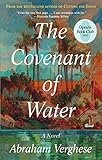
The Covenant of Water — Abraham Verghese ⭐⭐⭐⭐½
South India, 1900 to 1977: three generations of a family in Kerala’s Christian community, shaped by the British Empire’s departure, Indian independence, and the social upheavals of the 20th century. A hereditary condition affects family members in each generation — a propensity to drown — that becomes the novel’s central metaphor for what is inherited and what can be changed.
Verghese, a physician and medical educator, brings a doctor’s eye to the human body and its vulnerabilities. The novel is luminous, unhurried, and deeply human — an account of South Indian life largely absent from English-language fiction.
Best for: Readers who want to encounter a world rarely depicted in historical fiction, told with extraordinary warmth.
The Alice Network — Kate Quinn ⭐⭐⭐⭐
Two timelines: 1915, when a young English girl named Eve Gardiner is recruited into a WWI spy network operating in occupied France; and 1947, when an American socialite named Charlie St. Clair arrives in Europe searching for her missing cousin and falls in with a now-broken, alcoholic Eve. Quinn builds tension across both timelines and delivers one of the most satisfying structures in popular historical fiction.
More plot-driven than most books on this list, but executed with intelligence. An excellent entry point into the subgenre of WWI espionage fiction.
Best for: Readers who want propulsive plotting alongside rigorous historical research.
The Song of Achilles — Madeline Miller ⭐⭐⭐⭐½
The Trojan War retold from the perspective of Patroclus — the companion of Achilles, here portrayed as his lover from boyhood onward. Miller, a classicist by training, handles the source material (Homer’s Iliad, Ovid, Hesiod) with scholarly authority while writing with a contemporary emotional directness that makes the ancient world feel immediately accessible.
The prose is clean and beautiful without being anachronistic. The portrayal of Achilles — brilliant, inhuman, terrifying, tender — is one of the great characterisations in recent historical fiction. And the ending, if you know the Iliad, loses nothing for being inevitable.
Best for: Readers interested in classical antiquity; also an ideal first historical fiction for literary fiction readers.
Where to Start
Not sure which to pick up first? Here are three entry points based on what you’re looking for:
| If you want… | Start with… |
|---|---|
| Accessible historical fiction that reads like a thriller | All the Light We Cannot See |
| The highest literary ambition in the genre | Pachinko or Beloved |
| Epic scale across centuries | The Pillars of the Earth |
Historical Fiction vs. Historical Romance
A note on genre: historical fiction and historical romance share a setting but not a purpose. Historical romance is a love story set in the past, where the history provides atmosphere and the relationship provides the plot; the focus is emotional satisfaction and the resolution is a happy or hopeful ending. Historical fiction uses the past itself as its primary subject — the historical forces that shaped lives, the events that could not be avoided, the costs exacted by war and power and time.
Many readers love both. The distinction matters when choosing what to read next: if you want to understand the Second World War or the Tudor succession, historical fiction is what you want. If you want a love story that happens to wear a corset or a cravat, historical romance will serve you better.
The novels on this list are historical fiction in the serious sense: books for which the history is not decoration but subject.
Affiliate disclosure: Amazon links are affiliate links. We may earn a commission at no extra cost to you. This does not affect our editorial judgements — we only recommend books we believe in.
Also Worth Reading
Also worth reading is Kathleen Kent’s The Heretic’s Daughter, which vividly dramatizes the Salem witch trials through the ordeal of one family.
Frequently Asked Questions
What is the best historical fiction book of all time?
Wolf Hall by Hilary Mantel is most frequently cited as the greatest historical novel of the twenty-first century. The Pillars of the Earth by Ken Follett and All the Light We Cannot See by Anthony Doerr are among the most read and most decorated historical fiction novels of recent decades.
Where should I start with historical fiction?
The best entry points into historical fiction are A Gentleman in Moscow by Amor Towles (1920s Russia, warm and witty), The Nightingale by Kristin Hannah (World War Two France, emotional and fast-paced), or The Pillars of the Earth by Ken Follett (twelfth-century England, epic in scope). All three work as standalone novels.
What historical fiction is based on real events and people?
The Wolf Hall trilogy by Hilary Mantel follows the real life of Thomas Cromwell in Henry VIII's court. The Alienist by Caleb Carr is set in 1890s New York with real historical figures. Lincoln in the Bardo by George Saunders centres on the real grief of Abraham Lincoln after the death of his son Willie.
What historical fiction works well for book clubs?
The best historical fiction for book clubs includes The Nightingale by Kristin Hannah, Pachinko by Min Jin Lee, and The Book Thief by Markus Zusak. All three generate strong discussion because they present history through personal stories rather than grand sweep, and raise questions about identity, survival, and moral choice.