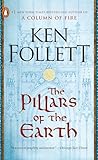
Editors Reads Verdict
Follett's magnum opus is one of popular fiction's greatest achievements — a massively detailed, emotionally urgent historical epic that makes medieval cathedral construction feel as gripping as any contemporary thriller.
What We Loved
- The cathedral itself becomes a character — its progress maps the story's emotional arc
- Medieval England rendered with extraordinary historical detail and narrative immediacy
- Complex cast of characters across multiple generations with genuine emotional weight
- Follett balances architectural detail with political and human drama effortlessly
Minor Drawbacks
- At nearly 1,000 pages, demands a significant time commitment
- Some villains are drawn with more melodrama than nuance
- The treatment of women is more progressive than the period would strictly allow
Key Takeaways
- → Great ambition requires generational commitment — cathedral-building took centuries
- → Power corrupts most devastatingly when it wears the face of religious authority
- → Architecture is a form of philosophy made material
- → Ordinary people's lives are shaped by history's grand forces whether they choose it or not
- → The creation of beauty in an ugly world is an act of profound defiance
| Author | Ken Follett |
|---|---|
| Publisher | New American Library |
| Pages | 973 |
| Published | August 5, 1989 |
| Language | English |
| Genre | Historical Fiction |
| Difficulty | Intermediate |
| Best For | Historical fiction readers who love immersive, detailed epics and aren't daunted by long books with large casts of characters. |
How The Pillars of the Earth Compares
The Pillars of the Earth at a glance against 2 similar books readers weigh alongside it.
| Book | Author | Rating | Best for |
|---|---|---|---|
| The Pillars of the Earth (this book) | Ken Follett | ★ 4.5 | Historical fiction readers who love immersive, detailed epics and aren't |
| All the Light We Cannot See | Anthony Doerr | ★ 4.6 | Literary fiction readers who want a Pulitzer-caliber World War II novel with |
| Outlander | Diana Gabaldon | ★ 4.4 | Historical fiction and romance readers who enjoy long, immersive narratives |
Building a World Across Centuries
In the anarchic England of King Stephen’s reign — the period known as the Anarchy, when civil war between Stephen and Empress Maud left the country ungoverned — a prior named Philip dreams of building the most beautiful cathedral in England. Tom Builder wants nothing more than to build a cathedral before he dies. Their meeting in the town of Kingsbridge sets in motion a narrative that spans decades, generations, and hundreds of thousands of words.
Ken Follett spent years researching The Pillars of the Earth before publication, and that research is visible on every page without ever becoming a burden. He knew that readers needed to understand how a twelfth-century cathedral was actually built — the flying buttresses, the problem of stone cutting, the labor of moving materials — but he also understood that this information would only land if readers cared about the people doing the building.
The Cathedral as Protagonist
Follett’s structural masterstroke is treating the cathedral itself as a character. Its progress — the foundations laid, the nave raised, the setbacks after storm damage or sabotage — maps the emotional arc of the human story. When the cathedral is threatened, the stakes feel immediate and personal. When it rises, the achievement belongs to every character who contributed to it.
The building’s technical challenges generate genuine narrative tension. How do you vault a nave wider than anything attempted before? How do you manage the political relationships that determine whether you get the stone, the labor, and the ecclesiastical patronage required? These are not dry questions in Follett’s hands.
Melodrama and Its Justifications
The book’s most common criticism is its villain, Prior William — and more broadly, a cast of antagonists drawn with theatrical menace rather than psychological nuance. That criticism is not entirely wrong. But it misunderstands Follett’s tonal register: this is melodrama in the great Victorian tradition, where moral categories must be legible for the story’s emotional machinery to function.
The heroines — Ellen, Aliena — are more interesting than their male equivalents, and Follett’s commitment to rendering their agency within medieval constraints gives the book more feminist texture than its period might suggest.
An Enduring Phenomenon
The Pillars of the Earth was initially rejected by publishers who considered it uncommercial. It eventually became one of the best-selling historical novels ever published, selected for Oprah’s Book Club in 2007. That arc — from rejection to ubiquity — says something important about the underestimated appetite for serious, detailed historical fiction.
Our rating: 4.5/5 — A monumental historical epic that proves popular fiction and genuine historical intelligence are not mutually exclusive, with a cathedral at its center that will stay with you.
Reading Guides
- Books Like The Pillars of the Earth: 11 Epic Historical Novels You Won
- Books Like The Da Vinci Code: 11 Gripping Historical Conspiracy Thrillers
- Books Like The Count of Monte Cristo: 11 Epic Adventure and Revenge Classics
- Books Like Outlander: 11 Epic Historical Romances You
- Ken Follett Books in Order: Kingsbridge and Century Series Guide (2026)
- Best Historical Fiction Books of All Time: 20 Essential Reads
- Oprah
The Book Follett Almost Didn’t Write
Part of what gives The Pillars of the Earth its peculiar place in Follett’s career is that it was a departure he had wanted to make for years. He had built his reputation on lean Cold War thrillers — Eye of the Needle and its successors — and a thousand-page novel about twelfth-century cathedral construction was, by any commercial logic of 1989, a strange gamble. Follett has said repeatedly that it is his own favourite among his books and the one he is most often thanked for, and the gap between its unpromising premise and its eventual status as his best-loved novel is part of its legend. The story’s later life — the 2010 television miniseries, the Oprah’s Book Club selection — only confirmed an appetite the original publishers had doubted.
Faith, Power, and Stone
Beneath the architectural drama runs Follett’s real subject: the way ambition, faith, and naked power braid together in a society organised around the Church. Prior Philip’s dream of the cathedral is genuine devotion, but realising it requires money, politics, and the management of men far less scrupulous than himself. The antagonists — Bishop Waleran, the brutal Hamleighs — embody the way ecclesiastical authority could be turned to entirely worldly ends. The cathedral that rises across the decades is thus both an act of worship and a monument to the compromises that made it possible, and Follett never lets the reader forget that the two are inseparable.
This is the engine that carries the book’s length. The technical questions of how to vault a nave or move cut stone matter because they are bound to questions of who holds power in Kingsbridge, and the human story and the building story advance as one.
The Women of Kingsbridge
A book set in the twelfth-century Church might be expected to leave little room for female agency, and the common criticism that Follett’s women are more modern than their period would strictly allow is not baseless. But it undersells what he achieves with Aliena and Ellen, who are among the most fully realised characters in the novel. Aliena’s arc — dispossessed noblewoman who rebuilds a fortune through the wool trade by sheer will and intelligence — is the book’s most satisfying study of resilience, and it grants her an economic and moral authority the men around her must reckon with. Ellen, the outsider living beyond the village’s approval, embodies a freedom the settled world both needs and fears. Follett’s commitment to rendering their determination within real medieval constraints gives the novel a feminist texture its period setting might not have promised, and it is no accident that readers often find the heroines more compelling than the heroes.
Frequently Asked Questions
What is "The Pillars of the Earth" about?
Set in twelfth-century England, the novel follows the building of a cathedral in the fictional town of Kingsbridge over decades of civil war, religious conflict, and human ambition.
Who should read "The Pillars of the Earth"?
Historical fiction readers who love immersive, detailed epics and aren't daunted by long books with large casts of characters.
What are the key takeaways from "The Pillars of the Earth"?
Great ambition requires generational commitment — cathedral-building took centuries Power corrupts most devastatingly when it wears the face of religious authority Architecture is a form of philosophy made material Ordinary people's lives are shaped by history's grand forces whether they choose it or not The creation of beauty in an ugly world is an act of profound defiance
Is "The Pillars of the Earth" worth reading?
Follett's magnum opus is one of popular fiction's greatest achievements — a massively detailed, emotionally urgent historical epic that makes medieval cathedral construction feel as gripping as any contemporary thriller.
Ready to Read The Pillars of the Earth?
Check the current price on Amazon.
Check Price on Amazon (paid link)Prices and availability are subject to change. See Amazon for current price.
Review last updated: