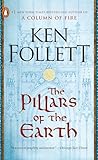
Ken Follett is a Welsh author of sweeping historical epics and taut thrillers, best known for The Pillars of the Earth, a decades-spanning saga of cathedral building in medieval England.
Ken Follett began his career writing pulp thrillers under pseudonyms before Eye of the Needle, published in 1978, made him an international name in the spy genre. He spent several years on The Pillars of the Earth, published in 1989, a 900-page novel set in twelfth-century England that traces the construction of a cathedral alongside the lives of the people shaped by and against it. The book was a commercial phenomenon, selling tens of millions of copies and spawning a direct sequel, World Without End, as well as the Kingsbridge series that continued into the twenty-first century.
The Pillars of the Earth works because Follett genuinely understands architecture and invests real narrative energy in the cathedral itself — it functions almost as a character, embodying the ambitions, faith, and corruption of the society building it. The human storylines are more conventional, with heroes and villains drawn in broad strokes, but they propel the narrative across its considerable length with impressive momentum. Follett is one of the great page-turners of the historical genre.
The criticisms are familiar to any reader who has spent time with Follett: his characterization is often thin, his villains cartoonishly evil, and his treatment of women and sexuality can feel anachronistic in its frankness. Literary readers looking for nuance may find his prose functional rather than beautiful. But as a storyteller who makes history visceral and compelling for a mass audience, Follett has few peers.
A Master of the Epic
Ken Follett is one of the world’s best-selling authors, a writer who has achieved enormous popularity across multiple genres but is best known for his sweeping historical epics. With a gift for combining meticulous research, propulsive plotting, and large casts of vivid characters, Follett creates immersive novels that bring entire historical eras to life on a grand scale. His ability to render the past with rich detail while sustaining gripping narrative momentum has earned him a vast global readership, and his major epics rank among the most popular historical novels ever written.
The Pillars of the Earth
Follett’s most beloved novel, The Pillars of the Earth, is a sweeping epic set in twelfth-century England centred on the building of a cathedral. Spanning decades and featuring a large cast of monks, builders, nobles, and ordinary people, the novel combines architectural and historical detail with intrigue, ambition, love, and conflict, immersing readers in the medieval world. A departure from the thrillers that first made his name, it became a massive and enduring bestseller and the foundation of his Kingsbridge series, demonstrating his mastery of the historical epic and winning him legions of devoted fans.
The Kingsbridge Series
The Pillars of the Earth launched the Kingsbridge series, a sequence of epic historical novels following the fictional town of Kingsbridge across the centuries, including World Without End and later additions that extend both forward and backward in time. Each novel immerses readers in a different historical era through the lives of richly drawn characters, and together they form one of the most popular bodies of historical fiction in contemporary publishing. The series exemplifies Follett’s ability to combine sweeping scope with intimate human drama across vast spans of history.
Thrillers and Range
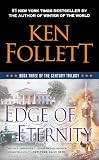
Before his historical epics, Follett established himself as a master of the thriller, and works such as the World War II espionage novel Eye of the Needle brought him his first great success. His ability to craft tense, intelligent suspense demonstrated the plotting skills he would later apply on an epic scale, and he has continued to write in multiple genres, including the ambitious Century Trilogy chronicling the twentieth century through several families. This range and versatility, spanning espionage, history, and the modern era, reflect his consistent gift for storytelling across very different forms.
Research and Authenticity
A hallmark of Follett’s epics is the depth and accuracy of their historical research. He immerses himself in the periods he writes about, and his novels are rich with authentic detail about the architecture, technology, politics, religion, and daily life of their eras, grounding his dramas in convincing historical reality. This commitment to authenticity, combined with his skill at weaving research seamlessly into narrative, allows readers to feel they are genuinely inhabiting the past, and it is central to the immersive quality and the educational pleasure of his work.
Storytelling on a Grand Scale
What unites Follett’s diverse output is his mastery of large-scale storytelling. He excels at managing sprawling casts, intricate plots, and lengthy narratives, sustaining tension and emotional investment across hundreds of pages and multiple intertwining storylines. His novels deliver the old-fashioned pleasures of epic narrative — adventure, romance, conflict, and the rise and fall of fortunes — on a grand and satisfying scale. This command of the long, immersive, character-rich story is the foundation of his extraordinary and lasting popularity.
The Lasting Legacy of Ken Follett
Ken Follett has become one of the most successful and beloved authors of historical fiction, his epics cherished by millions for their scope, detail, and narrative power. For newcomers, The Pillars of the Earth is the essential starting point and the gateway to the Kingsbridge series, while Eye of the Needle offers an excellent introduction to his thrillers. For readers seeking immersive, richly detailed, and compulsively readable historical epics that bring the past to vivid life, Ken Follett remains one of the most reliable and rewarding storytellers in popular fiction.
Other Titles Worth Seeking Out
Beyond the obvious starting points, Evening and Morning show other sides of Ken Follett.
Reading Guides