Authors Like Dan Brown: 7 Thriller Writers to Read Next
Authors like Dan Brown for fans of puzzle-driven conspiracy thrillers — Robert Harris, Umberto Eco, Michael Crichton, Ken Follett, and more, with where to start for each.
Dan Brown built one of the most recognisable formulas in modern fiction: a brilliant academic, an ancient institution with something to hide, a string of coded clues, and a plot that unfolds over a single breathless night of short chapters and cliffhanger endings. The Robert Langdon novels — Angels and Demons, The Da Vinci Code, Inferno — turned symbology, religious history, and conspiracy into airport-bestseller gold.
If you have raced through the Langdon books and want the same combination of puzzle-solving, hidden history, and relentless pace, the good news is that the conspiracy thriller is a crowded and talented field. Below are seven authors who deliver different parts of the Dan Brown experience — some matching his religious-mystery DNA almost exactly, others bringing sharper prose or bigger historical canvases. For each, we suggest where to start. (If you are still working through Brown himself, see our guide to where to start with Dan Brown and our list of books like The Da Vinci Code.)
Robert Harris — The Sophisticated Conspiracy
If you want the closest match to Brown’s institution-cracking thrillers with markedly better writing, start with Robert Harris. His novel Conclave locks the reader inside the Vatican during the secret election of a new pope — ritual, faction, ambition, and a buried secret that detonates in the final pages. It is everything the Langdon books reach for, executed with restraint and real character work. Harris’s range, from Pompeii to Fatherland, shows the same gift Brown has for making research feel like suspense.
Umberto Eco — The Literary Original
Brown’s puzzles about secret societies and hidden meaning have a far more ambitious ancestor. Umberto Eco wrote the novel that Brown’s work echoes: a murder mystery in a medieval abbey stuffed with theology, semiotics, and a labyrinthine library. Begin with Foucault’s Pendulum, in which three editors invent a conspiracy theory as a game — only for it to start coming true. It is The Da Vinci Code for readers who want the ideas to be genuinely difficult, and it rewards the effort enormously.
Kate Mosse — The Grail-Hunt Read-Alike
No author has been marketed to Da Vinci Code readers more directly than Kate Mosse, and the comparison earns itself. Labyrinth runs two timelines — a thirteenth-century Cathar woman entrusted with a deadly secret, and a present-day archaeologist who unearths it — braided around a Grail mystery set in the Languedoc. The hidden relic, the secret society, the historical conspiracy bleeding into the present: it is the Brown template with a stronger sense of place and a richer emotional core. For readers who specifically loved the Grail-and-heresy material of The Da Vinci Code, this is the most direct match on the list.
Michael Crichton — The Pacing Machine
If what you love about Brown is the propulsion — the short chapters, the cliffhangers, the sense that the floor could give way at any second — Michael Crichton is your writer. Timeline sends a team of historians back to fourteenth-century France and traps them there, blending hard science, medieval history, and pure adventure. Crichton’s techno-thrillers share Brown’s instinct for turning expertise into white-knuckle entertainment, usually with a smarter engine under the hood.
Ken Follett — The Historical Epic
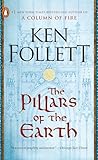
Brown delivers his history in a single frantic night; Ken Follett delivers it across decades and continents. The Pillars of the Earth builds an entire twelfth-century world around the construction of a cathedral, with the political scheming, religious intrigue, and buried secrets Brown fans crave — only on an immense, immersive scale. If you want the historical-conspiracy texture without the race-against-the-clock compression, Follett is the natural next step.
Brad Thor — The Action Conspiracy
For readers drawn to Brown’s globe-trotting, government-and-church-secrets side but who want more gunfire and field action, Brad Thor is a reliable engine. Start with The Lions of Lucerne, the first Scot Harvath novel. Thor trades symbology for special-operations tradecraft, but keeps the international scope, the institutional conspiracy, and the chapter-ending hooks that make a book impossible to put down.
Lee Child — The Page-Turner
Strip Dan Brown down to his most fundamental quality — the sheer compulsion to turn the page — and you arrive at Lee Child. The Jack Reacher novels are leaner and grittier than Brown’s, with no academic puzzles, but they are masterclasses in momentum. 61 Hours is a perfectly engineered ticking-clock thriller. If you read Brown mostly because you cannot stop, Reacher will keep you up just as late.
How to Choose Your Next Read
The fastest way to pick: if you want Brown’s religious and historical mystery, read Robert Harris, Kate Mosse, or Umberto Eco. If you want his pacing and adventure, read Michael Crichton or Lee Child. If you want the epic historical canvas, read Ken Follett. And if you want the globe-spanning conspiracy with more action, read Brad Thor.
A useful rule of thumb: Brown blends three ingredients — a code or relic to decipher, an institution guarding a secret, and a clock that will not stop. Most of his read-alikes lean hard into one or two of those. Mosse and Eco own the secret; Harris owns the institution; Crichton, Child, and Thor own the clock. Knowing which element hooked you in the Langdon novels is the quickest route to the right next author.
Each of these writers has a deep backlist, so a single good entry point can unlock years of reading. Dan Brown’s gift was never really symbology — it was the promise that history is full of secrets worth chasing. These seven authors all keep that promise, each in their own register.
Frequently Asked Questions
Who is the most similar author to Dan Brown?
Robert Harris is the closest match for readers who love the research-driven, institution-cracking side of Dan Brown — his novel Conclave, set during a papal election inside the Vatican, delivers the same blend of secret ritual, hidden agendas, and ticking-clock tension that powers the Robert Langdon books, but with sharper prose and more credible characters. For the intellectual, secret-society side of Brown, Umberto Eco is the literary original.
What should I read if I liked The Da Vinci Code?
If you loved the codes, religious history, and race-against-time structure of The Da Vinci Code, start with Robert Harris's Conclave or Umberto Eco's Foucault's Pendulum. For the breathless, short-chapter pacing rather than the religious puzzle, Michael Crichton's Timeline and Lee Child's Jack Reacher novels scratch the same itch. Ken Follett's The Pillars of the Earth delivers the historical sweep on a much larger canvas.
Are there authors like Dan Brown but better written?
Yes. Readers who enjoy Brown's plots but find the prose thin often prefer Robert Harris and Umberto Eco, both of whom bring genuine literary craft to conspiracy and historical-mystery material. Eco's The Name of the Rose is, in many ways, the sophisticated novel that The Da Vinci Code is the popular echo of.