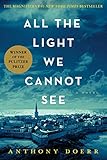
Editors Reads Verdict
Anthony Doerr's Pulitzer Prize-winning novel is one of the most technically accomplished works of historical fiction of the century — structurally intricate, lyrically written, and emotionally devastating in ways that seem to accumulate silently until the moment they become overwhelming.
What We Loved
- The alternating perspectives are structurally sophisticated and convergent in a way that satisfies
- Doerr's prose is genuinely beautiful — every sentence is precisely made
- Marie-Laure's blindness is rendered with sensory richness that illuminates rather than limits
- Werner's moral compromise is handled with compassion and intellectual honesty
- The Pulitzer is deserved — this is major literary fiction with popular accessibility
Minor Drawbacks
- The novel's deliberate pace requires patience from thriller-oriented readers
- Some supporting characters are more sketchily drawn than the leads
- The nonlinear structure occasionally disrupts momentum
Key Takeaways
- → Human connection can survive across the most complete institutional separation
- → Moral compromise under coercion is not the same as moral failure — but it has costs
- → Blind perception can be more finely calibrated than sighted perception
- → War's beauty and horror coexist with equal force and neither cancels the other
- → The light we cannot see is often what matters most
| Author | Anthony Doerr |
|---|---|
| Publisher | Scribner |
| Pages | 531 |
| Published | May 6, 2014 |
| Language | English |
| Genre | Historical Fiction, Literary Fiction, World War II Fiction |
| Difficulty | Intermediate |
| Best For | Literary fiction readers who want a Pulitzer-caliber World War II novel with extraordinary prose, structural sophistication, and deep emotional resonance. |
How All the Light We Cannot See Compares
All the Light We Cannot See at a glance against 3 similar books readers weigh alongside it.
| Book | Author | Rating | Best for |
|---|---|---|---|
| All the Light We Cannot See (this book) | Anthony Doerr | ★ 4.6 | Literary fiction readers who want a Pulitzer-caliber World War II novel with |
| A Thousand Splendid Suns | Khaled Hosseini | ★ 4.7 | Readers who want literary fiction that puts women's experiences at the center |
| The Book Thief | Markus Zusak | ★ 4.6 | Readers of historical fiction who appreciate literary prose, formally inventive |
| The Nightingale | Kristin Hannah | ★ 4.6 | Readers of women-centered historical fiction, World War II narratives, and |
Two Children, Two Countries, One War
Anthony Doerr spent ten years writing All the Light We Cannot See, and the precision of that labor is visible on every page. The novel follows two characters across parallel tracks that the structure slowly draws together: Marie-Laure LeBlanc, the daughter of a Paris museum locksmith who has been blind since age six, and Werner Pfennig, an orphan boy in a German mining town whose gift for radio electronics attracts the attention of the Nazi youth education system.
The novel is structured in short chapters — some barely a page — alternating between their perspectives, moving through time in ways that create converging lines of approach toward a moment of contact in Saint-Malo, France, in August 1944. The structural confidence required to maintain this convergence across 531 pages is remarkable.
Marie-Laure’s Sensory World
Doerr renders blindness as a different mode of perception rather than an absence of it. Marie-Laure navigates Paris and later Saint-Malo through mental models her father builds: first a wooden scale model of their neighborhood that she memorizes with her hands, later a model of the walled sea city where they take refuge. Her world is constituted in texture, smell, sound, and spatial memory — and Doerr’s language for this world is the novel’s most beautiful writing.
The Sea of Flames, a legendary diamond that may or may not carry a curse, weaves through the plot in ways that are more fairy tale than thriller, and this tonal register — the mythological embedded in the historical — is one of the novel’s distinctive qualities.
Werner’s Moral Trajectory
Werner’s story is the novel’s more psychologically complex strand. He has a gift and a dream, and the Nazi system offers the only viable path toward both. His enrollment in the Hitler Youth academy, his participation in the war as a radio specialist, and his gradual understanding of what he is participating in constitute a precise account of how intelligent, decent people become complicit in atrocity through incremental choices under institutional pressure.
Doerr refuses to condemn Werner simply — his compassion and his culpability coexist, as they did for millions of actual people in comparable situations.
The Pulitzer and Its Meaning
The 2015 Pulitzer Prize recognized a novel that managed to be both literary and accessible — the kind of fiction that reads like an important book without requiring effort that makes readers feel excluded. It is long, it is slow, it is beautifully made, and it rewards every page.
Our rating: 4.6/5 — A masterwork of historical fiction: structurally precise, lyrically accomplished, and emotionally devastating in ways that seem inevitable only after the fact.
The Discipline of Convergence
The structural feat of All the Light We Cannot See is its management of convergence across more than five hundred pages. Doerr keeps Marie-Laure and Werner apart for almost the entire novel, their lives running on parallel tracks separated by nationality, circumstance, and the whole machinery of the war, and yet the reader feels them drawn inexorably toward a single point in Saint-Malo in August 1944. Sustaining that sense of approach without letting it slacken or feel mechanical requires extraordinary control, and Doerr achieves it partly through his chapter architecture: very short sections, some less than a page, alternating between the two children and braiding in a second timeline that runs ahead to the siege. The effect is of two melodies moving toward a chord the reader can hear coming long before it sounds.
This is the kind of construction that can look like mere cleverness if it does not serve feeling, and the novel’s critics have sometimes charged exactly that — that the architecture is more impressive than moving. But the structure earns its keep. The slow convergence is the book’s argument made formal: that human connection can survive the most complete institutional separation, that two lives shaped by opposing forces can still bend toward one another. The form embodies the theme rather than merely housing it.
Werner and the Anatomy of Complicity
The novel’s moral seriousness rests almost entirely on Werner, and on Doerr’s refusal to let him off easily or to condemn him cheaply. Werner is gifted, decent, and trapped: a poor orphan whose talent for radio offers the only escape from a future in the mines, and the only door open to that talent is the Nazi educational system. Doerr traces, step by incremental step, how a good boy becomes complicit in atrocity — not through a single corrupting choice but through a long series of small accommodations, each individually survivable, that together amount to participation in horror. The famous scenes at the Schulpforta academy, where cruelty is administered as pedagogy, show the mechanism with painful clarity.
What distinguishes Doerr’s treatment is that he holds compassion and culpability together without letting either cancel the other. Werner is not exonerated by his circumstances, nor is he reduced to a villain. He is a specific, sympathetic person who did terrible things under pressure, which is the situation of an enormous number of actual people in the war, and the novel’s honesty about this is its deepest claim to seriousness.
Beauty as Method and as Risk
Doerr’s prose is the most immediately remarkable thing about the book — sentence by sentence, it is among the most beautiful writing in contemporary popular fiction. His rendering of Marie-Laure’s blindness as a different and richly calibrated mode of perception, rather than an absence, is the novel’s central technical triumph; her world of texture, sound, and spatial memory is built with a sensory precision that makes sightedness seem the poorer condition. The danger of such consistent beauty is that it can prettify horror, can make even the war’s atrocities go down too smoothly, and this is the most substantial critique the novel faces. But at its best the beauty is not decoration but argument: a insistence that loveliness and horror coexist in the same world with equal force, and that neither one cancels the other.
Reading Guides
- Books Like All the Light We Cannot See: WWII, Fate, and Two Lives Converging
- Books Like A Man Called Ove: 11 Novels About Grief, Grumpiness, and Found Family
- Books Like A Gentleman in Moscow: 11 Novels of Elegance, Wit, and Lives Well Lived
- Books Like The Pillars of the Earth: 11 Epic Historical Novels You Won
- Books Like The Nightingale: 11 Powerful WWII Novels You Need to Read
- 15 Books Like The Women by Kristin Hannah
- 25 Best Books for Men (That Are Actually Worth Reading)
Frequently Asked Questions
What is "All the Light We Cannot See" about?
A blind French girl and a German orphan boy, connected by a radio broadcast, move toward each other across the chaos of occupied France in the final days of World War II.
Who should read "All the Light We Cannot See"?
Literary fiction readers who want a Pulitzer-caliber World War II novel with extraordinary prose, structural sophistication, and deep emotional resonance.
What are the key takeaways from "All the Light We Cannot See"?
Human connection can survive across the most complete institutional separation Moral compromise under coercion is not the same as moral failure — but it has costs Blind perception can be more finely calibrated than sighted perception War's beauty and horror coexist with equal force and neither cancels the other The light we cannot see is often what matters most
Is "All the Light We Cannot See" worth reading?
Anthony Doerr's Pulitzer Prize-winning novel is one of the most technically accomplished works of historical fiction of the century — structurally intricate, lyrically written, and emotionally devastating in ways that seem to accumulate silently until the moment they become overwhelming.
Ready to Read All the Light We Cannot See?
Check the current price on Amazon.
Check Price on Amazon (paid link)Prices and availability are subject to change. See Amazon for current price.
Review last updated: