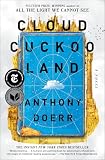
Editors Reads Verdict
Cloud Cuckoo Land is Doerr's most structurally ambitious novel — a book that is also an argument for books, demonstrating through its own operation the claim it makes about the necessity of stories and the improbable persistence of the things we write down.
What We Loved
- The structural ambition is matched by execution — the three timelines converge in ways that feel earned rather than contrived
- The fictional Greek manuscript at the novel's center is a genuine imaginative achievement: Doerr writes it convincingly in multiple fragmentary states
- The prose retains the sensory precision and emotional restraint of All the Light We Cannot See while expanding into new formal territory
Minor Drawbacks
- At 640 pages it asks for a sustained commitment; readers who prefer a tighter narrative may find the early sections slow
- The science fiction timeline set on the generation ship requires a larger imaginative adjustment than the historical sections
- The novel's thesis — that stories save us — is stated somewhat more explicitly than is entirely necessary
Key Takeaways
- → Stories survive because humans keep needing them — not abstractly but in specific moments of extremity when nothing else serves
- → A text that passes through enough hands across enough centuries becomes a different kind of object: a record of everyone who needed it
- → The past and the future are not separate from the present but continuous with it, and literature is one of the mechanisms of that continuity
- → What we preserve — and what we allow to be lost — is a moral choice with consequences we cannot foresee
| Author | Anthony Doerr |
|---|---|
| Publisher | Scribner |
| Pages | 640 |
| Published | September 28, 2021 |
| Language | English |
| Genre | Literary Fiction, Historical Fiction, Science Fiction |
How Cloud Cuckoo Land Compares
Cloud Cuckoo Land at a glance against 3 similar books readers weigh alongside it.
| Book | Author | Rating | Best for |
|---|---|---|---|
| Cloud Cuckoo Land (this book) | Anthony Doerr | ★ 4.6 | Literary Fiction |
| All the Light We Cannot See | Anthony Doerr | ★ 4.6 | Literary fiction readers who want a Pulitzer-caliber World War II novel with |
| Never Let Me Go | Kazuo Ishiguro | ★ 4.2 | Literary fiction readers drawn to Ishiguro's distinctive voice and the |
| One Hundred Years of Solitude | Gabriel García Márquez | ★ 4.6 | Readers of literary fiction interested in the most celebrated novel in Spanish, |
Cloud Cuckoo Land Review
Anthony Doerr spent a decade writing All the Light We Cannot See and won the Pulitzer Prize for it. Cloud Cuckoo Land, published six years later, is a more formally audacious book — three storylines across five centuries, connected by a single ancient text — and it is also, in its explicit subject matter, a novel about why novels matter. Whether those two facts are connected is one of the interesting questions the book raises.
The three storylines: Anna and Omeir, a Greek girl and a Bulgarian oxherd whose paths converge during the Ottoman siege of Constantinople in 1453; Zeno and Seymour, an elderly Korean War veteran and a young environmental radical in contemporary Lakeport, Idaho, who become connected through a children’s theater and a terrorist incident; and Konstance, a girl aboard the Argos, a generation ship traveling toward an earth-like planet in the distant future. The manuscript that links them — a fictional ancient Greek text, the “Cloud Cuckoo Land” of the title, in which a man magically becomes a donkey, then a fish, then a bird, in search of a paradise he cannot find — appears in different fragmentary states across all three timelines: being transcribed, being translated, being preserved.
Doerr has always been interested in the mechanisms of transmission — how information travels across time and through destruction — and the manuscript is a perfect vehicle for this interest. He writes it convincingly in three different versions corresponding to the different states of the text, and the fictional Greek original is charming and strange enough to be believable as something genuinely old and genuinely worth preserving. The book’s central argument — that stories survive because humans keep finding them necessary, keep risking things to preserve them — is demonstrated rather than merely stated, which is the only honest way to make that argument in a novel.
The science fiction timeline is the most formally adventurous element and the one readers will find most demanding. Konstance’s world — the Argos, the virtual library she inhabits called Sybil, the question of what exactly has happened to Earth — requires a larger imaginative adjustment than the historical sections, and some readers will find it slow to pay off. It does pay off, in the novel’s final movements, in ways that are genuinely moving. Cloud Cuckoo Land is a bigger book than All the Light We Cannot See, and in some respects a braver one. It is a novel that has thought seriously about what novels are for, and it has the confidence to be its own answer.
A Novel About Why Novels Survive
The deepest ambition of Cloud Cuckoo Land is to make an argument about literature itself — and, more daringly, to make that argument by example rather than assertion. The fictional ancient text at the novel’s heart, Antonius Diogenes’s tale of a foolish shepherd who wants to become a bird and reach a paradise in the clouds, is not merely a plot device linking the three timelines. It is Doerr’s demonstration of his thesis: that stories survive across centuries not because they are protected by institutions but because, again and again, individual human beings in moments of extremity find them necessary and risk something to preserve them. The text passes from a dying Byzantine world to a contemporary Idaho library to a starship hurtling away from a ruined Earth, and at each station it is saved by someone who needed it.
This is a claim that could easily become sentimental or self-congratulatory — the novel about the importance of novels, flattering its own readers. Doerr mostly avoids the trap by grounding the abstraction in specific, fully realized lives. The text matters not in the abstract but because it matters to Anna, to Zeno, to Konstance, each at a particular moment when nothing else will serve. The persistence of literature is shown as a chain of concrete human needs rather than asserted as a pious generality.
The Ambition and Its Costs
At 640 pages and across five centuries, Cloud Cuckoo Land asks a great deal of its reader, and it is honest to acknowledge that the demand is not always evenly rewarded. The historical sections — Anna inside the doomed walls of Constantinople, Omeir the gentle oxherd conscripted into the besieging army — have an immediacy that pulls the reader in quickly. The contemporary Idaho strand, centred on the elderly translator Zeno and the troubled young Seymour, builds more slowly but accumulates real force. The science-fiction timeline aboard the generation ship Argos is the most formally adventurous and the most demanding; Konstance’s world, with its virtual library and its withheld central mystery, requires the largest imaginative adjustment and is the slowest to pay off.
It does pay off — the convergence of the three timelines in the novel’s final movements is genuinely moving, and the science-fiction strand turns out to carry the book’s emotional climax. But readers who prefer a tighter narrative will feel the length, and the novel’s central thesis is occasionally stated more explicitly than a book demonstrating it so well actually needs.
A Braver Book Than Its Predecessor
In some respects Cloud Cuckoo Land is a bigger and braver book than the Pulitzer-winning All the Light We Cannot See. It takes more formal risks, spans more time, and stakes itself on an argument about the value of literature that a more cautious writer would have left implicit. It retains the sensory precision and emotional restraint of the earlier novel while expanding into territory — deep history, far future, the life of a single text across millennia — that All the Light never attempted. It is a novel that has thought hard about what novels are for, and it has the confidence to become its own answer to the question.
Frequently Asked Questions
What is "Cloud Cuckoo Land" about?
Five characters across three time periods — fifteenth-century Constantinople, contemporary Idaho, and a generation ship in the distant future — are connected by a single ancient Greek manuscript. A meditation on why stories matter.
What are the key takeaways from "Cloud Cuckoo Land"?
Stories survive because humans keep needing them — not abstractly but in specific moments of extremity when nothing else serves A text that passes through enough hands across enough centuries becomes a different kind of object: a record of everyone who needed it The past and the future are not separate from the present but continuous with it, and literature is one of the mechanisms of that continuity What we preserve — and what we allow to be lost — is a moral choice with consequences we cannot foresee
Is "Cloud Cuckoo Land" worth reading?
Cloud Cuckoo Land is Doerr's most structurally ambitious novel — a book that is also an argument for books, demonstrating through its own operation the claim it makes about the necessity of stories and the improbable persistence of the things we write down.
Ready to Read Cloud Cuckoo Land?
Check the current price on Amazon.
Check Price on Amazon (paid link)Prices and availability are subject to change. See Amazon for current price.
Review last updated: