Where to Start with Anthony Doerr: A Reading Guide
Where to start with Anthony Doerr — whether to begin with All the Light We Cannot See, Cloud Cuckoo Land, or About Grace. A complete reading guide.
Anthony Doerr (born 1973) is the American novelist who won the Pulitzer Prize for Fiction in 2015 for All the Light We Cannot See, the most widely read literary novel about the Second World War of its generation. He is known for the breadth of his scientific knowledge (he brings hydrology, radio physics, oceanography, and astrophysics into his fiction without it feeling like homework), the extraordinary quality of his prose (almost every sentence in All the Light does more than one thing), and his capacity for genuine wonder at the natural and human world. His novels require patience — they are intricately structured, moving through time and between multiple storylines — but readers who give themselves to that structure are rewarded with some of the most beautiful and most moving fiction of the twenty-first century.
Where to Start: All the Light We Cannot See (2014)
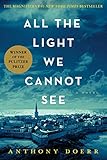
The essential Doerr — and the novel that made him famous. Two storylines, told in short alternating chapters: Marie-Laure LeBlanc, blinded at six, who is raised by her father in Paris and flees with him to Saint-Malo as Germany occupies France; and Werner Pfennig, an orphan in the Ruhr Valley whose extraordinary gift for radios takes him from an orphanage into the German military. The two stories converge during the Allied bombing of Saint-Malo in 1944.
Doerr spent a decade on this novel, and the care is evident in every paragraph: the research into radio physics, the miniature model of Paris that Marie-Laure’s father builds so she can navigate by touch, the sea-creature specimens in the museum, the light that gives the novel its title. It is a novel about the human capacity for goodness under circumstances designed to destroy it. His most complete and most necessary work.
Cloud Cuckoo Land (2021)
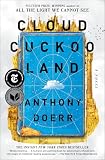
Doerr’s most ambitious novel — a three-stranded narrative connecting 1453 Constantinople, contemporary Idaho, and a future spaceship through a fictional ancient Greek text. Anna, a Greek girl in the fallen city, and Omeir, a young shepherd conscripted by the Ottoman army, share a story across the siege walls. In the present, Zeno, an elderly Korean War veteran who has spent his retirement translating a recovered text, rehearses a children’s play with a teenager named Seymour. In the future, a girl named Konstance, alone in an archive on a generation ship, reads the same text.
The novel is a celebration of storytelling itself — of the way stories survive catastrophe, cross centuries, and reach the people who need them most. More formally demanding than All the Light but equally rewarding for patient readers.
About Grace (2004)
Doerr’s first novel — the story of David Winkler, a hydrologist in Alaska who has had prophetic dreams since childhood and who becomes convinced that a recurring dream means he will cause a child to drown. He flees Alaska with Sandy, a woman he loves, and her daughter Grace, losing his wife, his career, and his sense of self in the process. When the dream comes true in a way he did not foresee, he spends twenty years in exile, trying to find his way back.
The novel is less tightly plotted than his later work but already fully Doerr’s: the scientific knowledge (water appears throughout, in every form), the extraordinary prose, and the meditative quality that distinguishes him from writers who are merely technically accomplished.
Four Seasons in Rome (2007)
Doerr’s memoir of the year he spent in Rome on a Rome Prize fellowship, arriving with his wife and newborn twin sons. It is a book about new fatherhood, about learning to see a new city and a new language, and about writing — about the difficulty of attending to the world when you are exhausted, and about the particular quality of attention that Rome, with its layers of visible history, demands.
His most personal and most directly autobiographical work; essential for readers interested in how he thinks about writing and observation.
Why All the Light We Cannot See Is the Ideal First Book
For a reader new to Anthony Doerr, All the Light We Cannot See is the ideal first book because it is his Pulitzer Prize-winning bestseller and the fullest expression of his distinctive gifts, the luminous prose, the intricate structure, and the deeply moving engagement with humanity amid war. All the Light We Cannot See weaves together the stories of a blind French girl and a German boy whose paths converge in occupied France during the Second World War, in a beautiful, intricate, and deeply moving novel. As an entry point it is ideal, for it is his most celebrated work and a perfect example of his luminous, intricate, emotionally rich fiction. It welcomes the newcomer with its luminous prose, its intricate structure, and its emotional power, drawing the reader into his distinctive vision. It is his most famous work and the one that best represents his gifts, so the new reader encounters Doerr at his finest. For the newcomer, then, All the Light We Cannot See is the natural and ideal starting point.
What to Expect as a New Reader
As a new reader, you can expect All the Light We Cannot See to be a luminous, intricate, and deeply moving novel. You can expect luminous prose, for Doerr writes with extraordinary beauty, precision, and lyricism. You can expect an intricate structure, for the novel weaves together the stories of two young people and moves through time toward their convergence. You can expect a powerful wartime setting, for the novel is set in occupied France during the Second World War. You can expect emotional power, for the novel is a moving meditation on humanity, courage, and connection amid war. You can expect a focus on the inner lives of its young protagonists, a blind French girl and a German boy. You can expect themes of light, science, fate, and human goodness. You should be prepared for the difficult realities of war. Expect, in short, a luminous, intricate, and deeply moving novel, a superb introduction to Doerr’s gifts.
Going Deeper After Your First Book
Once All the Light We Cannot See has introduced you to Doerr’s gifts, the reader who wishes to go deeper can explore his other books, which continue his luminous prose, his intricate structure, and his deeply moving, often wonder-filled vision. His later novel weaves together stories across centuries and even into the future around a single ancient text, displaying his intricate structure and his love of stories and connection, while his earlier story collections and his memoir reveal the range of his luminous, evocative writing. Reading these after All the Light We Cannot See deepens your appreciation of Doerr’s distinctive gifts, the luminous prose, the intricate structure, and the deeply moving vision. His characteristic strengths run through his work, and the reader moved by All the Light We Cannot See will find them across his books. Building your reading journey through Doerr is a matter of following his fiction from All the Light We Cannot See into his other novels and stories. The reader who begins here and continues will find one of the most luminous and intricately gifted contemporary novelists to follow.
Reading Anthony Doerr
Doerr’s fiction is unified by a quality that is rare in serious literary fiction: wonder. He is genuinely amazed by the world — by radio waves and the physics of light, by the way water moves through soil, by the human capacity for love and cruelty — and his fiction transmits that amazement. His prose is the best vehicle for it: dense with image and metaphor, attentive to sensory detail, and capable of making the reader see familiar things freshly. Begin with All the Light We Cannot See for the most powerful and the most complete; read Cloud Cuckoo Land for the most structurally ambitious and the most celebratory of storytelling itself.
Frequently Asked Questions
Where should I start with Anthony Doerr?
All the Light We Cannot See (2014) is the essential starting point — the Pulitzer Prize-winning novel that made Doerr internationally famous. Set during the Second World War, it alternates between the stories of Marie-Laure, a blind French girl who flees Paris with her father carrying a legendary diamond, and Werner Pfennig, an orphaned German boy whose talent for radios is exploited by the Nazi state. The two stories converge in Saint-Malo as the Allies bomb the city. It is Doerr's most powerful novel, his most widely read, and the one that most fully demonstrates his gifts: extraordinary sentences, meticulous research, and a capacity for wonder at science, beauty, and human resilience.
What is All the Light We Cannot See about?
All the Light We Cannot See (2014) tells two parallel stories set during the Second World War: Marie-Laure LeBlanc, who goes blind at age six and is raised by her father, a locksmith at the Museum of Natural History in Paris, and Werner Pfennig, an orphan in the German mining town of Zollverein whose talent for understanding and repairing radios draws the attention of the Nazi regime. When Germany occupies France, Marie-Laure and her father flee to Saint-Malo with a legendary diamond from the museum; Werner serves in the Wehrmacht, eventually tracking partisan radio operators. The novel is about light in all its forms — the light of radio waves, the light of human goodness under pressure, the light of the natural world observed with scientific wonder.
What is Cloud Cuckoo Land about?
Cloud Cuckoo Land (2021) is Doerr's most structurally ambitious novel — three storylines set in different centuries, connected by a fictional ancient Greek text called Cloud Cuckoo Land. In fifteenth-century Constantinople, an orphan girl named Anna and a young shepherd called Omeir are caught up in the fall of the city to the Ottomans. In present-day Idaho, a Korean War veteran named Zeno and a troubled teenager named Seymour are connected by a library. In a future spaceship, a girl named Konstance reads the ancient text while alone in a simulated archive. The novel is a celebration of books, stories, and human imagination across time.
Is About Grace worth reading?
About Grace (2004) is Doerr's first novel — the story of David Winkler, a hydrologist in Anchorage who has prophetic dreams and becomes convinced that a dream of a child drowning in a flood is a premonition. When he flees Alaska with a woman and her daughter and the dream comes true in a different way, he loses his family and spends twenty years trying to find them again. It is less polished than All the Light We Cannot See but shows Doerr's characteristic gifts — the scientific knowledge, the wonder, the beautiful prose. A rewarding novel for readers who want to understand how he developed his distinctive voice.