Best Dystopian Novels: 12 Books About Worlds We Should Never Build
The best dystopian fiction isn't escapism — it's a warning. These 12 novels imagine the logical endpoints of surveillance, totalitarianism, environmental collapse, and social control.
Dystopian fiction is not primarily about imaginary futures. It is about the present — specifically, about the political and social tendencies that a clear-eyed observer can already see, extrapolated to their logical conclusion. Orwell wrote 1984 in 1948, one digit flipped; he was describing what he’d seen in Spain and the Soviet Union, not inventing something new. Atwood has always insisted that nothing in The Handmaid’s Tale was invented — every horror in Gilead had precedent in recent history.
This is what makes the genre essential rather than merely entertaining. The best dystopian novels tell us what we are capable of when institutions fail, ideologies calcify, and ordinary people choose comfort over conscience. They are not escapism. They are a mirror held at an unflattering angle.
This list spans nearly a century of dystopian writing, from its foundational texts to contemporary expansions of what the genre can do. We’ve included two novels — Kafka’s The Trial and Shriver’s We Need to Talk About Kevin — that sit at the genre’s edge, along with a note on why they belong here.
Surveillance & Totalitarianism
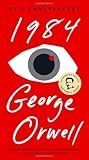
1. 1984 — George Orwell ⭐⭐⭐⭐⭐
The foundational dystopian novel, and still the most precise. Orwell’s Oceania — where the Party rewrites history in real time, language is engineered to make dissent unthinkable, and love itself is a crime against the state — has given the culture its entire vocabulary for political control: Big Brother, doublethink, thoughtcrime, the memory hole. Winston Smith’s rebellion and defeat is one of literature’s most devastating arcs.
What makes 1984 permanently relevant is not its specific technology but its psychology: the way totalitarianism works not by brute force alone but by making people genuinely uncertain about what is true. Read it alongside Hannah Arendt’s The Origins of Totalitarianism for the full picture.
2. Brave New World — Aldous Huxley ⭐⭐⭐⭐⭐
Huxley’s dystopia is, in important ways, the more prescient one. Where Orwell imagined control through pain and fear, Huxley imagined it through pleasure: a society where citizens are pharmacologically pacified with soma, genetically conditioned into their social roles, and so comprehensively entertained that freedom becomes a concept no one wants. The World State doesn’t prohibit anything — it makes authentic experience so uncomfortable that people choose the simulation voluntarily.
The debate about which vision is more accurate — Orwell’s boot-on-the-face or Huxley’s soma-tablet — remains genuinely unresolved. The answer, in 2026, is probably both.
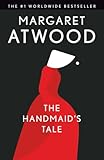
3. The Handmaid’s Tale — Margaret Atwood ⭐⭐⭐⭐⭐
Gilead is a theocratic patriarchy erected on the ruins of the United States, where fertile women are conscripted as reproductive vessels for the ruling class and every institution of female autonomy — property rights, employment, literacy — has been systematically dismantled. Offred’s narrative, told in the careful present tense of someone who knows she may not survive to tell it, is both suffocating and searingly controlled.
Atwood’s key formal decision — the “Historical Notes” epilogue, in which Gilead is studied by future academics — does something no other dystopian novel quite manages: it makes the horror feel both over and ongoing simultaneously.
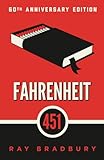
4. Fahrenheit 451 — Ray Bradbury ⭐⭐⭐⭐⭐
Bradbury’s firemen don’t put out fires — they start them. In a future America where books are burned on sight, Guy Montag is one of the burners until he begins, secretly, to read what he destroys. The novel is often read as being about censorship, but Bradbury was more precise than that: he was writing about a society that had chosen not to read long before any government banned books, because television and entertainment had made reading feel unnecessary.
Fahrenheit 451 is Bradbury’s argument that censorship is often the final act in a much longer cultural abdication.
Revolutionary Betrayal & Allegory
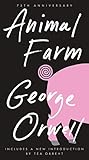
5. Animal Farm — George Orwell ⭐⭐⭐⭐⭐
At eighty pages, the most efficient political allegory ever written. The animals of Manor Farm overthrow their human master and establish a democratic republic — then watch as the pigs, who organise the revolution, gradually consolidate all power until the final transformation: the pigs walk upright, carry whips, and are indistinguishable from the humans they replaced. “All animals are equal, but some animals are more equal than others.”
Orwell based the allegory on the Soviet Union under Stalin, but its applicability to revolutionary movements more broadly has only grown. Every generation rediscovers that revolutions have a tendency to reproduce the structures they overthrow.
Quiet Dystopias & Social Control
6. Never Let Me Go — Kazuo Ishiguro ⭐⭐⭐⭐⭐
Ishiguro’s dystopia operates entirely without drama. Kathy, Tommy, and Ruth are students at Hailsham, an English boarding school — and it is only gradually, through the novel’s carefully withheld information, that the nature of their existence becomes clear. They are clones, raised to donate their organs upon reaching adulthood. What they are never given, at any point, is a reason to resist.
Never Let Me Go is the most unsettling book on this list because its characters accept their fate. The horror is not the violence of the state but the thoroughness of a conditioning so complete that liberation never occurs to the liberated. Ishiguro writes in a prose of almost painful delicacy about a subject of almost unendurable bleakness.
7. The Trial — Franz Kafka ⭐⭐⭐⭐⭐
Kafka’s novel, published posthumously in 1925, is not dystopian in the science fiction sense — no future date, no governing ideology. Josef K. is simply arrested one morning, never told the charge, and pursued through an incomprehensible legal bureaucracy that seems designed to exhaust and humiliate rather than adjudicate. He is guilty, the system implies, simply because the system says so.
The Trial is included here as the genre’s proto-text: the nightmare of state power operating without logic or accountability that every subsequent dystopian novel has, in some way, built on. Kafka wrote it in 1914–15. He may have been the first person to understand what the twentieth century was going to do.
Environmental Collapse & Survival
8. Parable of the Sower — Octavia Butler ⭐⭐⭐⭐⭐
Set in a near-future California destroyed by climate change, corporate feudalism, and the collapse of public institutions, Parable of the Sower follows Lauren Olamina — a teenager with hyperempathy disorder, who literally feels others’ pain — as she builds a community around a new religion she calls Earthseed. Butler wrote it in 1993; the California she describes in 2024 has arrived almost exactly on schedule.
Butler’s dystopia is unusual in the genre for being fundamentally constructive: the novel is not primarily about collapse but about what a person of extraordinary character builds in the ruins. Lauren is one of the most compelling protagonists in American science fiction.
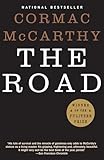
9. The Road — Cormac McCarthy ⭐⭐⭐⭐⭐
After an unspecified catastrophe has stripped the world of light, warmth, and almost all life, a father and his young son walk south toward the sea through ash and ruin. There is no society left to critique in The Road — the dystopia is total — but McCarthy’s concern is the same as Orwell’s and Atwood’s: what does it mean to remain moral when every external structure that enforced morality has collapsed?
The prose is McCarthy at his most stripped-back: no punctuation for dialogue, sentences of biblical compression. The father-son relationship is rendered with an intensity that borders on unbearable. A great novel and a very hard one.
Philosophical Dystopias
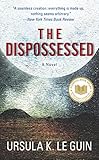
10. The Dispossessed — Ursula K. Le Guin ⭐⭐⭐⭐⭐
Le Guin’s novel operates by placing two systems in direct comparison: Anarres, a moon where an anarchist collective has built a resource-scarce but egalitarian society over 150 years; and Urras, the wealthy capitalist planet from which the anarchists originally fled. Physicist Shevek moves between both worlds, and Le Guin uses his perspective to examine what each system produces in human beings — their freedoms, their repressions, their blind spots.
The Dispossessed is dystopian and utopian simultaneously, refusing to declare either society the answer. It is also a serious work of political philosophy in novel form, which very few books manage to be without becoming unreadable.
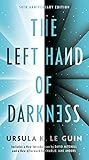
11. The Left Hand of Darkness — Ursula K. Le Guin ⭐⭐⭐⭐⭐
Le Guin’s earlier novel, set on the planet Gethen, imagines a society without biological sex: its people are androgynous for most of the month and assume temporary gender only during fertile periods. The novel follows a human envoy navigating Gethen’s politics while grappling with the ways his assumptions about gender structure everything he believes about power, kinship, and loyalty.
The Left Hand of Darkness is adjacent to dystopia — Gethen is not a nightmare, and Le Guin is not warning against it — but it belongs on this list as the genre’s most sophisticated examination of how social structures that feel natural are in fact constructed, and constructable otherwise.
Adjacent to the Genre
12. We Need to Talk About Kevin — Lionel Shriver ⭐⭐⭐⭐
Kevin Khatchadourian commits a school massacre at age sixteen. His mother Eva, writing letters to her estranged husband in the aftermath, reconstructs her son’s childhood and her own ambivalence about motherhood. Was Kevin born malevolent? Did Eva’s inability to love him naturally create the monster? Did American culture — its privilege, its entitlement, its rage — produce him?
We Need to Talk About Kevin is listed here not as conventional dystopia but as something the genre rarely attempts: a single point of collapse examined from the inside, with all its moral complexity intact. The America it describes is recognisable, not futuristic — which makes it, by the genre’s real criteria, the most dystopian book of all.
Why Dystopian Fiction Remains Essential
The most common objection to dystopian fiction is that it is relentlessly bleak, that readers leave it feeling worse about the world rather than equipped to improve it. The objection misunderstands the genre’s purpose.
Dystopian fiction asks a specific kind of question: given what we already know about how power works, what are the logical endpoints of the tendencies we can already see? Orwell watched fascism and Stalinism and asked what they become when fully realised. Atwood watched the religious right and asked the same question. Butler watched climate change and inequality and asked it again. Le Guin asked it about gender, about capitalism, about the anarchist project itself.
These are not comfortable questions. They are not meant to be. The discomfort is the point — a deliberate effort to make the familiar strange enough that we can see it clearly. The best dystopian novels don’t predict the future. They make the present harder to ignore.
Dystopian Novels by Type
| Type | Best Book |
|---|---|
| Totalitarianism / surveillance | 1984 |
| Pleasure as control | Brave New World |
| Theocratic patriarchy | The Handmaid’s Tale |
| Revolutionary allegory | Animal Farm |
| Quiet social control | Never Let Me Go |
| Climate collapse | Parable of the Sower |
| Post-apocalyptic survival | The Road |
| Political philosophy | The Dispossessed |
Affiliate disclosure: Book links are Amazon affiliate links. We earn a small commission at no extra cost to you.
Frequently Asked Questions
What is the best dystopian novel ever written?
1984 by George Orwell is most widely considered the greatest dystopian novel ever written, having defined the genre and given the English language words like doublethink and unperson. Brave New World by Aldous Huxley is equally important and presents a different but equally prescient vision of future tyranny.
What dystopian novels are similar to 1984?
The most similar books to 1984 are Brave New World by Aldous Huxley, We by Yevgeny Zamyatin (which directly influenced Orwell), and The Handmaid's Tale by Margaret Atwood. All three portray societies where individual freedom has been systematically eliminated through different mechanisms of control.
What dystopian novels are appropriate for teenagers?
The best dystopian novels for teenagers are The Hunger Games by Suzanne Collins, Divergent by Veronica Roth, and The Maze Runner by James Dashner. These are young adult titles with teen protagonists. For older teens ready for more complexity, The Handmaid's Tale and Brave New World are appropriate from around age 16.
What is the difference between dystopian and post-apocalyptic fiction?
Dystopian fiction depicts a society that has become oppressive through human design, such as totalitarian governments, surveillance states, or rigid class systems. Post-apocalyptic fiction depicts a world devastated by catastrophe and the struggle to survive or rebuild. The Road by Cormac McCarthy is post-apocalyptic; 1984 is dystopian. Many books blend both elements.