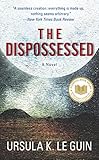
Editors Reads Verdict
The Dispossessed is one of the greatest science fiction novels ever written — a rigorous, compassionate, and ultimately moving examination of freedom, community, and the impossible difficulty of building a truly just society.
What We Loved
- The dual-planet structure is used with extraordinary intellectual and narrative skill
- Shevek is one of science fiction's most fully realised protagonists
- Le Guin examines both her societies with fairness — neither is utopia, hence the subtitle
- The ideas are genuinely complex and resist easy summary or dismissal
Minor Drawbacks
- The alternating timeline structure requires careful reading
- The dense political philosophy will engage some readers more than others
- Some of the Urras sequences feel more polemical than the Anarres sequences
Key Takeaways
- → An anarchist society is genuinely possible — but it creates its own conformity pressures
- → Freedom from the state does not automatically produce freedom for the individual
- → Le Guin's subtitle — An Ambiguous Utopia — is the most honest subtitle in SF
- → The novel asks what we are willing to give up for community, and what we must keep for ourselves
- → Shevek's physics — working toward a unified theory of time — mirrors the novel's structural argument
| Author | Ursula K. Le Guin |
|---|---|
| Publisher | HarperCollins |
| Pages | 387 |
| Published | May 1, 1974 |
| Language | English |
| Genre | Science Fiction |
| Difficulty | Advanced |
| Best For | Serious science fiction readers interested in political philosophy, utopian fiction, and Le Guin's Hainish Cycle — particularly those drawn to anarchism, freedom, and the structure of societies. |
How The Dispossessed Compares
The Dispossessed at a glance against 3 similar books readers weigh alongside it.
| Book | Author | Rating | Best for |
|---|---|---|---|
| The Dispossessed (this book) | Ursula K. Le Guin | ★ 4.4 | Serious science fiction readers interested in political philosophy, utopian |
| Red Mars | Kim Stanley Robinson | ★ 4.1 | Hard science fiction readers willing to invest in a dense, politically |
| The Forever War | Joe Haldeman | ★ 4.3 | Science fiction readers interested in military SF, anti-war fiction, and |
| The Moon Is a Harsh Mistress | Robert A. Heinlein | ★ 4.3 | Science fiction readers interested in political philosophy, AI, and revolution |
Two Worlds, One Question
Ursula K. Le Guin was the most politically serious writer in twentieth-century American science fiction, and The Dispossessed is her most directly political novel. Its subtitle — “An Ambiguous Utopia” — is also its central argument. There are no perfect societies. There are only different sets of trade-offs and different distributions of freedom and constraint.
The twin worlds of Urras and Anarres were separated two centuries before the novel begins. Urras is a prosperous, stratified, capitalist world — recognisable to any contemporary reader. Anarres is the moon settled by anarchists who rejected Urras’s structures and built a society with no government, no property, and no hierarchy. The novel alternates between Shevek’s life on Anarres and his journey to Urras, moving forward and backward in time simultaneously.
The Anarchist Society
Le Guin depicts Anarres with rigour and honesty. The society has no coercive state — and has also developed its own forms of social coercion, conformity pressure, and resistance to radical individual thought. Shevek, a physicist attempting to develop a unified theory of time, encounters on his anarchist homeland the same resistance to genuinely new thinking that he will encounter on capitalist Urras.
This even-handedness is the novel’s great achievement. Le Guin clearly prefers the Anarresti values — she was a committed anarchist and Taoist — but she does not give them a free pass. Both worlds are genuinely examined.
Shevek
The physicist protagonist is one of science fiction’s most fully realised human beings. Le Guin takes his work seriously — the Principle of Simultaneity he is developing is a coherent (if fictional) physics concept — and the relationship between his intellectual project and his political situation is the novel’s deepest thematic connection.
Our rating: 4.4/5 — Le Guin’s masterwork: a novel of ideas that never loses its humanity, and one of the essential texts in all of science fiction.
Reading Guides
- Books Like Dune: 14 Epic Sci-Fi Novels for Herbert Fans
- Ursula K. Le Guin Books in Order: Earthsea and Complete Reading Guide (2026)
- Best Dystopian Novels: 12 Books About Worlds We Should Never Build
The Political Context
The Dispossessed was published in 1974, shaped by a period of intense political questioning in the United States — the Vietnam War, the counterculture, and widespread interest in alternatives to both American capitalism and Soviet socialism. Le Guin was deeply engaged with anarchist political philosophy, particularly the work of Peter Kropotkin, and the Anarresti society she builds in the novel is a serious attempt to imagine what a functioning anarchist society might actually look like, including its failures and internal contradictions.
The novel’s subtitle — “An Ambiguous Utopia” — was Le Guin’s deliberate signal that she was not writing propaganda. No society is a utopia. What Anarres offers is a different distribution of freedoms and constraints, not freedom itself.
The Hugo and Nebula Awards
The Dispossessed won both the Hugo and Nebula Awards in 1975, making Le Guin the only writer to win both awards for two consecutive novels (following The Left Hand of Darkness in 1970). This double recognition confirmed her as the defining figure of literary science fiction in the 1970s, a position reinforced by her Earthsea novels and her many short stories. She received the National Book Award for Distinguished Contribution to American Letters in 2014 — recognition that extended beyond the science fiction field to acknowledge her standing in American literature broadly.
Shevek’s Physics
The Principle of Simultaneity that Shevek develops — a unified theory of time that reconciles sequential time (causality, past-to-future movement) with simultaneous time (the experience of all moments as co-present) — is a fictional physics concept that Le Guin developed with internal coherence. The relationship between Shevek’s physics and the novel’s political argument is not accidental: he is working toward a theory that would make instantaneous communication across interstellar distances possible, and the political argument is about whether knowledge can flow freely across the walls that societies build around themselves.
Le Guin’s Anarchism and Taoism
Le Guin identified as an anarchist and a Taoist throughout her adult life, and both commitments shape The Dispossessed. The Taoist influence is in the novel’s formal structure — the alternating chapters, the way Anarres and Urras mirror and complete each other — and in Shevek’s eventual synthesis, which involves not choosing between the two worlds but holding them in relation. The anarchist commitment is in the seriousness with which she takes the Anarresti project even while honestly depicting its failures. Le Guin was born October 21, 1929 and died January 22, 2018; The Dispossessed remains the fullest expression of her political imagination.
The Novel in the Hainish Cycle
The Dispossessed is part of Le Guin’s Hainish Cycle, the loosely connected future history in which humanity was originally seeded across many planets by an ancient civilisation. The Cycle’s novels and stories can be read in any order, but The Dispossessed is the one most fully devoted to political philosophy and the one that rewards the most careful reading. The ansible — the instantaneous communication device whose theory Shevek’s Principle of Simultaneity makes possible — appears in other Hainish Cycle works as the technological foundation of the Ekumen, the loose interplanetary federation. In this novel we see its intellectual origin: a theory of time developed by a physicist who himself embodies the contradiction between individual freedom and communal obligation.
Why It Remains Relevant
The Dispossessed was written in 1974 and has become more rather than less relevant with each decade. The question it poses — what is the actual cost of building a just society, and are we willing to pay it? — is not easier to answer in the 2020s than it was in the 1970s. Le Guin does not pretend to have the answer; she constructs a thought experiment rigorous enough to make the question unavoidable. This is the function of the best political science fiction: not to argue for a specific system but to force honest engagement with the trade-offs any system requires.
Frequently Asked Questions
What is "The Dispossessed" about?
A physicist from an anarchist moon travels to its capitalist twin planet in this dual-narrative exploration of two radically different societies and the meaning of freedom.
Who should read "The Dispossessed"?
Serious science fiction readers interested in political philosophy, utopian fiction, and Le Guin's Hainish Cycle — particularly those drawn to anarchism, freedom, and the structure of societies.
What are the key takeaways from "The Dispossessed"?
An anarchist society is genuinely possible — but it creates its own conformity pressures Freedom from the state does not automatically produce freedom for the individual Le Guin's subtitle — An Ambiguous Utopia — is the most honest subtitle in SF The novel asks what we are willing to give up for community, and what we must keep for ourselves Shevek's physics — working toward a unified theory of time — mirrors the novel's structural argument
Is "The Dispossessed" worth reading?
The Dispossessed is one of the greatest science fiction novels ever written — a rigorous, compassionate, and ultimately moving examination of freedom, community, and the impossible difficulty of building a truly just society.
Ready to Read The Dispossessed?
Check the current price on Amazon.
Check Price on Amazon (paid link)Prices and availability are subject to change. See Amazon for current price.
Review last updated: