Best Classic Science Fiction: Essential Golden Age and Beyond
The best classic science fiction — from Dune and Foundation to The Left Hand of Darkness and Stranger in a Strange Land. Essential Golden Age sci-fi and beyond.
Classic science fiction — from the Golden Age of Asimov and Heinlein (1940s-1960s) through the New Wave of Le Guin and Delany (1960s-1970s) to Herbert’s singular epic — is the tradition that established what the genre could do: imagine alternative worlds as a way of examining the assumptions of this one. The novels below are the essential starting points.
The Epic Foundation
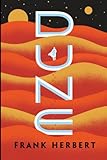
Dune — Frank Herbert (1965)
The most complete world-building achievement in science fiction — a desert planet, a valuable spice, a young heir, and the most complex political, ecological, and religious system ever constructed in fiction. Herbert spent six years researching the ecology of Oregon sand dunes before writing Dune; the result is a world in which everything is internally consistent and interconnected, where the religion, the economics, the ecology, and the politics all follow from each other. The most influential science fiction novel ever written and the best starting point for readers new to the genre’s epic tradition.
Foundation — Isaac Asimov (1951)
The foundational science fiction series — Hari Seldon’s psychohistory predicts civilizational collapse; his Foundation preserves enough knowledge to shorten the subsequent dark age. Asimov’s novel (originally published as connected short stories) is primarily about ideas: the nature of historical prediction, the relationship between individual agency and large-scale historical forces, and what institutions can do that individuals cannot. The most influential science fiction series for its thinking about history and civilisation.
Foundation and Empire — Isaac Asimov (1952)
The second Foundation volume — the Foundation faces its first crisis (a military general who threatens to conquer it) and then a more serious one (the Mule, a mutant whose individual psychology can subvert psychohistory). Asimov introduces here the idea that unpredictable individual genius can disrupt statistical prediction — a refinement of his original premise.
Second Foundation — Isaac Asimov (1953)
The third volume — revealing what Seldon’s plan actually consists of and introducing the Second Foundation, a hidden group of psychohistorians who have been guiding events throughout. The most intellectually satisfying conclusion to the original trilogy.
The New Wave: Ideas Over Action
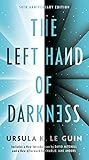
The Left Hand of Darkness — Ursula K. Le Guin (1969)
Le Guin’s most celebrated novel — a human envoy on a planet of ambisexual beings, examining what human gender is and what it determines. The philosophical argument (that our assumptions about sex and gender shape our politics, relationships, and perceptions in ways we cannot see until confronted with their absence) is the most sustained in classic science fiction. Won the Hugo and Nebula Awards.
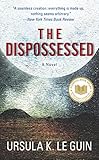
The Dispossessed — Ursula K. Le Guin (1974)
Le Guin’s political novel — a physicist from the anarchist moon Anarres travels to the capitalist planet Urras, and the novel alternates between the two societies. Le Guin is rigorously fair to both: Anarres’s anarchism is austere and sometimes oppressive in its social pressure to conform; Urras’s capitalism is prosperous and violent and produces beauty alongside inequality. The most sustained political thought experiment in science fiction.
Stranger in a Strange Land — Robert Heinlein (1961)
Heinlein’s most provocative novel — Valentine Michael Smith, raised by Martians and returned to Earth, is confronted with human culture (sex, religion, money, government) and reacts with Martian logic. The novel was the bible of the 1960s counterculture and remains the most direct challenge to conventional human institutions in classic science fiction. The word ‘grok’ (to understand completely, to merge with) entered the English language from this novel.
The Martian Chronicles
The Martian Chronicles — Ray Bradbury (1950)
Bradbury’s linked stories about the human colonisation of Mars — told as a series of vignettes from 1999 to 2026, following the successive waves of colonists and the fate of the Martians. Bradbury is the most literary of the Golden Age writers; his prose is the most beautiful in classic science fiction, and his elegies for lost cultures (both Martian and human) are the most moving.
The Literature of Ideas
Science fiction has often been called the literature of ideas, and the classic works on this list demonstrate why that description, far from being a limitation, identifies the genre’s distinctive power and its claim to serious attention. Where much fiction concerns itself primarily with character, relationship, and the texture of ordinary social life, science fiction takes as its special province the big ideas — the implications of scientific and technological change, the structures of possible societies, the nature of consciousness and intelligence, the long future of humanity and its place in the cosmos. The genre’s defining move is the thought experiment: it imagines a world altered in some fundamental way — by a technology, a discovery, a social arrangement, an encounter with the alien — and then follows the consequences with rigorous imagination, using the altered world to examine ideas that realistic fiction cannot reach. This capacity to take an idea and dramatize it, to make the abstract concrete and the speculative vivid, is science fiction’s unique gift. The best classic science fiction uses this method to grapple with questions of genuine importance: the relationship between humanity and its own creations, the dangers and promises of technological power, the contingency of social arrangements we take for granted, the vastness of time and space against which human concerns are measured. Far from being escapist entertainment, this is a literature that thinks, that takes seriously the largest questions facing a technological civilization, and that expands the reader’s imagination beyond the boundaries of the actual into the realm of the possible. To dismiss science fiction as mere adventure is to miss its essential character as the genre most willing to engage, directly and imaginatively, with the ideas that shape the human future.
From Pulp to Prophecy
The history of science fiction is a remarkable trajectory from disreputable origins to cultural prophecy, and understanding this arc deepens the appreciation of the classics that achieved the transformation. The genre’s roots lie partly in the pulp magazines of the early twentieth century, a context that long burdened science fiction with a reputation for crude prose, juvenile adventure, and literary illegitimacy. Yet from these humble and often disparaged beginnings, science fiction developed into one of the most prescient and culturally significant forms of modern literature, and the classic works on this list represent the genre’s maturation into something of real artistic and intellectual weight. Part of what earned science fiction its eventual respect was its uncanny prophetic power — its repeated success in anticipating the technological and social transformations that would actually come to pass, imagining the shape of futures that later arrived. The great works of classic science fiction foresaw, with striking frequency, developments in technology, society, and human life that their contemporaries could scarcely conceive, and this predictive achievement, while never the genre’s sole purpose, demonstrated that its speculative method could yield genuine insight into the direction of history. Equally important was the genre’s growing literary ambition, as writers brought to it increasing sophistication of style, character, and theme, proving that science fiction could be art as well as entertainment. The classics gathered here mark the stages of this ascent, the works through which a once-marginal genre established itself as an essential mode of modern literature — prophetic in its vision, serious in its ideas, and increasingly accomplished in its craft. To read them is to witness science fiction’s transformation from pulp amusement into one of the indispensable literatures of the modern age.
Why the Classics Still Matter
In a genre defined by its orientation toward the future, there is an apparent paradox in returning to its older works, and it is worth asking why the classics of science fiction continue to reward reading even as the futures they imagined have in many cases been overtaken by the actual present. The answer reveals something essential about the genre’s true subject. Science fiction has never really been about predicting the future with accuracy; it has always been, at its core, about the present in which it was written and about the perennial questions of human nature that no technological change alters. The classic works endure not because their specific predictions proved correct — many did not, and the dated details of their imagined futures can even add a certain charm — but because the ideas they explore, the questions they raise, and the human truths they illuminate remain permanently relevant. A great work of classic science fiction uses its imagined future as a lens to examine enduring concerns: the nature of humanity, the consequences of power, the structure of just and unjust societies, the relationship between people and their tools, the meaning of intelligence and consciousness. These concerns do not date, and so the books that engage them seriously retain their power long after their futures have become our past. The classics also matter as foundations, the works that established the genre’s themes, methods, and possibilities, and that every subsequent work of science fiction responds to, knowingly or not; to read them is to understand the source of ideas and images that have saturated modern culture. And they matter, finally, as literature of lasting imaginative power, capable still of expanding the reader’s sense of the possible and of provoking thought about the deepest questions of existence. The future they depicted may have changed, but the reasons to read them have not.
Reading Order
New to classic sci-fi: Dune → Foundation → The Left Hand of Darkness.
Ideas-focused: The Left Hand of Darkness → The Dispossessed → Stranger in a Strange Land.
Complete: Foundation → The Martian Chronicles → Stranger in a Strange Land → Dune → The Left Hand of Darkness → The Dispossessed.
Frequently Asked Questions
What is the best classic science fiction novel to start with?
Dune (1965) by Frank Herbert is the best starting point for classic science fiction — a political, ecological, and religious epic set on a desert planet that controls the most valuable substance in the universe, it is the most complete science fiction world-building ever achieved. At over 800 pages it is demanding, but it rewards the investment completely. The Left Hand of Darkness (1969) by Ursula K. Le Guin is the better choice for readers who prefer ideas to action — a novel about a planet whose inhabitants have no fixed gender, and what a human envoy learns from them about sex, politics, and what it means to be human.
What is Dune about?
Dune (1965) by Frank Herbert is set thousands of years in the future, on the desert planet Arrakis — the only source of 'spice,' a substance that enables space travel and extended life, making it the most valuable commodity in the known universe. Paul Atreides, heir to the noble house given control of Arrakis, is caught in a political trap by his family's rivals and must survive in the desert with the Fremen, Arrakis's indigenous people. Herbert's world is one of the most fully imagined in fiction: its ecology, religion, politics, and economics are all internally consistent and interconnected. The most influential science fiction novel ever written.
What is The Left Hand of Darkness about?
The Left Hand of Darkness (1969) by Ursula K. Le Guin follows Genly Ai, an envoy from the human Ekumen, sent to the planet Gethen (Winter) to persuade its nations to join the Ekumen. The Gethenians are human in every respect except that they have no fixed sex — they are periodically fertile (kemmer), during which time they take on either male or female sexual characteristics, but otherwise are neither. Le Guin uses this to examine what human gender actually is: what our assumptions about it are, how they shape politics, relationships, and perception. The most sustained philosophical argument in classic science fiction.
What is Foundation about?
Foundation (1951) by Isaac Asimov follows Hari Seldon, a mathematician who develops 'psychohistory' — a science that can predict the future of large populations with statistical accuracy. Seldon predicts that the Galactic Empire will collapse, plunging the galaxy into 30,000 years of barbarism, unless his Foundation can preserve enough knowledge to shorten the dark age to 1,000 years. The novel (and its sequels) follow the Foundation across centuries, showing how Seldon's plan survives challenges that appear to contradict it. The most influential science fiction series for its ideas about history, civilisation, and the limits of prediction.