Where to Start with Liu Cixin: A Reading Guide
Where to start with Liu Cixin — whether to begin with The Three-Body Problem or The Dark Forest. A complete reading guide to Chinese science fiction's greatest writer.
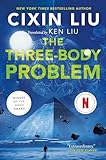
Liu Cixin (born 1963) is the Chinese science fiction novelist who — with The Three-Body Problem (2006; English translation 2014) — became the first Asian author to win the Hugo Award for Best Novel and the first Chinese science fiction novel to receive international recognition on this scale. His Remembrance of Earth’s Past trilogy is one of the most ambitious science fiction works of the twenty-first century, spanning from the Cultural Revolution to the deep future of the universe and constructing a first-contact narrative of extraordinary philosophical and physical scope. He is the most important Chinese science fiction writer and one of the most important science fiction writers in any language.
Where to Start: The Three-Body Problem (2006/2014)
The essential Liu Cixin — and the beginning of a trilogy of extraordinary scope. The novel opens in China during the Cultural Revolution, where astrophysicist Ye Wenjie witnesses violence that destroys her faith in humanity. Decades later, she makes a decision whose consequences will unfold over the next two books and billions of years. In the novel’s present, scientist Wang Miao is drawn into the investigation of a secret organisation called the Frontiers of Science, connected to a wave of suicides among the world’s leading physicists, and is introduced to a virtual reality game set on a world with three suns and an unpredictable orbital mechanics that periodically destroys everything built on it.
Liu’s world-building encompasses physics, cosmology, Chinese history, and game theory, all in service of a first-contact narrative that refuses the genre’s conventional anthropocentrism. His aliens are not comprehensible or sympathetic; his humans are not reliably heroic; and the universe is not organised in any way that privileges intelligent life. The Three-Body Problem establishes these premises; The Dark Forest and Death’s End discharge their consequences.
The Dark Forest (2008/2015)
The second book — and, for many readers, the strongest in the trilogy. Liu introduces the Wallfacer Project: four individuals are given unlimited resources and authority to devise secret strategies for humanity’s survival, kept secret because the Trisolarans have seeded Earth with proton-sized supercomputers capable of observing everything. The protagonist, Luo Ji, appears to be the least likely effective Wallfacer; the novel is his story and the elaboration of the Dark Forest hypothesis. The philosophical argument — the game theory of civilisational survival — is the trilogy’s intellectual centre.
Death’s End (2010/2016)
The concluding volume — the most ambitious and most cosmic of the three books. The narrative jumps forward in time in increasingly large leaps; the scale of what Liu is describing — the deep future of the universe, the long-arc consequences of the Trisolaran contact — becomes almost unimaginable. Some readers find the final book the most astonishing; others find its distance from human-scale drama difficult to sustain engagement with. The ending is genuinely cosmic in the astronomical sense.
Why The Three-Body Problem Is the Ideal First Book
For a reader new to Liu Cixin, The Three-Body Problem is the ideal first book because it is his breakout international success, the opening of his acclaimed trilogy, and the fullest expression of his distinctive gifts, the grand scale, the rigorous scientific imagination, and the sweeping vision of humanity’s place in the cosmos. The Three-Body Problem begins with a secret contact with an alien civilization and unfolds into a story that spans from China’s Cultural Revolution to a looming cosmic encounter. As an entry point it is the natural beginning of the trilogy and a perfect introduction to his ambitious hard science fiction. It welcomes the newcomer with its gripping mystery, its bold scientific ideas, and its expanding scope, drawing the reader into one of the most celebrated works of modern science fiction. It is his most famous work and the start of his finest sequence, so the new reader begins where his cosmic vision opens. For the newcomer, then, The Three-Body Problem is the natural and ideal starting point.
What to Expect as a New Reader
As a new reader, you can expect The Three-Body Problem to be an ambitious, intellectually bold, and cosmically scaled work of hard science fiction. You can expect rigorous scientific imagination, for Liu builds his story on real and speculative physics, astronomy, and mathematics, taking ideas seriously and following them to startling conclusions. You can expect a grand scale, for the trilogy reaches toward the fate of humanity and the structure of the cosmos itself. You can expect a gripping central mystery, beginning with strange events and a secret first contact and expanding outward. You can expect a distinctive perspective, for Liu’s work is rooted in Chinese history and thought, opening with the Cultural Revolution. You can expect ideas-driven storytelling that prizes concept and scope. You can expect the opening of an epic and visionary trilogy. Expect, in short, an ambitious, intellectually bold, and cosmically scaled work of hard science fiction, a stunning introduction to Liu’s gifts.
Going Deeper After Your First Book
Once The Three-Body Problem has drawn you into its cosmic vision, the natural next step is to continue the trilogy through The Dark Forest and Death’s End, for the story expands enormously in scope and ambition across its volumes, reaching toward a staggering vision of the universe and humanity’s fate. The trilogy is best read in order, its ideas, characters, and cosmic scale building across the books toward an unforgettable conclusion. Beyond it, the reader who has enjoyed Liu’s gifts can explore his other fiction, including his acclaimed short stories and novellas, which display the same scientific imagination and grand vision in shorter form. His characteristic strengths, the rigorous science, the grand scale, and the visionary scope, run through his work. Building your reading journey through Liu is a matter of completing the trilogy and exploring his shorter fiction. The reader who begins with The Three-Body Problem and continues will find one of the most ambitious and visionary science-fiction writers working today.
Reading Liu Cixin
The Remembrance of Earth’s Past trilogy is best read as a single work: a sustained philosophical and scientific argument about the conditions for intelligent civilisations’ survival in a universe governed by the Dark Forest logic. Begin with The Three-Body Problem and commit to all three volumes; the trilogy rewards completion with a scale of consequence that very few works of fiction in any genre achieve.
Frequently Asked Questions
Where should I start with Liu Cixin?
The Three-Body Problem (2006; English translation 2014) is the only starting point — the first book of the Remembrance of Earth's Past trilogy, the most celebrated Chinese science fiction novel ever published and winner of the 2015 Hugo Award for Best Novel. The novel begins during China's Cultural Revolution, where physicist Ye Wenjie makes contact with an alien civilisation; in the present day, scientist Wang Miao investigates a mysterious pattern of suicides among physicists and is drawn into a secret organisation called the Frontiers of Science. The second and third books are not readable without the first.
What is the Three-Body Problem trilogy about?
The Remembrance of Earth's Past trilogy (The Three-Body Problem, The Dark Forest, Death's End) spans from China's Cultural Revolution to billions of years in the future. The first contact with the Trisolarans — inhabitants of a three-star system with unpredictable orbital mechanics — triggers a civilisational crisis that unfolds across three books and thousands of years. Liu is interested in the long-arc consequences of contact between civilisations at different technological levels, the game theory of civilisational survival (the Dark Forest hypothesis), and the deep future of the universe. The trilogy's scale is extraordinary: few works of science fiction encompass as much time and consequence.
What is the Dark Forest hypothesis?
The Dark Forest hypothesis, introduced in The Dark Forest (Book 2), is Liu Cixin's answer to the Fermi Paradox — the question of why, given the statistical likelihood of intelligent life, we have received no signals from other civilisations. Liu's answer: the universe is a dark forest, and every civilisation is a hunter. Any civilisation that reveals its location risks being destroyed by another civilisation that cannot afford the risk of allowing a potential rival to develop. Therefore all intelligent civilisations hide, and destroy any civilisation they discover before it can develop further. The hypothesis is used in the novel as both a plot mechanism and a philosophical framework for the trilogy's arc.
Is the Three-Body Problem translated well into English?
The Three-Body Problem was first translated by Ken Liu (no relation to the author), one of the leading translators of Chinese science fiction; The Dark Forest was translated by Joel Martinsen; Death's End was translated by Ken Liu again. The translations are generally well regarded by readers who have access to both the Chinese original and the English versions. Some readers note that the first book's Cultural Revolution sections require historical context that Chinese readers bring automatically; Liu Cixin has said he provided more background in the original text than appeared in the translation. A Netflix/Tencent adaptation and a Netflix Western adaptation (3 Body Problem, 2024) have both been produced.