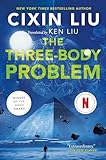
Editors Reads Verdict
The Three-Body Problem is a rare specimen in science fiction: a novel with genuine scientific ambition that uses physics and astronomy as dramatic engines rather than decoration. Liu Cixin's universe is cold and unforgiving, and his portrayal of the Cultural Revolution as a crucible for the novel's central act of cosmic betrayal gives the book an emotional and historical grounding that Western hard SF rarely achieves.
What We Loved
- The science — orbital mechanics, game theory, the three-body problem itself — is dramatized with genuine rigor
- The Cultural Revolution sections are harrowing historical fiction in their own right
- The scale of thinking is extraordinary — Liu operates on civilizational and cosmic timescales
- The VR game sequences are genuinely inventive world-building
Minor Drawbacks
- Characters are often vehicles for ideas rather than fully realized individuals
- Ken Liu's translation, while excellent, occasionally feels slightly formal
- The novel ends mid-story, requiring commitment to the trilogy
Key Takeaways
- → The Dark Forest theory proposes that intelligent civilizations must hide to survive — an elegant and terrifying idea
- → Historical trauma can produce the kind of despair that leads to acts of civilizational consequence
- → Physics at the cosmological scale is genuinely stranger than most science fiction imagines
- → Contact with extraterrestrial intelligence would not be a diplomatic encounter but a strategic one
- → Liu's novel is a rebuke to optimistic first-contact narratives — the universe does not care about humanity
| Author | Liu Cixin |
|---|---|
| Publisher | Tor Books |
| Pages | 400 |
| Published | November 11, 2014 |
| Language | English |
| Genre | Science Fiction |
| Difficulty | Advanced |
| Best For | Hard science fiction enthusiasts, readers interested in Chinese literature and history, and anyone ready for a first-contact story that takes the stakes genuinely seriously. |
How The Three-Body Problem Compares
The Three-Body Problem at a glance against 3 similar books readers weigh alongside it.
| Book | Author | Rating | Best for |
|---|---|---|---|
| The Three-Body Problem (this book) | Liu Cixin | ★ 4.4 | Hard science fiction enthusiasts, readers interested in Chinese literature and |
| Annihilation | Jeff VanderMeer | ★ 3.9 | Readers drawn to literary horror and weird fiction, fans of Borges and Kafka, |
| Dune | Frank Herbert | ★ 4.7 | Readers of ambitious fiction, fans of the films who want the deeper version, |
| Ender's Game | Orson Scott Card | ★ 4.7 | Science fiction readers from teenage years upward, fans of military fiction who |
History as the Foundation of Cosmic Horror
The Three-Body Problem opens not in space but in the chaos of China’s Cultural Revolution — specifically, at a struggle session where the astrophysicist Ye Wenjie watches her father beaten to death for the ideological crime of teaching relativistic physics. This scene, which is among the finest and most horrifying historical fiction written in the past twenty years, establishes the novel’s central emotional logic: Ye’s encounter with human cruelty will lead her to make a decision that puts the entire planet at risk.
The novel pivots between the Cultural Revolution and the near-present, where physicist Wang Miao is drawn into a conspiracy involving a mysterious virtual reality game called Three Body — a simulation of a planet orbiting three suns, subjected to chaotic eras of unpredictable climate — and a secret scientific community experiencing a crisis of faith.
The Science as Drama
Liu Cixin’s extraordinary achievement is making the three-body problem — the unsolvable classical mechanics problem of predicting the movement of three mutually attracting bodies — into a narrative engine. The VR game sequences, in which human historical figures attempt to understand and survive a planet’s chaotic conditions, are wildly inventive hard SF that would stand alone as a novella. The scientific material never feels decorative; it is the story.
The novel’s speculative physics becomes more ambitious as it proceeds. The Trisolarans — the alien civilization Ye’s transmission has summoned — think in terms of light-years and centuries. Their technology is not magic but extrapolated science, and Liu is scrupulous about keeping it plausible.
Cold Ambition
What distinguishes Liu from most Western science fiction is his refusal of anthropocentrism. Humanity, in his universe, is not the protagonist of a cosmic story — it is simply one of countless civilizations navigating a predatory universe. The Dark Forest theory, which emerges more fully in the sequel but is implicit throughout, holds that any civilization that reveals its location to others invites its own destruction. The universe is a dark forest. Every civilization is a hunter.
This is bleak cosmology, but Liu dramatizes it with a novelist’s understanding of human motivation. Ye Wenjie’s decision to respond to the Trisolaran signal is not mad; given what she has witnessed of humanity, it is almost rational.
The Cultural Revolution as Origin
The novel’s most distinctive feature, and the source of much of its power, is that its cosmic science-fiction plot is rooted in a specific and devastating piece of twentieth-century history. Liu opens not in space but at a Cultural Revolution struggle session, where the young astrophysicist Ye Wenjie watches her physicist father beaten to death for teaching “reactionary” relativistic theory, and it is this trauma — the betrayal of reason itself by ideological frenzy — that motivates the fateful choice on which the entire trilogy turns. By grounding humanity’s first contact with an alien civilization in the moral catastrophe of the Cultural Revolution, Liu gives his hard science fiction an emotional and historical weight rarely found in the genre. Ye’s eventual decision to summon the Trisolarans is not madness but a terrible, comprehensible despair born of what she has witnessed of human cruelty; she concludes that humanity cannot redeem itself and must be redeemed from outside. This fusion of personal history, national trauma, and cosmic stakes is what lifts the novel above conventional first-contact fiction.
The Rigor of the Speculation
The Three-Body Problem is hard science fiction in the truest sense: its drama is generated by real scientific ideas, rigorously extrapolated, rather than by the trappings of space opera. The titular problem — the unsolvable classical-mechanics puzzle of predicting the motion of three gravitationally interacting bodies — becomes both a literal plot device and a controlling metaphor, embodied in the virtual-reality game sequences where players struggle to survive on a planet orbiting three suns through unpredictable “Stable” and “Chaotic” eras. These sequences are wildly inventive set pieces that could stand alone as a novella, and they demonstrate Liu’s gift for converting abstract physics into visceral narrative. As the novel proceeds, the speculation grows more audacious — the Trisolarans’ technology, the sophons, the manipulation of fundamental physics — yet Liu is scrupulous about keeping it grounded in genuine theory rather than magic. The science is never decorative; it is the engine of the story, which is precisely what its admirers prize.
A Bleak and Original Cosmology
What most distinguishes Liu Cixin from the Western science-fiction tradition is his radical rejection of anthropocentrism and his correspondingly bleak vision of the cosmos. In Liu’s universe, humanity is not the chosen protagonist of a meaningful cosmic story but one fragile civilization among countless others, navigating a galaxy governed by ruthless logic. The “dark forest” theory — fully articulated in the sequel but already implicit here — holds that every civilization is a hunter in a silent, lightless wood, and that any species that reveals its location invites annihilation, because the costs of misjudging an unknown neighbor are too catastrophic to risk. This is a chilling reframing of the famous Fermi paradox, and it gives the trilogy its distinctive atmosphere of cosmic dread. Yet Liu dramatizes this cold philosophy through characters whose motivations are deeply human, so that the universe’s indifference is registered not as abstraction but as tragedy, lending the bleakness genuine emotional force.
A Global Landmark
The Three-Body Problem, first published in China in 2008 and released in Ken Liu’s acclaimed English translation in 2014, became a watershed in the international reception of Chinese science fiction. It won the Hugo Award for Best Novel — the first translated work ever to do so — and drew admirers ranging from Barack Obama to George R. R. Martin to the founders of major technology companies, before being adapted into both a Chinese television series and a Netflix production. Its success opened Western audiences to a flourishing tradition of Chinese SF and established Liu as one of the most important living writers in the genre. Ken Liu’s translation deserves particular credit for rendering not only the science but the cultural specificity of the original accessible to English readers. As the opening volume of the Remembrance of Earth’s Past trilogy, it lays the foundation for one of the most ambitious works of speculative fiction of the century, and it stands on its own as a singular achievement.
Our rating: 4.4/5 — A landmark of hard science fiction that earns its cosmic scale through genuine scientific rigor and an unflinching confrontation with the darkest implications of the universe’s indifference to human life.
Reading Guides
Frequently Asked Questions
What is "The Three-Body Problem" about?
A secret military project during China's Cultural Revolution makes contact with an alien civilization, setting in motion events that will determine the fate of humanity.
Who should read "The Three-Body Problem"?
Hard science fiction enthusiasts, readers interested in Chinese literature and history, and anyone ready for a first-contact story that takes the stakes genuinely seriously.
What are the key takeaways from "The Three-Body Problem"?
The Dark Forest theory proposes that intelligent civilizations must hide to survive — an elegant and terrifying idea Historical trauma can produce the kind of despair that leads to acts of civilizational consequence Physics at the cosmological scale is genuinely stranger than most science fiction imagines Contact with extraterrestrial intelligence would not be a diplomatic encounter but a strategic one Liu's novel is a rebuke to optimistic first-contact narratives — the universe does not care about humanity
Is "The Three-Body Problem" worth reading?
The Three-Body Problem is a rare specimen in science fiction: a novel with genuine scientific ambition that uses physics and astronomy as dramatic engines rather than decoration. Liu Cixin's universe is cold and unforgiving, and his portrayal of the Cultural Revolution as a crucible for the novel's central act of cosmic betrayal gives the book an emotional and historical grounding that Western hard SF rarely achieves.
Ready to Read The Three-Body Problem?
Check the current price on Amazon.
Check Price on Amazon (paid link)Prices and availability are subject to change. See Amazon for current price.
Review last updated: