Liu Cixin Books in Order: Complete Reading Guide
Liu Cixin's Remembrance of Earth's Past trilogy in order — The Three-Body Problem, The Dark Forest, Death's End. Complete reading guide for the essential Chinese SF trilogy.
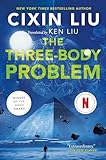
Liu Cixin is a Chinese science fiction author who has become the most widely read SF writer in the world outside the English-speaking countries, and, since the translation of The Three-Body Problem, one of the most celebrated globally. The Remembrance of Earth’s Past trilogy is his defining work.
Remembrance of Earth’s Past Trilogy (Read in Order)
| # | Title | Year |
|---|---|---|
| 1 | The Three-Body Problem | 2008 |
| 2 | The Dark Forest | 2008 |
| 3 | Death’s End | 2010 |
1. The Three-Body Problem — 2008 Chinese / 2014 English
Start here. During China’s Cultural Revolution, a scientist receives a message from an alien civilisation in the Alpha Centauri system. The novel shifts between the Cultural Revolution, the contemporary investigation of a series of physicist suicides, and a virtual reality game set on a world with three suns. Winner of the 2015 Hugo Award for Best Novel — the first Asian author to win.
➡ Full review → | Buy on Amazon →
2. The Dark Forest — 2008 Chinese / 2015 English
Humanity prepares for the alien invasion, 400 years away — but the aliens can monitor all of Earth’s communications, so strategy must be developed inside individual human minds. The novel introduces the Dark Forest hypothesis: that the reason we don’t hear from other civilisations is because intelligent life survives by eliminating all competitors.
➡ Full review → | Buy on Amazon →
3. Death’s End — 2010 Chinese / 2016 English
The conclusion — spanning from the 23rd century to the final moments of the universe. Liu Cixin’s most ambitious novel: an account of the long game of cosmic survival that makes the previous two volumes look like a prologue. Hugo Award finalist.
➡ Full review → | Buy on Amazon →
Other Liu Cixin Works
The Wandering Earth — A short story collection including the novella that became China’s highest-grossing science fiction film. Good introduction to Liu Cixin’s shorter-form work.
Ball Lightning — A standalone novel about a physicist obsessed with understanding ball lightning. Set in the same world as the trilogy.
A Landmark of Chinese Science Fiction
Liu Cixin is the most celebrated and influential figure in Chinese science fiction, a writer whose work, above all his acclaimed trilogy, brought Chinese science fiction to global prominence and earned international recognition of the highest order. Liu is the preeminent figure in Chinese science fiction, and his work, particularly his celebrated trilogy beginning with The Three-Body Problem, achieved a global breakthrough, bringing Chinese science fiction to international attention and acclaim and earning recognition of the highest order. His trilogy became an international phenomenon, widely translated and read around the world, and earned major international honors, establishing Liu as a science fiction writer of global stature and bringing unprecedented attention to Chinese science fiction. This achievement is a landmark, for Liu’s work demonstrated the power and ambition of Chinese science fiction to a global audience and established it as a significant force in world science fiction. The international success and recognition of Liu’s trilogy represented a breakthrough for Chinese science fiction, bringing it to global prominence and establishing Liu as one of the most significant science fiction writers in the world. For readers, Liu offers a landmark of Chinese science fiction, the celebrated trilogy that brought Chinese science fiction to global prominence and earned international recognition of the highest order. A landmark of Chinese science fiction, Liu Cixin is the most celebrated and influential figure in the field, and his acclaimed trilogy brought Chinese science fiction to global prominence, earning international recognition of the highest order and establishing him as a science fiction writer of global stature.
The Grandeur of Hard Science Fiction
Liu Cixin is a master of hard science fiction, the mode that takes seriously the science in science fiction, and his trilogy is distinguished by its rigorous engagement with scientific ideas and its breathtaking grandeur of cosmic scale and imaginative ambition. Liu writes hard science fiction, fiction grounded in serious scientific ideas and rigorous extrapolation, and his trilogy is distinguished by its engagement with genuine scientific concepts and its working out of their implications with rigor and imagination. His fiction is also marked by an extraordinary grandeur of scale and ambition, encompassing vast reaches of space and time, the fate of civilizations and indeed of the cosmos, and imaginative conceptions of breathtaking scope and audacity. This combination of rigorous hard science fiction and breathtaking cosmic grandeur is central to Liu’s achievement and appeal, for his trilogy engages serious scientific ideas while imagining scenarios of vast cosmic scale and ambition, working out the implications of its concepts across reaches of space and time and confronting the deepest questions of humanity’s place and fate in the cosmos. The grandeur of his imaginative vision, combined with the rigor of his engagement with scientific ideas, gives his fiction its distinctive power and its breathtaking scope. For readers, Liu offers the grandeur of hard science fiction, rigorous engagement with scientific ideas combined with breathtaking cosmic scale and imaginative ambition. The grandeur of hard science fiction distinguishes Liu’s trilogy, its rigorous engagement with genuine scientific ideas combined with a breathtaking grandeur of cosmic scale and imaginative ambition, encompassing vast reaches of space and time and confronting the deepest questions of humanity’s place and fate in the cosmos.
Humanity in the Face of the Cosmos
At its deepest, Liu Cixin’s trilogy confronts the profound and often unsettling question of humanity’s place and fate in a vast, indifferent, and potentially hostile cosmos, exploring how human civilization might survive and what it might become in the face of cosmic realities of staggering scale and danger. Liu’s fiction confronts the great questions of humanity’s place in the cosmos, of how human civilization might fare in a vast universe that may contain other, possibly hostile, intelligences, and of the survival, transformation, and fate of humanity in the face of cosmic realities of staggering scale and danger. His trilogy explores, with rigor and imaginative power, the prospects and perils of humanity’s encounter with the wider cosmos, the threats and challenges that a vast and possibly hostile universe might pose, and the difficult questions of survival, morality, and civilization that such an encounter would raise. This confrontation with humanity’s place and fate in the cosmos is the deepest concern of Liu’s fiction, for his trilogy uses the resources of hard science fiction and cosmic-scale imagination to explore the profound questions of how humanity might survive and what it might become in the face of cosmic realities, and the moral and existential challenges such realities would pose. His vision is often unsettling, confronting the possibility of a vast, indifferent, and dangerous cosmos and the hard choices that humanity’s survival within it might require. For readers, Liu offers a profound confrontation with humanity’s place and fate in the cosmos, the survival and transformation of human civilization in the face of vast and potentially hostile cosmic realities. Humanity in the face of the cosmos is the deepest concern of Liu’s trilogy, which confronts the profound question of humanity’s place and fate in a vast, indifferent, and potentially hostile universe, exploring how human civilization might survive and what it might become in the face of cosmic realities of staggering scale and danger.
Why the Trilogy Is Important
Liu Cixin writes science fiction at the scale of cosmic history — his sense of time is geological, his sense of space truly interstellar. The Three-Body Problem trilogy does something rare: it imagines first contact with alien civilisation at genuinely alien scale, refusing to anthropomorphise the encounter. The Dark Forest hypothesis in particular has entered serious scientific discourse about the Fermi paradox.
Affiliate disclosure: Links to Amazon on this page are affiliate links. We earn a small commission at no extra cost to you.
Frequently Asked Questions
Do I need to read the Three-Body Problem trilogy in order?
Yes. The three novels form a continuous story across an enormous time span — from the Cultural Revolution to the heat death of the universe. Each novel builds directly on the events of the previous one. Start with The Three-Body Problem.
What is The Three-Body Problem about?
During China's Cultural Revolution, a scientist makes first contact with an alien civilisation. The novel follows the consequences of that contact — and the discovery that the alien world has sent a fleet to Earth that will arrive in four centuries. It spans physics, game theory, Chinese history, and first contact.
Do I need to know physics to enjoy Liu Cixin?
No. The physics is real and used accurately, but the novels are narrative-driven and accessible to non-scientists. The conceptual leaps are what matter, not the technical details.