Douglas Adams Books in Order: Complete Bibliography & Best Starting Points
Douglas Adams's complete bibliography in order — from The Hitchhiker's Guide to the Galaxy to Dirk Gently's Holistic Detective Agency. Best starting points for new readers.
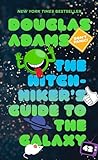
Douglas Adams (1952–2001) is the funniest science fiction writer who ever lived, and the most frequently quoted. His Hitchhiker’s Guide to the Galaxy (which began as a BBC radio comedy in 1978, became a novel in 1979, and eventually a five-book ‘trilogy’) is one of the most beloved works in English comic literature. The answer to Life, the Universe, and Everything is 42.
He was notoriously unable to meet deadlines — his editor was famous for the observation that Adams loved the sound of deadlines whooshing by. He died of a heart attack in 2001 at the age of 49, leaving a fifth Hitchhiker book and a Dirk Gently sequel unfinished.
Where to Start
The Hitchhiker’s Guide to the Galaxy (1979)
The only starting point — the funniest science fiction novel ever written, and one of the most purely enjoyable books in English. Start here. Read it in one sitting if possible. The combination of genuine cosmic absurdity and the specifically English comic sensibility (Arthur Dent’s reaction to the end of the world is to wonder about his demolition hearing) has never been replicated.
The Restaurant at the End of the Universe (1980)
The second book — continue immediately. The universe expands; the restaurant at the end of time is introduced; Zaphod’s quest for the man who runs the universe begins. Almost as good as the first.
Dirk Gently’s Holistic Detective Agency (1987)
Adams’s second series — a detective who believes in the interconnectedness of all things, a ghost, a horse in a bathroom, and the beginning of life on Earth. Differently structured from Hitchhiker (more plotted, more self-consciously clever) but equally funny and philosophically richer.
Complete Bibliography
| Title | Year | Note |
|---|---|---|
| The Hitchhiker’s Guide to the Galaxy | 1979 | Start here; essential |
| The Restaurant at the End of the Universe | 1980 | Hitchhiker II |
| Life, the Universe and Everything | 1982 | Hitchhiker III |
| So Long, and Thanks for All the Fish | 1984 | Hitchhiker IV; Arthur returns to Earth |
| Dirk Gently’s Holistic Detective Agency | 1987 | New series; detective; ghost |
| The Long Dark Tea-Time of the Soul | 1988 | Dirk Gently II |
| Mostly Harmless | 1992 | Hitchhiker V; darkest; unresolved |
| The Salmon of Doubt | 2002 | Posthumous; essays; unfinished novel |
The Master of Comic Science Fiction
Douglas Adams was the supreme master of comic science fiction, a writer whose blend of science fiction, absurdist humor, and satirical wit created in The Hitchhiker’s Guide to the Galaxy one of the most beloved and influential comic works of modern times. Adams’s achievement was to fuse science fiction with comedy, creating a distinctive and brilliant blend of imaginative science fiction premises, absurdist humor, and satirical wit that made The Hitchhiker’s Guide to the Galaxy a beloved phenomenon and one of the most influential comic works of its era. His fiction takes the conventions, scenarios, and cosmic scale of science fiction and turns them to comic and satirical purposes, finding in the vastness and absurdity of the cosmos endless opportunities for humor, wit, and satire. This mastery of comic science fiction is central to Adams’s achievement, for he created a brilliant and distinctive blend of science fiction and comedy that delighted a vast readership and influenced countless writers and works. His fusion of imaginative science fiction premises with absurdist humor and satirical wit produced some of the most beloved and quotable comic writing of modern times. For readers, Adams offers the supreme achievement of comic science fiction, a brilliant blend of imaginative premises, absurdist humor, and satirical wit. The master of comic science fiction, Adams created in The Hitchhiker’s Guide to the Galaxy one of the most beloved and influential comic works of modern times, fusing science fiction with absurdist humor and satirical wit in a distinctive and brilliant blend.
Absurdity, Wit, and Satire
The distinctive character of Douglas Adams’s comedy lies in its absurdist humor, its quick wit, and its satirical engagement with human folly, all rendered with a brilliance and a quotability that have made his work endlessly beloved. Adams’s comedy is marked by its absurdist sensibility, its delight in the ridiculous, the illogical, and the cosmically absurd, and his fiction finds endless humor in the absurdity of existence, the universe, and human behavior. His comedy is also marked by its quick, brilliant wit, its inventive and quotable humor, and its capacity to delight through sheer cleverness and verbal invention. And beneath the absurdist humor and the wit runs a satirical engagement with human folly, with the absurdities, pretensions, and follies of human behavior, society, and thought, which Adams satirizes with a light but pointed touch. This combination of absurdity, wit, and satire gives Adams’s comedy its distinctive brilliance and its endless appeal, for he delights through absurdist humor and quick wit while also satirizing human folly with a light but pointed touch. His humor is at once gloriously silly and genuinely intelligent, combining absurdist delight with satirical insight and brilliant wit. For readers, Adams offers the distinctive pleasures of absurdity, wit, and satire, absurdist humor and quick wit combined with a satirical engagement with human folly. Absurdity, wit, and satire are the distinctive character of Adams’s comedy, its absurdist humor, its quick wit, and its satirical engagement with human folly, rendered with a brilliance and quotability that have made his work endlessly beloved.
Comedy with a Thoughtful Heart
Beneath its absurdist surface, Douglas Adams’s comedy possesses a genuine intelligence and a thoughtful engagement with real ideas and questions, about science, philosophy, technology, and the human condition, that gives his work a depth beyond mere entertainment. Adams’s comedy, for all its absurdist silliness, is genuinely intelligent and thoughtful, engaging beneath its humorous surface with real ideas and questions about science, technology, philosophy, existence, and the human condition. His fiction plays with genuine scientific and philosophical ideas, satirizes real features of human society and behavior, and engages, through its comedy, with serious questions about existence, meaning, and the human place in the cosmos. This thoughtful heart beneath the absurdist surface gives Adams’s comedy a depth beyond mere entertainment, for his humor is grounded in genuine intelligence and engages with real ideas and questions, combining absurdist delight with thoughtful substance. His fiction rewards the reader not only with laughter but with intelligent engagement with ideas about science, philosophy, and the human condition, demonstrating that comedy can be both gloriously funny and genuinely thoughtful. The combination of absurdist humor and thoughtful substance, of comic delight and genuine intelligence, is central to the lasting appeal and the depth of Adams’s work. For readers, Adams offers comedy with a thoughtful heart, absurdist humor grounded in genuine intelligence and engaging with real ideas about science, philosophy, and the human condition. Comedy with a thoughtful heart distinguishes Adams’s work, for beneath its absurdist surface his comedy possesses a genuine intelligence and a thoughtful engagement with real ideas and questions about science, philosophy, technology, and the human condition, giving his work a depth beyond mere entertainment.
Reading Order Recommendations
New to Adams: The Hitchhiker’s Guide → The Restaurant at the End of the Universe → Life, the Universe and Everything.
Dirk Gently: Dirk Gently’s Holistic Detective Agency → The Long Dark Tea-Time of the Soul.
Complete Hitchhiker: The Hitchhiker’s Guide → The Restaurant at the End of the Universe → Life, the Universe and Everything → So Long, and Thanks for All the Fish → Mostly Harmless.
Frequently Asked Questions
What is the best Douglas Adams book to start with?
The Hitchhiker's Guide to the Galaxy (1979) is the only starting point — the best comic science fiction novel ever written, and one of the most purely enjoyable books in English. Arthur Dent's Thursday morning begins with his house being demolished to make way for a bypass and ends with Earth being demolished to make way for a hyperspatial express route, after which he is rescued by his alien friend Ford Prefect and begins a tour of the universe.
What is The Hitchhiker's Guide to the Galaxy about?
The Hitchhiker's Guide to the Galaxy (1979) follows Arthur Dent, a perfectly ordinary Englishman, whose house is being demolished on a Thursday morning. His friend Ford Prefect, who turns out to be from a small planet in the vicinity of Betelgeuse and is a researcher for the eponymous Guide, rescues him seconds before Earth is destroyed by a Vogon constructor fleet making way for a hyperspace bypass. Arthur and Ford then hitch a ride on a stolen spacecraft with Zaphod Beeblebrox (the President of the Galaxy), Trillian (the only other human survivor), and Marvin (a chronically depressed robot). The novel is a sustained comic meditation on the meaninglessness of the universe and the importance of knowing where your towel is.
What is Dirk Gently's Holistic Detective Agency about?
Dirk Gently's Holistic Detective Agency (1987) follows Dirk Gently, a detective who believes in the 'fundamental interconnectedness of all things' and charges his clients for entirely unrelated expenses on the grounds that everything is connected. The case begins with a ghost, a horse in a bathroom, a time machine, and the beginning of life on Earth. Adams uses the detective genre to explore the same ideas of determinism, interconnectedness, and cosmic absurdity that run through the Hitchhiker series, but with a different cast and a more self-consciously plotted structure.
What is The Restaurant at the End of the Universe about?
The Restaurant at the End of the Universe (1980) is the second book in the Hitchhiker series — Arthur and Ford, having escaped the Vogons, join Zaphod on his quest to find the man who rules the universe, stopping at Milliways (the Restaurant at the End of the Universe, situated at the very end of time) along the way. Adams expands the universe considerably — the question of what the universe is for, who (if anyone) is in charge of it, and what the Answer to Life, the Universe, and Everything actually means.


