Where to Start with Douglas Adams: A Reading Guide
Where to start with Douglas Adams — whether to begin with The Hitchhiker's Guide to the Galaxy or Dirk Gently's Holistic Detective Agency. A complete reading guide.
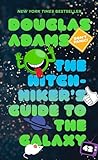
Douglas Adams (1952–2001) is the English comic writer whose five-book ‘trilogy’ — beginning with The Hitchhiker’s Guide to the Galaxy (1979) — is among the most beloved works in British science fiction and one of the funniest things written in English in the twentieth century. Adams began as a radio writer; The Hitchhiker’s Guide started as a BBC Radio 4 comedy in 1978 before Adams expanded it into novels, a television series, a stage show, a video game, and eventually a feature film. He also wrote two Dirk Gently novels — Dirk Gently’s Holistic Detective Agency (1987) and The Long Dark Tea-Time of the Soul (1988) — before his death of a heart attack at forty-nine. Last Chance to See (1990), his non-fiction account of travelling to find endangered species with zoologist Mark Carwardine, is his most personally revealing book.
Where to Start: The Hitchhiker’s Guide to the Galaxy (1979)
The only possible starting point — and one of the most pleasurable reading experiences in the English language. Arthur Dent’s house is about to be demolished; the Earth is about to be demolished (to make way for a hyperspace bypass); and Arthur’s friend Ford Prefect, who has been posing as an out-of-work actor for the last fifteen years while actually researching Earth for the Hitchhiker’s Guide, rescues him by hitching a ride on the Vogon construction fleet. From there: the Vogon poetry (the third worst in the universe), the Heart of Gold, Zaphod Beeblebrox, Marvin the Paranoid Android, the question to which the answer is 42, and Milliways, the Restaurant at the End of the Universe.
Adams’s comedy works through the collision of the cosmic and the mundane — the universe is incomprehensibly vast and largely indifferent, and the human response is to ask for a cup of tea. The prose is precisely controlled, the jokes are layered, and the underlying melancholy (the universe is meaningless; we invented the meaning) gives the book more weight than pure farce.
Dirk Gently’s Holistic Detective Agency (1987)
Adams’s second great comic creation — and a demonstration that the Hitchhiker mode was not a one-off. Dirk Gently is a private detective of grandiose self-confidence and shaky ethics who charges his clients for anything he does on the grounds that everything is connected; his cases tend to involve the metaphysically implausible. The novel involves a Cambridge professor, time travel, Coleridge, a horse in a bathroom, and a ghost who needs something resolved at the dawn of life on Earth.
Darker and more structurally complex than the Hitchhiker books, Dirk Gently shows Adams working in a different register: the comedy is more embedded in character, the plot is more carefully constructed, and the melancholy is closer to the surface. Essential reading for anyone who loved the Hitchhiker novels and wants more.
Why The Hitchhiker’s Guide to the Galaxy Is the Ideal First Book
For a reader new to Douglas Adams, The Hitchhiker’s Guide to the Galaxy is the ideal first book because it is his most famous work, a beloved comic science-fiction classic, and the fullest expression of his distinctive gifts, the wit, the absurd imagination, and the gleeful satire of life, the universe, and everything. The Hitchhiker’s Guide to the Galaxy follows the hapless Arthur Dent, swept off an about-to-be-demolished Earth into a wildly absurd cosmic adventure, in a story bursting with invention and comedy. As an entry point it is ideal, for it is his signature work and a perfect example of his hilarious, inventive science-fiction comedy. It welcomes the newcomer with its irresistible humor, its absurd invention, and its quotable wit, drawing the reader into one of the funniest and most beloved works of comic science fiction. It is his most famous work and the start of his beloved series, so the new reader begins where his comic universe opens. For the newcomer, then, The Hitchhiker’s Guide to the Galaxy is the natural and ideal starting point.
What to Expect as a New Reader
As a new reader, you can expect The Hitchhiker’s Guide to the Galaxy to be a hilarious, absurd, and endlessly inventive work of comic science fiction. You can expect wit, for Adams writes with sparkling, quotable, intelligent humor that has delighted readers for decades. You can expect absurd invention, for the book overflows with bizarre and brilliant ideas, alien races, improbable technologies, and cosmic jokes. You can expect satire, for beneath the comedy Adams skewers bureaucracy, philosophy, technology, and the human condition. You can expect an everyman hero in Arthur Dent, bewildered by a universe far stranger than he imagined. You can expect a loose, anarchic plot driven by comic invention rather than tight structure. You can expect the famous answer to life, the universe, and everything. Expect, in short, a hilarious, absurd, and endlessly inventive work of comic science fiction, a delightful introduction to Adams’s gifts.
Going Deeper After Your First Book
Once The Hitchhiker’s Guide to the Galaxy has introduced you to Adams’s comic genius, the natural next step is to continue the Hitchhiker’s series, following Arthur Dent and his companions through the subsequent books as the absurd cosmic adventure continues with the same wit and invention. The series, often enjoyed in order, extends the comedy and the beloved characters across several volumes. Beyond it, the reader who has enjoyed Adams’s gifts can explore his other fiction, especially the Dirk Gently novels, which bring his wit and inventive imagination to a gloriously absurd take on the detective story. His characteristic strengths, the wit, the absurd invention, and the satire, run through his work, and the reader delighted by The Hitchhiker’s Guide will find them across it. Building your reading journey through Adams is a matter of continuing the Hitchhiker’s series and exploring the Dirk Gently books. The reader who begins here will find one of the funniest and most inventive comic writers in modern fiction to follow.
Reading Douglas Adams
Adams wrote from a conviction that the universe is absurd, that human beings are mostly confused, and that this is funny rather than tragic — though the tragedy is always visible through the comedy. His prose is one of the great English comic styles: precisely observed, structurally surprising, and capable of the kind of sentence that stops a reader and makes them laugh before they fully understand why. Begin with The Hitchhiker’s Guide to the Galaxy — it is the source of everything else — and work through the five-book sequence before trying Dirk Gently.
Frequently Asked Questions
Where should I start with Douglas Adams?
The Hitchhiker's Guide to the Galaxy (1979) is the only real starting point — the novel (expanded from Adams's BBC radio comedy) in which the Earth is demolished to make way for a hyperspace bypass five minutes before the main character, Arthur Dent, is whisked off the planet by his friend Ford Prefect, a researcher for the eponymous Guide. It is one of the funniest books in the English language and the foundation of a five-book 'trilogy' (Adams's joke) that includes The Restaurant at the End of the Universe, Life, the Universe and Everything, So Long and Thanks for All the Fish, and Mostly Harmless.
What is The Hitchhiker's Guide to the Galaxy about?
The Hitchhiker's Guide to the Galaxy (1979) begins on an ordinary Thursday morning when Arthur Dent's house is about to be demolished to make way for a bypass, which turns out to be the least of his problems: the Vogons (a bureaucratic alien species) have arrived to demolish the Earth to make way for a hyperspace bypass. His friend Ford Prefect — who has been researching Earth for the Hitchhiker's Guide for the last fifteen years — rescues him by hitching a ride on the Vogon ship. They are subsequently thrown out of the airlock, rescued by improbability, and set off across the galaxy with Zaphod Beeblebrox (the President of the Galaxy, who has stolen the Heart of Gold), Trillian (a human woman Arthur once met at a party), and Marvin (a robot with depression).
What is Dirk Gently's Holistic Detective Agency about?
Dirk Gently's Holistic Detective Agency (1987) introduces Dirk Gently, a private detective who exploits the 'fundamental interconnectedness of all things' — which is to say, he charges his clients for anything he does, anywhere, on the grounds that it's all connected to their case. The novel involves a Cambridge professor, a time machine, Coleridge's 'Kubla Khan,' Samuel Taylor Coleridge himself, and a ghost who needs to resolve something from the beginning of life on Earth. It is darker and more structurally complex than the Hitchhiker books, and it demonstrates that Adams's comic genius extended well beyond one series.
Should I read the Hitchhiker's Guide series in order?
Yes — the five Hitchhiker books are best read in order, beginning with The Hitchhiker's Guide to the Galaxy. The series has a loose continuing plot, and Arthur Dent's gradual adaptation to the universe (or failure to adapt) accumulates across the books. The first two (Hitchhiker's Guide and Restaurant at the End of the Universe) are the funniest and most tightly plotted; So Long and Thanks for All the Fish is the most surprising; Mostly Harmless (written in a period of depression) is the darkest. Dirk Gently's Holistic Detective Agency stands completely apart and can be read at any point.