Best Contemporary Science Fiction: Essential Reading from the Past 20 Years
The best contemporary science fiction — from The Three-Body Problem and Annihilation to Piranesi and Children of Time. Essential recent sci-fi reading.
Contemporary science fiction has expanded far beyond its Golden Age roots — the best recent work includes Chinese hard science fiction (The Three-Body Problem), ecological horror (Annihilation), post-pandemic literary fiction (Station Eleven), and cosy fantasy (Legends & Lattes). The novels below represent the essential range of what science fiction and speculative fiction have been doing in the past twenty years.
The Grand Vision
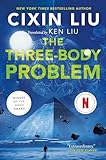
The Three-Body Problem — Liu Cixin (2008, tr. 2014)
The most ambitious science fiction novel of the twenty-first century — a first contact story spanning from the Cultural Revolution to the far future, told with a physicist’s rigour and a storyteller’s command. Liu Cixin’s Remembrance of Earth’s Past trilogy is the most complete science fictional account of what contact with an alien civilisation would actually mean. The most important work of science fiction since Dune.
The Dark Forest — Liu Cixin (2008, tr. 2015)
The second volume of the trilogy — the Wallfacer Project and the Dark Forest solution to the Fermi paradox. Liu’s hypothesis that silence in the universe is the natural consequence of every civilisation’s fear of every other is the most chilling and most intellectually rigorous explanation for why we have not heard from other life.
Ecological Uncanny
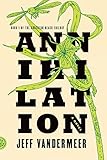
Annihilation — Jeff VanderMeer (2014)
The most atmospheric science fiction novel of the decade — Area X and the twelfth expedition. VanderMeer’s prose is deliberately disorienting: the reader cannot be sure what is real, what is hallucination, and what is something else entirely. The most effective use of Lovecraftian ecological horror in contemporary fiction.
Borne — Jeff VanderMeer (2017)
VanderMeer’s post-collapse novel — a scavenger woman finds a strange creature (Borne) in the ruins of a city dominated by a giant flying bear. The novel is about parenthood, survival, and what constitutes personhood; more emotionally direct than the Area X trilogy.
Children of Time — Adrian Tchaikovsky (2015)
The most idea-rich science fiction novel of the 2010s — an alien civilisation of uplifted spiders developing across millennia, and the remnant of humanity seeking a new home. Tchaikovsky’s account of how a civilisation built by beings with a fundamentally different cognitive structure might think and organise itself is the most rigorous thought experiment in recent science fiction.
Post-Pandemic Literary Fiction
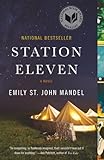
Station Eleven — Emily St. John Mandel (2014)
A flu pandemic kills most of humanity; the novel follows both the collapse and the world twenty years after, structured around a Shakespeare company performing in the settlements that have survived. Mandel’s novel is about art and memory — what survives of culture, and what survival is worth. The most literary science fiction novel on this list.
The Ministry for the Future — Kim Stanley Robinson (2020)
A near-future novel about climate change — a new UN agency tasked with representing the interests of future generations, and the various ways (political, economic, violent, technological) in which the world attempts to reduce carbon emissions. The most politically serious science fiction novel of recent years and the most detailed account of what a successful response to climate change might look like.
Cosy and Intimate Speculative Fiction
Piranesi — Susanna Clarke (2020)
The most surprising novel of recent science fiction — a man living in a house of infinite halls, who gradually discovers what the house is and who he is. Clarke’s prose is as controlled and beautiful as in her first novel Jonathan Strange & Mr Norrell (2004). Won the Women’s Prize for Fiction.
The Long Way to a Small, Angry Planet — Becky Chambers (2014)
The warmest science fiction novel on this list — a found-family crew making a long journey through space, the novel interested in how different species and cultures learn to understand each other. Chambers’s Wayfarers series is the most humanist and the least interested in conflict as a plot mechanism of any contemporary science fiction series.
A Psalm for the Wild-Built — Becky Chambers (2021)
A tea monk on a world where robots left humanity to live in the wilderness — the robot returns to ask what humans need. A small, perfect novella about purpose, contentment, and what enough feels like.
Gothic and Horror
Mexican Gothic — Silvia Moreno-Garcia (2020)
A glamorous socialite investigates her cousin’s strange distress at a crumbling house in the Mexican countryside in the 1950s. Moreno-Garcia’s novel is a love letter to the gothic tradition — Shirley Jackson, Daphne du Maurier — and a genuinely disturbing account of colonial violence and its legacy. The most enjoyable gothic novel of recent years.
The Literature of the Present Moment
Contemporary science fiction has become, paradoxically for a genre concerned with the future, the literature most directly engaged with the anxieties and transformations of the present moment — the form best suited to grappling with the dizzying technological and social changes of our own time, from artificial intelligence and biotechnology to climate change and the digital reshaping of human life. While set in imagined futures, the best contemporary science fiction is fundamentally about the present, using the speculative imagination to explore the implications and anxieties of the transformations we are living through now, to think clearly about where our current trajectories might lead, and to render emotionally and imaginatively real the abstract forces reshaping our world. This is the genre’s distinctive power in the current moment: as the pace of technological and social change accelerates and the future rushes upon us faster than ever, science fiction has become the essential literature for understanding and confronting the transformations of our age, the form that takes seriously the implications of the technologies and forces reshaping human life and that helps us think through their meaning and their dangers. The contemporary science fiction writers grapple directly with the defining anxieties of the present: the rise of artificial intelligence and its implications for human work, meaning, and even survival; the revolutionary and unsettling possibilities of biotechnology and genetic engineering; the existential threat of climate change and ecological collapse; the digital reshaping of human consciousness, relationship, and society; and the broader question of where our accelerating technological civilization is heading. In confronting these present anxieties through the speculative imagination, contemporary science fiction performs an essential function, helping readers to understand and think through the transformations of their own time, and proving that the literature of the future is, at its best, the literature most deeply engaged with the urgent realities of the present.
A Genre Transformed by New Voices
Contemporary science fiction has been profoundly transformed and enriched by a dramatic expansion of the voices writing it — by the entry of writers from backgrounds, cultures, and perspectives long underrepresented in the genre, whose contributions have broadened, deepened, and revitalized science fiction in ways that make the contemporary scene more vibrant and various than ever before. For much of its history, science fiction was dominated by a relatively narrow range of voices and perspectives, but recent decades have witnessed a remarkable diversification, as writers of varied backgrounds, nationalities, and identities have brought to the genre new perspectives, concerns, and imaginative possibilities, transforming science fiction into a far richer and more various literature. This expansion of voices has enriched the genre immeasurably, bringing perspectives and experiences previously absent, opening new imaginative territories, raising new questions, and challenging the assumptions and conventions that a narrower science fiction had taken for granted. The new voices have brought fresh concerns to the genre, exploring through the speculative imagination the experiences and questions of communities and cultures previously marginalized, and have expanded the very conception of what science fiction can be and do. The result is a contemporary science fiction far more various, inclusive, and imaginatively rich than the genre of earlier eras, a literature revitalized by the diversity of voices now contributing to it and energized by the new perspectives and possibilities they bring. This transformation by new voices is among the most significant and exciting developments in contemporary science fiction, marking the genre’s evolution into a more inclusive and various literature, and ensuring that the speculative imagination is now informed by a far wider range of human experience and perspective than ever before. The reader of contemporary science fiction encounters a genre transformed and enriched by this expansion of voices, more various and vibrant than at any point in its history, and offering the imaginative riches that only such diversity of perspective can provide.
When Genre and Literary Fiction Converge
One of the most striking features of the contemporary literary landscape, and a development that has elevated and legitimized contemporary science fiction, is the increasing convergence of science fiction and literary fiction — the dissolving of the old boundary that separated genre from literature, as serious literary writers turn to science-fictional themes and science fiction writers achieve a literary sophistication that commands the highest critical respect. For much of the twentieth century, a rigid and often snobbish distinction separated science fiction, dismissed as mere genre entertainment, from literary fiction, accorded the prestige of serious art, but this distinction has increasingly broken down in the contemporary period, as the boundary between the two has blurred and the convergence between them has accelerated. On one side, acclaimed literary writers have turned to the themes, settings, and devices of science fiction, using the speculative imagination to explore serious literary concerns and bringing the prestige and the techniques of literary fiction to science-fictional material. On the other, science fiction writers have achieved a literary sophistication, a depth of character, a beauty of prose, and a seriousness of theme that command the respect once reserved for literary fiction, demonstrating that genre and literary merit are not opposed and that science fiction can be art of the highest order. The result is a convergence that has enriched both traditions and elevated contemporary science fiction, breaking down the old prejudice that dismissed the genre and establishing science fiction as a legitimate and respected mode of serious literature. This convergence reflects a recognition that the speculative imagination is a powerful tool for serious literary art, that the concerns of science fiction are among the most important facing humanity, and that the old distinction between genre and literature was always more a matter of prejudice than of genuine merit. The contemporary reader encounters a science fiction increasingly continuous with literary fiction, commanding critical respect and achieving artistic heights, and benefits from the convergence that has enriched both traditions and established science fiction as a serious and respected mode of contemporary literature.
Reading Order
Start ambitious: The Three-Body Problem → The Dark Forest → Children of Time.
Start accessible: Station Eleven → Piranesi → A Psalm for the Wild-Built.
Complete: Station Eleven → Annihilation → The Three-Body Problem → The Dark Forest → Children of Time → Piranesi → Mexican Gothic → The Ministry for the Future.
Frequently Asked Questions
What is the best contemporary science fiction novel to start with?
The Three-Body Problem (2008, translated 2014) by Liu Cixin is the best starting point for readers who want ambitious, idea-driven science fiction — a novel about first contact with an alien civilisation, told through Chinese history from the Cultural Revolution to the far future. Piranesi (2020) by Susanna Clarke is the best starting point for readers who prefer mystery and atmosphere — a man living in a house containing infinite halls and statues, who knows nothing of the world outside. Annihilation (2014) by Jeff VanderMeer is the best starting point for Lovecraftian ecological horror — the first expedition into Area X, a mysterious zone where nature has become strange and dangerous.
What is The Three-Body Problem about?
The Three-Body Problem (2008, Liu Cixin, translated 2014) begins during China's Cultural Revolution, when a physicist named Ye Wenjie, witnessing the violence of the revolution, makes a desperate decision that will shape humanity's future for centuries. The novel then jumps to the present, where a physicist named Wang Miao is drawn into a secret society investigating strange phenomena in the scientific community. Liu's novel is about first contact, the Fermi paradox (why is there no evidence of other civilisations?), and the physics of a three-sun system. The most ambitious science fiction novel since the Golden Age and the best-selling Chinese science fiction novel of all time.
What is Piranesi about?
Piranesi (2020) by Susanna Clarke follows a man who knows himself only as Piranesi, living in a house of infinite halls filled with tidal waters and ancient statues. He records his observations in journals, knows only one other living person (the Other), and has no memory of the world outside the house. The novel is about identity, memory, and reality — what it means to know where you are when the evidence of your senses contradicts what someone else tells you. Extraordinarily atmospheric and formally inventive; won the Women's Prize for Fiction.
What is Annihilation about?
Annihilation (2014) by Jeff VanderMeer follows the twelfth expedition into Area X — a mysterious zone on the coast of an unnamed country where something has altered the natural world in ways that cannot be explained. The narrator, known only as the biologist, is one of four women (the others are named only by their roles: the anthropologist, the psychologist, the surveyor) sent to investigate. Previous expeditions have all ended badly. VanderMeer's novel is about ecology, identity, and the limits of scientific understanding — what happens when the natural world stops being comprehensible.