Best Science Fiction Books of All Time — The Essential Reading List
From Dune to Project Hail Mary, Asimov to Le Guin — the greatest science fiction novels ever written. Ranked and reviewed by our editorial team, with reading paths for every type of reader.

Science fiction is the literature of consequences. Every great science fiction novel asks one question — what if? — and then follows the answer with complete honesty wherever it leads. What if consciousness could be transferred? What if alien contact happened tomorrow? What if the Sun started dying?
The best science fiction is also the most prescient literature: Orwell’s surveillance state, Dick’s surveillance capitalism, Gibson’s networked world, Clarke’s communications satellites (proposed in a technical paper before they existed). The genre has an extraordinary track record of thinking further ahead than the world is ready for.
These are the novels that define it.
The Essential Canon
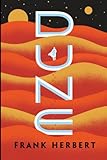
Dune — Frank Herbert ⭐⭐⭐⭐⭐
The best-selling science fiction novel of all time, and the most fully realised imaginary world in the genre. On the desert planet Arrakis — the only source of Melange, the spice that enables interstellar travel and extends life — young Paul Atreides must navigate political betrayal, ecological disaster, and prophetic destiny.
Herbert built not just a plot but an entire civilisation: the ecology of the desert, the feudal politics of the Empire, the Bene Gesserit breeding programme, the Fremen’s water discipline. He was writing about oil, imperialism, and the weaponisation of religion in 1965. He’s writing about right now.
Why it’s essential: The most ambitious novel the genre has ever produced. Nothing else has this scope.
➡ Read our full review → | Buy on Amazon →
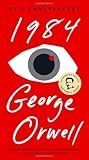
1984 — George Orwell ⭐⭐⭐⭐⭐
Orwell’s vision of totalitarian control — Big Brother, doublethink, the memory hole, Room 101 — is so thoroughly embedded in the political vocabulary of the 20th and 21st centuries that it’s easy to forget it was a specific novel, written in 1948, by a man who was dying of tuberculosis and racing to finish.
1984 is not technically science fiction in the hard sense — it contains no speculative technology that didn’t exist at the time of writing — but it belongs here because it invented the template for every dystopian fiction that followed.
Why it’s essential: The most important political novel ever written. Required reading in any era where the phrase “alternative facts” can be used in public without embarrassment.
➡ Read our full review → | Buy on Amazon →
Project Hail Mary — Andy Weir ⭐⭐⭐⭐⭐
The most enjoyable science fiction novel of the 2020s. Ryland Grace wakes up alone on a spacecraft with no memory of his mission — and gradually pieces together that he is humanity’s last hope against a microscopic threat killing the Sun. The science is accurate, the voice is irresistible, and the friendship that develops in the second half is one of the most moving in recent fiction.
Weir’s genius is making hard science feel like a thriller. Every chapter is a puzzle, every solution earned.
Why it’s essential: The novel that proves hard science fiction can be the most emotionally satisfying fiction in any genre.
➡ Read our full review → | Buy on Amazon →
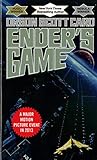
Ender’s Game — Orson Scott Card ⭐⭐⭐⭐½
Andrew “Ender” Wiggin is humanity’s most gifted military mind, trained from childhood to fight an alien invasion he doesn’t fully understand. The Battle Room sequences — zero-gravity tactical combat where children learn to think about space differently — are kinetically brilliant. The ethical twist in the final act reframes everything before it.
Winner of both the Hugo and Nebula Awards in the same year. Still assigned in military academies.
Why it’s essential: The most ethically serious novel to come out of the military science fiction tradition.
➡ Read our full review → | Buy on Amazon →
Hard Science Fiction: When the Science Is the Point
The Martian — Andy Weir ⭐⭐⭐⭐⭐
Mark Watney is accidentally abandoned on Mars after a mission abort and must survive on a planet where nothing grows and help is 140 million miles away. He does it with duct tape, potatoes, and orbital mechanics.
The Martian is the most purely entertaining hard science fiction novel ever written. Watney’s voice — sarcastic, problem-focused, irrepressible — makes the survival calculations feel like comedy. Every solution is technically correct. Ridley Scott’s film adaptation is excellent; the book is funnier and more detailed.
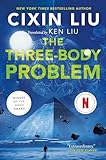
The Three-Body Problem — Liu Cixin ⭐⭐⭐⭐½
The most important science fiction to emerge from China — and one of the most genuinely alien visions of first contact ever written. Beginning during China’s Cultural Revolution and expanding to encompass centuries of human history and the physics of a civilisation orbiting three suns, Liu’s trilogy operates at a scale that makes most Western science fiction look small.
The Dark Forest theory — the novel’s central idea about why the universe appears silent despite the statistical certainty of other civilisations — is the most disturbing original science fiction idea of the past twenty years.
Blindsight — Peter Watts ⭐⭐⭐⭐½
A First Contact novel that uses the encounter with an alien intelligence to ask whether consciousness itself is an evolutionary mistake. The alien Rorschach processes information and responds to its environment with extraordinary sophistication — but appears to have no inner experience.
Watts is a marine biologist who uses actual cutting-edge neuroscience and biology, and Blindsight is the hardest science fiction novel on this list — and the most philosophically unsettling. Not comfortable reading; essential thinking.
Classic Science Fiction: The Masters
Foundation — Isaac Asimov ⭐⭐⭐⭐⭐
Hari Seldon has used “psychohistory” — a mathematical science that can predict the future of large populations — to foresee the fall of the Galactic Empire and 30,000 years of barbarism. He establishes the Foundation to preserve civilisation and shorten the dark age to a thousand years.
Foundation is one of the great ideas in all of fiction. The series spans thousands of years and dozens of characters; individual books vary in quality, but the original trilogy is essential.
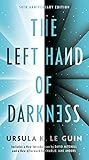
The Left Hand of Darkness — Ursula K. Le Guin ⭐⭐⭐⭐⭐
An envoy from the interstellar Ekumen visits Gethen, a planet whose people have no fixed sex — they become briefly male or female during a monthly fertility cycle, otherwise remaining androgynous. Le Guin uses this premise not for titillation but to examine everything we assume about gender: how it shapes politics, relationships, and identity.
Le Guin won the Hugo and the Nebula for this novel in 1969 — the same year as the Apollo moon landing. It reads as current today as it did then.
Do Androids Dream of Electric Sheep? — Philip K. Dick ⭐⭐⭐⭐⭐
The source material for Blade Runner. Rick Deckard is a bounty hunter tasked with “retiring” (killing) six escaped androids — robots indistinguishable from humans except by an empathy test. The novel is a meditation on what makes a person a person, conducted in the ruins of a post-nuclear San Francisco where most animals are extinct and humans keep electric simulacra.
Dick’s paranoid visionary prose is unlike anything else in the genre. Androids is his most accessible entry point.
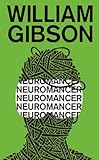
Neuromancer — William Gibson ⭐⭐⭐⭐½
Gibson invented cyberpunk with this 1984 novel — and invented most of the vocabulary (cyberspace, the Matrix, ICE) that the internet age adopted when it arrived. Henry Case is a burned-out hacker hired for one last job in a neon-lit world of corporate espionage, artificial intelligence, and direct neural connection to a global network.
Reading it now is eerie: Gibson got so much right, a decade before the Web existed.
Reading Paths by Preference
| If you want… | Start with… |
|---|---|
| The most ambitious scope | Dune |
| The most fun | Project Hail Mary |
| Political urgency | 1984 |
| Actual science | The Martian |
| Mind-bending ideas | The Three-Body Problem |
| Beautiful prose | The Left Hand of Darkness |
| Military ethics | Ender’s Game |
| Philosophical darkness | Blindsight |
FAQ
What is the best science fiction novel ever written?
Dune by Frank Herbert tops most polls and critical lists. Its scope, ambition, and sustained quality over 900 pages have not been matched. For individual ideas, Foundation (Asimov) is the most influential. For prose, Le Guin’s The Left Hand of Darkness is unrivalled. For sheer enjoyment, Project Hail Mary (Weir) is the most fun 476 pages in the genre.
What’s the difference between hard science fiction and soft science fiction?
Hard science fiction prioritises scientific accuracy — the technology and physics in the story must be plausible based on real science. The Martian and Project Hail Mary are hard sci-fi. Soft science fiction explores speculative social, political, or psychological ideas without worrying about the technical plausibility. 1984 and The Left Hand of Darkness are soft sci-fi. Most great science fiction uses both.
Is Dune better to read or watch (the Villeneuve films)?
Both are excellent — Villeneuve’s 2021 and 2024 adaptations are among the best science fiction films ever made. The book contains significantly more: Paul’s inner experience, the Bene Gesserit’s full political machinations, the economics of the spice trade. Watch the films for the spectacle; read the book for the ideas.
Where should I start if I’ve never read science fiction?
Project Hail Mary (Andy Weir) — it’s fast, funny, scientifically grounded, and emotionally engaging. It requires no prior knowledge of the genre and gives you a complete, satisfying story in one volume. Ender’s Game (Card) is the other natural entry point: short, propulsive, and built around genuinely compelling ideas.
Affiliate disclosure: Amazon links are affiliate links. We may earn a commission at no extra cost to you. This does not affect our editorial judgements.
Frequently Asked Questions
What is the best science fiction book of all time?
Dune by Frank Herbert is most consistently ranked as the greatest science fiction novel ever written. Foundation by Isaac Asimov and The Left Hand of Darkness by Ursula K. Le Guin are the most frequently cited alternatives. Among modern science fiction, The Three-Body Problem by Liu Cixin and Project Hail Mary by Andy Weir are considered the most significant works of the past decade.
Where should a new science fiction reader start?
New science fiction readers should start with The Martian by Andy Weir (fast, funny, scientifically grounded), Ender's Game by Orson Scott Card (character-driven and accessible), or The Hitchhiker's Guide to the Galaxy by Douglas Adams (comedic and welcoming). Dune is the classic entry point but requires patience with its world-building in the early chapters.
What science fiction is most similar to Dune?
The books most similar to Dune are Foundation by Isaac Asimov for civilisation-scale political drama, The Left Hand of Darkness by Ursula K. Le Guin for literary ideas-driven science fiction, and A Fire Upon the Deep by Vernor Vinge for epic interstellar scope. All share Dune's interest in ecology, religion, and the fate of civilisations.
What science fiction books are being adapted for film or TV in 2025?
Major science fiction adaptations in progress include The Expanse (Amazon Prime, based on James S.A. Corey's series), Foundation Season 3 (Apple TV+, based on Isaac Asimov), and various projects based on Philip K. Dick stories. Dune Part Three is in development with Denis Villeneuve, based on Children of Dune.