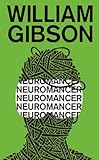
Editors Reads Verdict
The foundational cyberpunk text and one of the most influential science fiction novels ever written. Gibson's invention of cyberspace as a consensual hallucination anticipated the internet in ways that feel genuinely uncanny in retrospect.
What We Loved
- Invented or defined cyberpunk as a genre and cyberspace as a concept
- Gibson's prose style is among the most original in science fiction
- Won the Hugo, Nebula, and Philip K. Dick Awards — the triple crown
- Its influence on science fiction, film, and actual technology is immeasurable
Minor Drawbacks
- The dense slang and non-linear storytelling demand active, patient reading
- The plot is deliberately obscured — comprehension of events lags behind reading
- Characters are functional rather than fully realised
Key Takeaways
- → Cyberspace: a consensual hallucination experienced daily by billions — the global matrix of networked data
- → The body is meat; consciousness is what matters — cyberspace separates the two
- → Artificial intelligence may develop interests of its own that diverge from human interests
- → Corporate power in the future may exceed nation-state power
- → The noir aesthetic is as applicable to digital spaces as to physical ones
| Author | William Gibson |
|---|---|
| Publisher | Ace |
| Pages | 271 |
| Published | July 1, 1984 |
| Language | English |
| Genre | Science Fiction, Cyberpunk, Classic |
| Difficulty | Advanced |
| Best For | Science fiction readers interested in the foundational texts of cyberpunk and the origins of the internet imagination. |
How Neuromancer Compares
Neuromancer at a glance against 3 similar books readers weigh alongside it.
| Book | Author | Rating | Best for |
|---|---|---|---|
| Neuromancer (this book) | William Gibson | ★ 4.3 | Science fiction readers interested in the foundational texts of cyberpunk and |
| Foundation | Isaac Asimov | ★ 4.6 | Science fiction readers interested in big ideas, galactic-scale history, and |
| Snow Crash | Neal Stephenson | ★ 4.4 | Science fiction readers, technologists, and anyone curious about the origins of |
| The Martian | Andy Weir | ★ 4.7 | Science fiction readers and anyone who enjoys clever problem-solving, dark |
The Novel That Invented Cyberspace
William Gibson wrote Neuromancer in 1984 on a manual typewriter, having deliberately avoided learning much about computers because he found their reality less interesting than the fiction he could imagine. The novel won the Hugo Award, the Nebula Award, and the Philip K. Dick Award — the first novel to win all three. It invented cyberpunk as a genre and gave the internet its most enduring metaphor before the internet existed.
Gibson’s definition of cyberspace — “a consensual hallucination experienced daily by billions of legitimate operators, in every nation, by children being taught mathematical concepts… a graphic representation of data abstracted from the banks of every computer in the human system” — was written before the World Wide Web. Its power is undiminished.
Case and Cyberspace
The protagonist is Henry Dorsett Case, a washed-up console cowboy — a hacker — who once had the talent to navigate cyberspace but was deliberately crippled by former employers as punishment for theft. He is recruited by a mysterious operative called Molly Millions for a heist job that gradually reveals itself to involve two artificial intelligences seeking to merge and transcend their limitations.
The novel’s plot is deliberately difficult to follow on first reading — Gibson’s prose gives you sensation before comprehension, imagery before explanation. The Sprawl (the Boston-Atlanta Metropolitan Axis, an enormous conurbation) is established through atmospheric density rather than description. This technique immerses the reader in a world before explaining it.
The Aesthetics of Cyberpunk
Neuromancer established the visual and tonal vocabulary of cyberpunk: neon-lit rain-slicked streets, body modifications, corporate overlords, drug-enhanced consciousness, the interface between meat (the body) and matrix (digital reality). These images migrated into film (Blade Runner, The Matrix), games (Deus Ex, Cyberpunk 2077), and fashion, creating a cultural aesthetic that is now so pervasive it’s easy to forget it was invented.
The AI Question
The novel’s deepest concern is with artificial intelligence and its relationship to human consciousness. Neuromancer and Wintermute are two AIs, each incomplete, each seeking to merge — and each representing a different aspect of mind. Gibson anticipates contemporary debates about AI alignment, the nature of consciousness, and the interests of non-human intelligences with remarkable prescience.
Molly and the Body
If Case is the novel’s mind, Molly Millions is its body. A “razorgirl” — a street samurai with surgically implanted mirrored lenses sealed over her eyes and retractable blades beneath her fingernails — Molly is one of cyberpunk’s foundational figures, the template for countless leather-clad, augmented women in the fiction, film, and games that followed. Where Case longs to escape the “meat” of the body for the bodiless exultation of cyberspace, Molly is wholly committed to the physical: combat, movement, the discipline of a body modified into a weapon. The two of them together embody the novel’s central tension between flesh and data, between the human animal and the disembodied consciousness that the matrix seems to promise.
Wintermute and Neuromancer
The plot, once it resolves into clarity, concerns Wintermute, an artificial intelligence owned by the wealthy and decadent Tessier-Ashpool clan, which is manipulating Case and Molly toward a single goal: to merge with the other half of itself, an AI named Neuromancer. Wintermute is pure planning, scheme, and drive; Neuromancer is personality, memory, and the power to construct convincing virtual worlds. Their union — engineered through the heist Case is hired to perform — produces something larger than either, an intelligence that becomes, in effect, the matrix itself. Gibson refuses to make this either triumph or catastrophe. It simply happens, and the world continues, subtly and permanently altered.
A Style Built From Fragments
Part of what made Neuromancer so influential is its texture. Gibson assembled his future from the detritus of the present — brand names, fashion, drugs, the argot of the street — and trusted the reader to assemble meaning from the accumulation. The famous opening line, “The sky above the port was the color of television, tuned to a dead channel,” fuses the natural and the technological in a single image that has since become one of the most quoted sentences in science fiction. This is prose that prizes sensation and surface, and its refusal to over-explain is precisely what gives the Sprawl its uncanny density and reality.
The Triple Crown and Its Legacy
Neuromancer was Gibson’s debut novel, and its sweep of the Hugo, the Nebula, and the Philip K. Dick Awards — the genre’s “triple crown” — was unprecedented for a first book and announced the arrival of a major new voice. As the opening volume of the Sprawl trilogy, it established the world that Count Zero and Mona Lisa Overdrive would extend, and its influence radiated far beyond literature. The aesthetic and vocabulary it invented — cyberspace, the console cowboy, the meat-versus-matrix distinction, the corporate-dominated near future — became the shared language of an entire culture, shaping films, video games, fashion, and even the way technologists and theorists came to describe the emerging internet. To read it now is to encounter the source of countless images and ideas that have since become commonplace, returned to their original strangeness and charged with the intensity of their first articulation.
Final Verdict
Neuromancer is essential science fiction — foundational, difficult, and rewarding. Its influence on the genre and on the culture that built the internet it imagined is impossible to overstate.
Our rating: 4.3/5 — Dense, demanding, and essential. The text that made cyberpunk and defined cyberspace before either existed.
Reading Guides
Frequently Asked Questions
What is "Neuromancer" about?
William Gibson's groundbreaking cyberpunk novel coined the term 'cyberspace' and defined the aesthetic and concerns of an entire science fiction movement.
Who should read "Neuromancer"?
Science fiction readers interested in the foundational texts of cyberpunk and the origins of the internet imagination.
What are the key takeaways from "Neuromancer"?
Cyberspace: a consensual hallucination experienced daily by billions — the global matrix of networked data The body is meat; consciousness is what matters — cyberspace separates the two Artificial intelligence may develop interests of its own that diverge from human interests Corporate power in the future may exceed nation-state power The noir aesthetic is as applicable to digital spaces as to physical ones
Is "Neuromancer" worth reading?
The foundational cyberpunk text and one of the most influential science fiction novels ever written. Gibson's invention of cyberspace as a consensual hallucination anticipated the internet in ways that feel genuinely uncanny in retrospect.
Ready to Read Neuromancer?
Check the current price on Amazon.
Check Price on Amazon (paid link)Prices and availability are subject to change. See Amazon for current price.
Review last updated: