Where to Start with William Gibson: A Reading Guide
Where to start with William Gibson — whether to begin with Neuromancer, Pattern Recognition, or Count Zero. A complete reading guide to the father of cyberpunk.
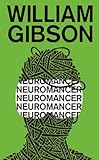
William Gibson (born 1948) is the American-Canadian science fiction writer who coined the word ‘cyberspace’ and whose novel Neuromancer (1984) invented cyberpunk — the genre that predicted, and to some extent shaped, the networked digital world we now inhabit. Gibson imagined the internet before the internet existed as a public network; he imagined corporate dystopias, designer viruses, street-level hackers, and the erosion of the boundary between physical and virtual existence, all with a precision that has proved increasingly predictive. He is one of the most stylistically distinctive writers in science fiction — his prose is dense, allusive, and cinematic — and one of the few genre writers whose work is widely read and cited in literary culture. Neuromancer remains one of the most important science fiction novels ever written; Pattern Recognition (2003) and his subsequent novels have extended his exploration into the contemporary present.
Where to Start: Neuromancer (1984)
The novel that invented cyberpunk — and one of the most influential science fiction novels of the twentieth century. Case is a burned-out computer hacker in the Sprawl (a vast coastal megacity running from Boston to Atlanta) who has been crippled by a former employer: something has been done to his nervous system that prevents him from accessing cyberspace (the shared virtual reality that underlies all commerce and information). He is recruited by Armitage, a mysterious former soldier, and Molly Millions, a street samurai with implanted mirror-lenses and retractable razorblades under her fingernails, for a heist that turns out to be more complicated than advertised.
Gibson’s prose is dense with neologism and future-shock detail — the Sprawl’s ‘case-coloured sky,’ the ‘sky the colour of television tuned to a dead channel’ — and the world he creates is simultaneously unfamiliar (the technology) and recognizable (the economic relationships, the power structures). At forty years’ distance, the novel’s prescience about corporate dominance and network culture is remarkable.
Count Zero (1986)
The second Sprawl novel — three interlocking narratives set seven years after Neuromancer, in a world where the artificial intelligences loosed at the end of that novel have fragmented into multiple entities that have begun to behave like the Vodou loa. Turner, a corporate mercenary, runs an extraction (a defection from one corporation to another). Bobby Newmark (Count Zero), a teenage hacker, survives an encounter with something inexplicable in cyberspace. Marly Krushkhova, an art dealer, is hired to trace the source of strange found-art boxes.
More accessible than Neuromancer in some respects (the three-strand narrative gives the reader handholds), and the development of the AIs as loa is one of Gibson’s most inventive ideas.
Pattern Recognition (2003)
Gibson’s most immediately accessible novel — set in 2002, the months after 9/11, in a world recognizably our own. Cayce Pollard is a marketing consultant with an unusual condition: she is allergic to branding and logos (the Michelin Man makes her physically ill). She is also part of an online community obsessed with ‘the footage’ — mysterious film fragments appearing anonymously on the internet. When a marketing firm hires her to track the footage’s source, she moves from London to Tokyo to Moscow.
Pattern Recognition is Gibson’s most psychologically interior novel — Cayce is his most fully realised character — and his most direct engagement with contemporary culture: branding, surveillance, internet community, and the aftershock of catastrophic violence. The best entry point for readers new to Gibson who find science fiction off-putting.
Why Neuromancer Is the Ideal First Book
For a reader new to William Gibson, Neuromancer is the ideal first book because it is his landmark debut, the founding novel of cyberpunk, and the fullest expression of his distinctive gifts, the visionary imagination, the striking prose, and the prescient vision of technology and the future. Neuromancer follows a washed-up computer hacker drawn into one last job in a gritty, high-tech future of cyberspace, artificial intelligence, and corporate power, in a dazzling, influential novel that helped define cyberpunk and even coined the term cyberspace. As an entry point it is ideal, for it is his most famous work and a perfect example of his visionary, stylish science fiction. It welcomes the newcomer with its gritty future, its striking prose, and its prescient vision, drawing the reader into his distinctive vision. It is his defining work and the one that best represents his gifts, so the new reader encounters Gibson at his most characteristic. For the newcomer, then, Neuromancer is the natural and ideal starting point.
What to Expect as a New Reader
As a new reader, you can expect Neuromancer to be a dazzling, gritty, and visionary work of cyberpunk science fiction. You can expect a gritty, high-tech future, for the novel is set in a world of cyberspace, artificial intelligence, hackers, and corporate power. You can expect visionary imagination, for Gibson imagined cyberspace and the digital future with startling prescience. You can expect striking prose, for Gibson writes in a dense, stylish, image-rich style. You can expect a noir-inflected plot, for the novel follows a washed-up hacker drawn into one last job. You can expect the founding qualities of cyberpunk, which the novel helped define. You can expect a fast, immersive, and demanding read. You should be prepared for a dense style that rewards attention. Expect, in short, a dazzling, gritty, and visionary work of cyberpunk science fiction, a superb introduction to Gibson’s gifts.
Going Deeper After Your First Book
Once Neuromancer has introduced you to Gibson’s gifts, the natural next step is to continue its Sprawl trilogy, which extends the world and themes of Neuromancer across its subsequent novels, deepening his vision of a high-tech future. Beyond it, Gibson has written further acclaimed trilogies that move closer to the present and even into the near future, exploring technology, culture, and the texture of contemporary and coming life with his characteristic prescience and style. His characteristic strengths, the visionary imagination, the striking prose, and the prescient vision of technology, run through his work. Reading on deepens your appreciation of his gifts and his evolving vision of the future and the present. The reader gripped by Neuromancer will find a rich body of visionary science fiction to explore. Building your reading journey through Gibson is a matter of following his fiction from Neuromancer into the Sprawl trilogy and his later work. The reader who begins here will find the founding author of cyberpunk and one of the most visionary writers in science fiction.
Reading William Gibson
Gibson’s fiction is built on the conviction that technology is not a neutral tool but a force that reshapes human perception, identity, and social organisation — and that fiction’s task is to map these changes before they are fully legible in the world. His prose style is distinctive and demanding: dense, allusive, rich with brand names and street-level detail, moving through narrative with the speed of a film. Begin with Neuromancer for the essential Gibson and the founding text of cyberpunk; read Pattern Recognition for the most accessible and the most psychologically present. The Sprawl trilogy (Neuromancer, Count Zero, Mona Lisa Overdrive) is worth reading in sequence for the richest experience of his future world.
Frequently Asked Questions
Where should I start with William Gibson?
Neuromancer (1984) is the essential starting point — the novel that invented cyberpunk and won the Hugo, Nebula, and Philip K. Dick Awards in the same year, the first novel to do so. It follows Case, a washed-up computer hacker who is hired for one final heist in a future of corporate dystopias, artificial intelligences, and a virtual reality called the Matrix. It is among the most influential science fiction novels ever written and the one that defines Gibson's themes: technology's transformation of human identity, the blurring of physical and virtual space, and the corporate future that looks less like science fiction with each passing decade. Pattern Recognition is the best alternative for readers who want Gibson's most immediately accessible and psychologically rich novel.
What is Neuromancer about?
Neuromancer (1984) follows Case, a former console cowboy (computer hacker) who has been neurologically crippled by a former employer after stealing from him — unable to access cyberspace, the shared virtual reality that is the nervous system of Gibson's future world. He is recruited by a mysterious figure named Armitage and a street samurai named Molly, sent to steal something from a vast artificial intelligence called Wintermute. The novel is set in a sprawling coastal megacity called the Sprawl, in Freeside (a luxury satellite) and Zion (a Rastafarian space commune). Gibson's future is densely layered, linguistically inventive, and defined by corporate power and technological acceleration.
What is Pattern Recognition about?
Pattern Recognition (2003) is Gibson's most accessible and most psychologically focused novel — set not in the future but in the present (or very near past) of 2002, in the months after 9/11. Its protagonist, Cayce Pollard, is a marketing consultant with an unusual condition: she is physically allergic to brands and logos (certain ones make her nauseous). She is also obsessed with 'the footage' — mysterious film fragments appearing anonymously on the internet that have attracted a devoted online community. Hired by a marketing firm to track down the source of the footage, Cayce travels from London to Tokyo to Moscow. A quieter, more intimate Gibson than the Sprawl trilogy.
Do Gibson's novels need to be read in order?
Gibson writes in trilogies. The Sprawl trilogy (Neuromancer, Count Zero, Mona Lisa Overdrive) is set in the same future world and can be read independently but is richest read in sequence — characters and events from Neuromancer reappear. The Bridge trilogy (Virtual Light, Idoru, All Tomorrow's Parties) is loosely connected. The Blue Ant trilogy (Pattern Recognition, Spook Country, Zero History) is the most connected, sharing protagonist Bigend and several recurring characters. For new readers: Neuromancer is the canonical starting point; Pattern Recognition is the most immediately accessible alternative.