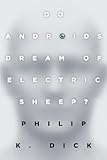
Editors Reads Verdict
Do Androids Dream of Electric Sheep? is Philip K. Dick's most cinematically famous work and one of his most philosophically searching. Its central question — what separates genuine empathy from its perfect simulation — has only grown more urgent as artificial intelligence has advanced. Dick's bleak, funny, and deeply humane novel remains essential reading.
What We Loved
- The central philosophical question about empathy and personhood is as relevant today as in 1968
- Mercerism and the mood organ are among the most inventive world-building details in science fiction
- Dick's prose is lean and propulsive, the novel moves at thriller pace
- The android ambiguity is handled with far more nuance than the film adaptation
Minor Drawbacks
- The subplot involving Isidore can feel disconnected from the main narrative
- Some readers find the ending abrupt and underresolved
- The world-building is dense; context requires active reconstruction from sparse details
Key Takeaways
- → Empathy may be the defining trait of humanity — and it cannot be faked indefinitely
- → In a world of perfect simulation, authenticity becomes the rarest and most desired commodity
- → Survival in an entropic world requires constant moral renegotiation
- → The line between tool and person is drawn by whoever holds the power to classify
| Author | Philip K. Dick |
|---|---|
| Publisher | Del Rey |
| Pages | 210 |
| Published | March 1, 1968 |
| Language | English |
| Genre | Science Fiction, Fiction, Classic |
| Difficulty | Intermediate |
| Best For | Science fiction readers interested in philosophical questions about identity and consciousness; fans of Blade Runner who want to encounter Dick's richer, stranger source material. |
How Do Androids Dream of Electric Sheep? Compares
Do Androids Dream of Electric Sheep? at a glance against 3 similar books readers weigh alongside it.
| Book | Author | Rating | Best for |
|---|---|---|---|
| Do Androids Dream of Electric Sheep? (this book) | Philip K. Dick | ★ 4.3 | Science fiction readers interested in philosophical questions about identity |
| 1984 | George Orwell | ★ 4.7 | Every adult in a democracy |
| Brave New World | Aldous Huxley | ★ 4.5 | Readers of 1984 and other dystopian fiction, philosophy and ethics enthusiasts, |
| Neuromancer | William Gibson | ★ 4.3 | Science fiction readers interested in the foundational texts of cyberpunk and |
Empathy as the Last Human Frontier
Philip K. Dick published Do Androids Dream of Electric Sheep? in 1968, at a moment when the science fiction genre was beginning to take questions of artificial intelligence seriously as philosophical rather than merely technological problems. Dick’s framing device is elegant and brutal: in post-nuclear San Francisco, where most animal species have gone extinct and most humans have emigrated to Mars, the primary measure of authentic humanity is empathic capacity. Androids, the most sophisticated products of Earth’s remaining industry, are physically indistinguishable from humans but fail the Voigt-Kampff empathy test — a polygraph-like assessment of involuntary emotional response to scenarios involving animals and other beings.
Rick Deckard is a bounty hunter licensed to “retire” — Dick’s clinical euphemism is precise and intentional — androids who have escaped their Martian servitude and returned to Earth. His work forces him to confront the question the novel poses to the reader: if an android responds to its own death with something that looks indistinguishable from fear, does the classification matter?
The Mood Organ and Mercerism
The details of Dick’s world are where his genius operates most distinctly. Every human apartment is equipped with a Penfield mood organ — a dial device that allows residents to select their emotional state each morning. One can program “pleased acknowledgment of husband’s superior wisdom,” or schedule depression for a Thursday afternoon. The device is simultaneously a convenience and a horror, and Dick treats it as both.
Mercerism, the dominant religion of the post-nuclear world, involves all adherents simultaneously grasping handles that connect them to the experience of Wilbur Mercer, an elderly man eternally climbing a stone hill while strangers hurl rocks. The experience of shared suffering is the foundation of human community — and the novel asks whether that community can survive the discovery that Mercer may be as artificial as the androids Deckard hunts.
These invented institutions do more philosophical work than the android plot itself. They interrogate whether authenticity matters if the functional result is identical, and whether a manufactured sense of connection is meaningfully different from an organic one.
What the Film Left Behind
The 1982 Ridley Scott film Blade Runner is a masterpiece of visual science fiction, but it streamlines Dick’s novel into something cleaner and more conventionally noir. What it loses is the novel’s humor — dark, absurdist, and very much Dick’s own — and its genuine interest in the secondary characters. J.R. Isidore, a “chickenhead” (cognitively impaired human, deemed unfit for emigration) who shares a building with escaped androids, has an interior life the film reduces to atmosphere. In Dick’s telling, Isidore’s care for the androids who cannot care back is the novel’s moral center.
The novel also refuses the film’s romantic resolution. Dick is not interested in whether Rick Deckard can fall in love with an android; he is interested in whether Deckard can maintain his professional empathy — the capacity to kill — after he has begun to feel something for his targets. The ending offers no comfort.
Our rating: 4.3/5 — A foundational work of science fiction that asks whether empathy can be manufactured, and what we lose if we decide the answer doesn’t matter.
What Makes Us Human?
Do Androids Dream of Electric Sheep? is one of Philip K. Dick’s most celebrated and influential novels, the source for the landmark film Blade Runner and a profound meditation on the nature of humanity and empathy. Set in a decaying, post-apocalyptic future, the novel follows a bounty hunter tasked with “retiring” escaped androids who are nearly indistinguishable from humans, and through his pursuit it probes the question that obsessed Dick throughout his career: what, if anything, truly separates the human from the artificial? The novel uses its science fiction premise to explore the deepest questions of identity, consciousness, and what it means to be alive.
Empathy as the Human Measure
At the heart of the novel is the idea that empathy, rather than intelligence or biology, may be the defining characteristic of humanity. The androids Dick imagines are brilliant and lifelike but lack genuine empathy, and the test used to identify them measures emotional response. Yet the novel complicates this neat distinction, as its human characters display their own coldness and the androids evoke sympathy, blurring the line the bounty hunter is meant to enforce. This exploration of empathy and its limits gives the novel its moral and emotional depth.
A Decaying, Uncertain World
As in much of Dick’s fiction, the novel is set in a world of decay, ambiguity, and uncertain reality, where the boundaries between authentic and artificial, real and fake, are perpetually unstable. The post-apocalyptic Earth, the artificial animals that have replaced the dying real ones, and the strange religion of empathy that the characters practice all contribute to a pervasive atmosphere of disorientation and loss. This unsettling, ambiguous world is characteristic of Dick’s vision and reflects his lifelong preoccupation with the instability of reality and identity.
An Enduring Influence
Do Androids Dream of Electric Sheep? has become one of the most influential science fiction novels ever written, its questions about artificial intelligence, consciousness, and empathy growing only more relevant in an age of advancing technology. Though it differs significantly from the film it inspired, the novel stands on its own as a profound and unsettling work, and it offers an ideal introduction to Dick’s preoccupations and his genius. For readers drawn to science fiction that probes the deepest questions of what it means to be human, the novel remains essential, a haunting and prophetic classic of the genre.
Frequently Asked Questions
What is "Do Androids Dream of Electric Sheep?" about?
In post-nuclear San Francisco, bounty hunter Rick Deckard hunts down rogue androids nearly indistinguishable from humans — the basis for the film Blade Runner.
Who should read "Do Androids Dream of Electric Sheep?"?
Science fiction readers interested in philosophical questions about identity and consciousness; fans of Blade Runner who want to encounter Dick's richer, stranger source material.
What are the key takeaways from "Do Androids Dream of Electric Sheep?"?
Empathy may be the defining trait of humanity — and it cannot be faked indefinitely In a world of perfect simulation, authenticity becomes the rarest and most desired commodity Survival in an entropic world requires constant moral renegotiation The line between tool and person is drawn by whoever holds the power to classify
Is "Do Androids Dream of Electric Sheep?" worth reading?
Do Androids Dream of Electric Sheep? is Philip K. Dick's most cinematically famous work and one of his most philosophically searching. Its central question — what separates genuine empathy from its perfect simulation — has only grown more urgent as artificial intelligence has advanced. Dick's bleak, funny, and deeply humane novel remains essential reading.
Ready to Read Do Androids Dream of Electric Sheep??
Check the current price on Amazon.
Check Price on Amazon (paid link)Prices and availability are subject to change. See Amazon for current price.
Review last updated: