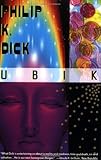
Editors Reads Verdict
Ubik is Philip K. Dick at his most inventive and most unsettling. Its portrait of a reality that degrades like old film — entropy made metaphysical — is matched by a vision of consumerism so prescient it reads as contemporary satire. Time magazine named it one of the 100 greatest English-language novels since 1923.
What We Loved
- The entropy conceit is one of the great original ideas in science fiction
- The consumer product satire remains wickedly funny and prescient
- Dick sustains narrative momentum through escalating ontological uncertainty
- The half-life world — neither alive nor dead — is philosophically rich and emotionally strange
Minor Drawbacks
- The novel's resolution deliberately refuses closure — some readers find this frustrating
- Dick's characterization is minimal; plot and idea drive everything
- The near-future 1992 setting dates some of the world-building details
Key Takeaways
- → Reality may be a consensus construct that can degrade when the consensus breaks down
- → Consumerism offers the illusion of control over an environment that is fundamentally entropic
- → The dead may retain a form of consciousness — and that consciousness may be manipulable
- → Identity persists even as the external world regresses; the self is the last stable thing
| Author | Philip K. Dick |
|---|---|
| Publisher | Vintage |
| Pages | 224 |
| Published | January 1, 1969 |
| Language | English |
| Genre | Science Fiction, Fiction, Classic |
| Difficulty | Intermediate |
| Best For | Science fiction readers willing to engage with genuine metaphysical uncertainty; fans of Philip K. Dick looking for his strangest and most original standalone novel. |
How Ubik Compares
Ubik at a glance against 3 similar books readers weigh alongside it.
| Book | Author | Rating | Best for |
|---|---|---|---|
| Ubik (this book) | Philip K. Dick | ★ 4.2 | Science fiction readers willing to engage with genuine metaphysical uncertainty |
| A Scanner Darkly | Philip K. Dick | ★ 4.2 | Readers interested in addiction literature and identity |
| Martian Time-Slip | Philip K. Dick | ★ 4.1 | Philip K |
| The Man in the High Castle | Philip K. Dick | ★ 4.1 | Readers interested in alternate history and speculative fiction |
A World Where the Dead Linger
Ubik opens in a future 1992 that bears Dick’s characteristic hallmarks: commerce has colonized everything, including the afterlife. Moratorium facilities keep the recently dead in a state called “half-life,” a diminishing form of consciousness that allows loved ones to make time-limited contact with the deceased. Glen Runciter runs a “prudence organization” — a company that provides inertials, humans capable of blocking psi powers, to corporations worried about psychic industrial espionage. His head tester is Joe Chip, a man so perpetually indebted that he cannot afford to open his own apartment door without paying a coin fee.
When Runciter’s team is dispatched to the Moon on what proves to be an ambush, a bomb blast kills Runciter — or kills most of his team, leaving Runciter the sole survivor. The novel refuses to clarify which. What follows is a systematic dissolution of the characters’ reality, as the world around them begins to regress: modern appliances become 1930s models, cigarettes crumble, milk curdles instantly, and Runciter’s face appears on coins and television screens in the manner of a dead president.
Entropy as Metaphor
The central idea of Ubik — that physical reality is subject to thermodynamic decay, and that the rate of that decay can be slowed by a spray-can product called Ubik — is so strange that it takes a paragraph to summarize and a full reading to feel its weight. Dick is not primarily interested in the science fiction mechanics of his premise. He is interested in what it feels like to watch your world deteriorate: to reach for the familiar and find it has already become something older and less reliable.
The half-life conceit extends this into mortality. If the dead can still think, still feel, still be reached — and if their consciousness is itself subject to entropy, fading toward true death — then what does it mean to save someone? The characters in half-life cannot act on the world. They can only receive and transmit. Their situation is a concentrated version of the situation Dick sees all humans in: enclosed, diminishing, dependent on external stabilization.
Consumerism and Its Discontents
One of Ubik’s pleasures is its satire. Each chapter opens with an advertisement for Ubik — the product whose exact nature is revealed only in the novel’s final pages — that escalates from mundane commercial copy to cosmic claims. The joke is that every chapter’s advertisement is more grandiose than the last, until Ubik is presented as the source of creation itself. Dick is mocking the totalizing logic of consumer capitalism, in which any human need can be packaged and sold — including the need for existential stability.
The coin-operated apartment door, the fee to call a taxi, the psychic powers available for commercial rental — these details build a world in which no transaction is free, no relationship unmediated by commerce. Dick was writing in 1969, but Ubik’s satire reads as keener and stranger in the age of subscription services and algorithmic feeds.
Our rating: 4.2/5 — Dick’s most formally adventurous novel, Ubik dissolves reality with such conviction that the reader begins to feel the entropy seeping through the page.
Publication History
Ubik was published in 1969 by Doubleday as one of four novels Dick published that year, a productivity rate that reflected both his extraordinary output and the financial pressures that drove him to write constantly. The novel was based on an earlier short story and a screenplay Dick wrote in the mid-1960s that no studio had purchased. Time magazine included Ubik in its 2005 list of the 100 best English-language novels published since 1923 — one of only a handful of science fiction novels on the list.
PKD’s Reputation and Legacy
Philip K. Dick died in March 1982, weeks before the release of Blade Runner, the film adaptation of Do Androids Dream of Electric Sheep? that began the transformation of his reputation from prolific pulp writer to major literary figure. The process of rehabilitation continued through the 1980s and 1990s: Vintage Books republished his major novels in trade paperback editions; scholars established the Philip K. Dick Award (1983) and the Philip K. Dick Society; and the Library of America published four volumes of his work in 2007–2010, a recognition previously reserved for canonical American writers.
Ubik is central to the PKD scholarly tradition because it articulates, more clearly than almost any other Dick novel, what his critics call his central preoccupation: the ontological insecurity of experience — the question of whether the world as perceived is the world as it is. Where other science fiction writers used this theme as premise, Dick used it as the lived texture of his characters’ daily experience, making the paranoid uncertainty feel not exotic but ordinary.
Film Rights
Film rights to Ubik have changed hands multiple times since the 1970s without a successful adaptation being produced. Michel Gondry was attached to a production in the 2010s; as of the mid-2020s no film version has been completed. The novel’s narrative — in which reality degrades in stages, rolling backward through time — presents obvious adaptation challenges that have defeated multiple screenwriters.
Time Regression as Metaphor
The novel’s central phenomenon — reality regressing through time, decaying toward earlier technological states (jet planes becoming propeller planes, then biplanes; modern appliances reverting to older versions) — was interpreted by Philip K. Dick himself as a metaphor for entropy in human consciousness: the way memory replaces present experience, the past asserting itself over the present. Dick described Ubik as his most personal exploration of this theme, the one in which the metaphysical conceit was most closely connected to his own psychological experience. The spray-can version of Ubik — which briefly arrests the regression before it continues — is the novel’s most precise image of how help arrives too late and too insufficiently.
Frequently Asked Questions
What is "Ubik" about?
Joe Chip works for a psychic-shielding agency in a world of commercial telepaths, until a bomb blast sends his team into a reality that keeps regressing — a mind-bending exploration of reality, death, and consumerism.
Who should read "Ubik"?
Science fiction readers willing to engage with genuine metaphysical uncertainty; fans of Philip K. Dick looking for his strangest and most original standalone novel.
What are the key takeaways from "Ubik"?
Reality may be a consensus construct that can degrade when the consensus breaks down Consumerism offers the illusion of control over an environment that is fundamentally entropic The dead may retain a form of consciousness — and that consciousness may be manipulable Identity persists even as the external world regresses; the self is the last stable thing
Is "Ubik" worth reading?
Ubik is Philip K. Dick at his most inventive and most unsettling. Its portrait of a reality that degrades like old film — entropy made metaphysical — is matched by a vision of consumerism so prescient it reads as contemporary satire. Time magazine named it one of the 100 greatest English-language novels since 1923.
Ready to Read Ubik?
Check the current price on Amazon.
Check Price on Amazon (paid link)Prices and availability are subject to change. See Amazon for current price.
Review last updated: